Chapter 8 of 23
What Barn Owls Eat
Voles, shrews, mice and the story told by a pellet
About 8 minute read
Ask a farmer what a Barn Owl eats and you will probably be told rats and mice. Ask an owl what it eats, and the answer, most nights, is voles. The Barn Owl is a specialist. It hunts small mammals in open country, and in Britain it does that better than any other bird.
The big three
In the last few decades, thousands of volunteers have collected Barn Owl pellets from all over Britain and taken them to be picked apart and counted. The results have been very clear. Of well over 180,000 prey items identified from around 50,000 pellets, nearly half were field voles. Common shrews came next, and then wood mice. Between them, those three animals made up about four in every five things the owls ate.

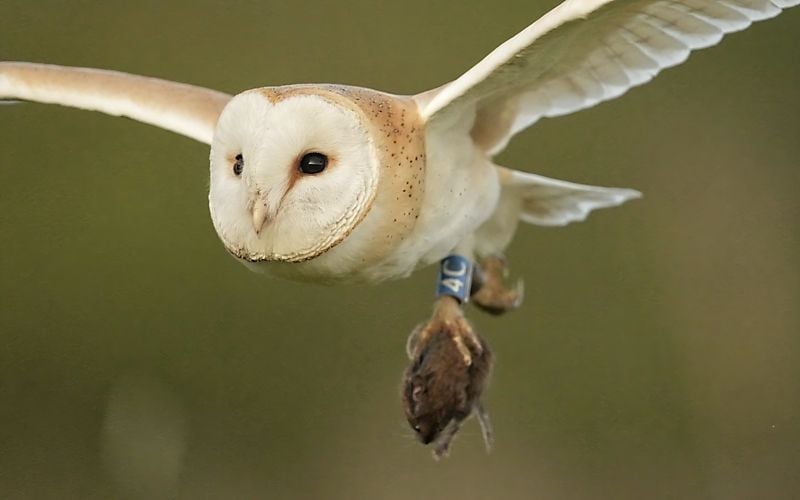
The field vole is the perfect meal for a Barn Owl. It is a small, grey brown rodent with a blunt nose, small ears and a short tail, and it typically weighs between 20 and 30 grams. That is just the right size. It is big enough to give the owl about a third of its daily food, and small enough to swallow whole, easy to carry back to the nest, and simple to tear up for newly hatched chicks. Field voles live in thick, tussocky grass and rarely burrow underground, which is why they are so tied to the kind of habitat we will look at in the next chapter.
Common shrews come second. They are tiny, restless and fast, and a favourite in spring and early summer. Wood mice are a bigger share in summer and autumn, and they are fairly common in hedges and field edges. If you weigh what the owls eat, not just count it, the field vole matters even more, and the wood mouse matters more than the shrew, since a wood mouse is bigger.
The supporting cast
A great many other animals turn up in pellets, but each in much smaller numbers. Pygmy shrews, bank voles and harvest mice make a small contribution. House mice and brown rats are rare in the pellets of most owls, though on farms in a hard winter, the mice and rats around buildings can matter a lot. Small birds, frogs and insects appear now and then. Water voles, moles and dormice are almost never taken.
In a year when field voles are scarce, the little extras count for more. Owls take more shrews and mice, and now and then a young rat, a small bird or a frog. That is why a landscape with lots of different kinds of small mammal is so much better for Barn Owls than a landscape with just one.
Do Barn Owls eat bats?
Not often, despite what you might hear. Out of more than 180,000 prey items in the national survey, only about three in every ten thousand were bats. That is tiny. A Barn Owl is a bird that flies slowly and low over open ground, not a bird built to snatch a bat from the air, and it is far too big to get into most places where bats live. Occasionally an individual owl takes several, particularly near a roost, but at the scale of the whole country, the effect is insignificant.
Small birds are similar. House sparrows, blackbirds and finches occasionally turn up, and they are usually the commonest species in the area. Barn Owls also share buildings with swallows, wrens, robins and wagtails without harming them, as far as anyone has seen. It is most likely that an owl now and then takes a fallen nestling or an injured bird that would not have survived anyway.
How much do they need?
Working from pellets, researchers have estimated that an adult Barn Owl in winter eats about 75 grams of food a day, close to a quarter of its own body weight. That is roughly three field voles. Captive birds are usually fed a bit less, because they do not have to keep warm or fly all night. During the breeding season the numbers go way up. A male feeding a hungry family may catch a dozen or more animals in a night. On my cameras, each growing owlet can get through three or four small rodents in a single evening, so with four owlets a parent may need to find as many as sixteen deliveries for the young and another three or four for itself.
Because Barn Owls get their water from their food, fresh prey matters, and they rarely bother to drink. A juicy vole is a meal and a drink in one, and it is proportionally far richer in moisture than an insect. You might spot one bathing on a very hot day, but it is a rare sight.
Stashing food
Barn Owls do sometimes keep a little larder. In the run up to nesting, a male may bring more food than the female can eat and leave it in the nest, and it can be eaten later if the weather turns bad. If the weather stays good, it may never be eaten. A male without a mate has been known to stockpile a huge number of animals at a possible nest site, more than a hundred in one case, presumably to impress a visitor. Some birds also stash food at roosts in hard winters. It is an insurance policy, and it can make a real difference in a poor spell.
Pellets: the owl's leftovers
Everything a Barn Owl cannot digest, including fur, bones, teeth and tiny bits of insect, stays in the gizzard, the muscular part of the stomach. The gizzard squeezes it all into a tidy lump, called a pellet, which the owl brings back up through its mouth, usually once a day. A bird about to cough one up looks a bit miserable and will not eat until it is done. It lowers its head, shakes it from side to side, and out comes the pellet.
A Barn Owl pellet is easy to recognise. It is black, smooth and glossy when it is fresh, and it stays dark and fairly hard even when it dries out. It is usually around four to six centimetres long, oval in shape and a couple of centimetres wide, with a dusting of white and grey where bone and fur poke through. Other owls, like the Tawny Owl, produce pellets that are greyer, furrier and untidier. Barn Owl pellets tend to be packed with whole, clean bones.
Finding pellets is one of the best ways to discover where a Barn Owl roosts. Look under beams, on ledges, in the entrance to a nest and on the ground beneath favourite perches. A pile of pellets and white droppings is a sure sign. During nesting, the pellets make good nest material. Insect remains do turn up in some pellets, but they most likely came from the stomachs of other prey, such as fledglings, so Barn Owls are not really chasing insects. A female often breaks them up with her bill and scatters the bits about the nest with her feet before she lays, and the soft, furry mix makes a warm, dry bed. If you put up a nest box, adding a few old pellets and some dry bark chippings can make it more inviting.
Picking a pellet apart
Dissecting a pellet is a fun and easy way to find out what an owl has been eating. You will need a pair of tweezers, a tray, a small dish of water, a magnifying glass and some disposable gloves. Old, dry pellets are the safest, and those sold by suppliers to schools are usually heat treated. If you find a fresh pellet in the wild, wear gloves and wash your hands afterwards.
Gently tease the pellet apart in the water, and separate the bones from the fur. Look for the skulls. Field voles have a zigzag pattern on their back teeth, shrews have a long, pointed skull with tiny teeth tipped in reddish brown, and mice have a rounder skull with a pair of big front teeth. Skulls and jaw bones are the easiest way to count the number of animals in a pellet and to identify them. It is not unusual to find two or three in one pellet, and you will soon start to see the story of a night's hunting spread out on your tray.
Read more: What do Barn Owls eat? on BarnOwl.live has my full write up, with a downloadable fact sheet.
See it happen live. Everything in this guide plays out on our cameras.
Watch the live nest Subscribe on YouTube Free PDF Find us on Facebook
Share this page: Facebook · WhatsApp
Free to read and share under a Creative Commons Attribution NonCommercial NoDerivatives 4.0 licence. Last updated September 2026 · Edition 1.0 · About 8 minute read