Chapter 16 of 23
Watching Barn Owls
Where to go, what to look for and how to be a good visitor
About 4 minute read
When and where
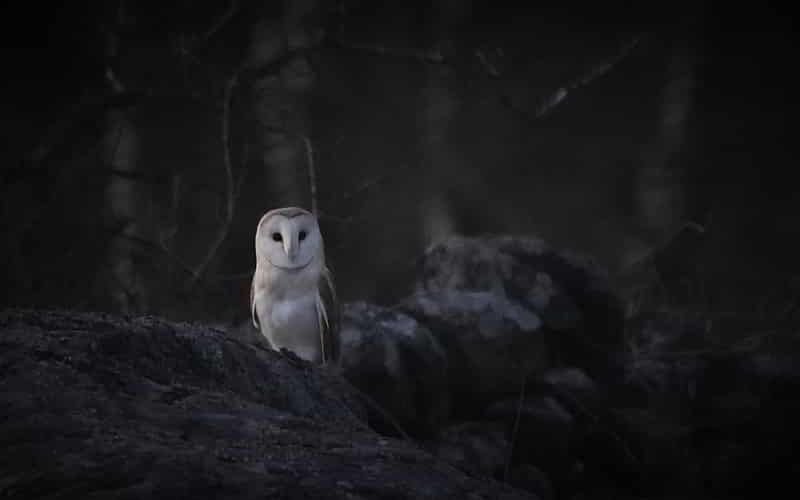
The best way to see a Barn Owl is to go to the right place at the right time and stay quiet. Try a calm, dry evening in the hour before dusk, beside rough grassland, field margins, riverbanks or the edges of marshes. In winter, when they often hunt earlier, you have a fair chance of seeing one in the late afternoon. In summer, while the parents are feeding a family, the evenings before sunset can be very good, and you may see a male working the same stretch of grass over and over again.
Look for the pale shape first. A Barn Owl flying low over a field looks like a piece of paper blowing in the wind, and it can be surprisingly hard to pick out against a pale sky. Then watch how it flies. It moves slowly and steadily along a line, tilts a little from side to side and hovers now and then. When it drops, mark the spot and see whether it comes up with anything.
How to behave
Barn Owls are much more relaxed about people than many birds, as long as you stay put. They tend to ignore things that do not move, and there are plenty of stories of an owl landing on a gatepost within a few metres of a motionless watcher. The moment you move suddenly, they notice. So find a comfortable spot, stay still and let the owl come to you. A car parked at a gateway makes a very good hide.
- Keep well back from any building or box where you think owls may be nesting.
- Never use torches or spotlights on owls. A moving light unsettles them.
- Do not play recorded calls to attract them.
- Keep dogs under control, especially in the summer when young owls are on the ground.
- Do not reveal the exact location of a nest online or to strangers. Nest robbing and disturbance are real problems.
Photography
A good photograph of a Barn Owl is a wonderful thing, and I would never want to put anyone off. But the bird comes first. Keep at a distance, use a long lens and do not get close to a nest, however tempting. Do not use flash near roosts or nests, and never move vegetation or alter a site to get a clearer view. If in doubt, walk away. The law protects Barn Owls from disturbance, and that includes disturbance by photographers.
Watching without disturbing
One of the best ways to see what goes on inside a nest is through a camera. Nest cameras, properly installed by people who know what they are doing and outside the breeding season, let you watch courtship, egg laying, hatching and growing owlets from the comfort of your sofa, without a single feather being ruffled. It is how much of what we have learned about Barn Owl family life has come to light. If you enjoy this guide, you will love the live streaming cameras on the BarnOwl.live website, which broadcast from the Peak District National Park.
What to do if you find an owl in trouble
Now and again, someone finds a Barn Owl that is injured, wet, thin or on the ground where it should not be. Here is what to do.
- Stay calm, and watch from a distance for a few minutes. A fully feathered young owl on the ground at night may simply be exploring, and its parents may be nearby.
- If it is obviously hurt, soaked, weak, or in immediate danger, from traffic or a fox for example, it needs help.
- Wear gloves if you have them. An owl can strike with its talons. Gently cover it with a towel and place it in a cardboard box with air holes, in a warm, dark and quiet place.
- Do not try to feed it. Do not give it water, milk or bread.
- Contact a wildlife rescue, a vet or the RSPCA as soon as you can. Barn Owl specialists know exactly what to do.
A Barn Owl that cannot fly properly has a very slim chance in the wild, so getting it to expert care as quickly as possible is the kindest thing you can do. And please do not keep it. Wild Barn Owls are protected by law, and taking one home is an offence.
See it happen live. Everything in this guide plays out on our cameras.
Watch the live nest Subscribe on YouTube Free PDF Find us on Facebook
Share this page: Facebook · WhatsApp
Free to read and share under a Creative Commons Attribution NonCommercial NoDerivatives 4.0 licence. Last updated September 2026 · Edition 1.0 · About 4 minute read