The Easy Guide to Barn Owls
The whole book on one page. Use the contents on the left to jump to any chapter, or press the Search button.
Back to the contents Get the free PDF
Start here
About this guide
Hello, and welcome. This guide grew out of many years of watching Barn Owls, from evenings at the edge of a field to long stretches in front of my nest box cameras. The live streams on my YouTube channel, @BarnOwlLive, have given me a real world education in owl family life that no book can match. I have learned a huge amount from the birds themselves, and just as much from the researchers and conservation groups who have spent decades studying them. I have tried to bring the best of both together in one place, in plain English.
You do not have to read the guide from start to finish. Each chapter stands on its own, so feel free to dip into the parts that interest you. If you are brand new to owls, the first four chapters are a good place to start. If you have a nest box or a bit of land, jump straight to chapter 15. If you have found an owl in trouble, turn to the end of chapter 16. This guide is free to share, and the sharing terms and sources are on the last pages. If you watch a nest camera, chapter 17 explains what you are seeing, chapter 18 tells the story of two ringed owls, Mia and Buster, and chapter 19 helps you tell Britain's owls apart by sight and sound.
The guide focuses on Barn Owls in the UK, because that is where I watch them and where most of my readers live. Some of the details, especially on the law and on conservation, apply mainly to Britain, and rules can change, so please check the latest guidance before you act. The numbers I have used, such as sizes, weights and dates, are typical figures and averages. Real owls vary a great deal, and no two nests are quite the same.
Most of all, I hope it makes you want to go out at dusk and look for one. There is nothing quite like the first time a Barn Owl drifts silently past you in the last of the light.
Chapter 1 of 23
Meet the Barn Owl
The pale ghost of the British countryside
If you drive along a quiet country lane at dusk, there is a good chance you will one day see something pale and silent drift across the road in front of you. It is bigger than you expect and whiter than anything else out at that hour, and it is gone almost before you have time to say the words out loud. That is a Barn Owl, and most people who see one never forget it.
The Barn Owl is one of the most loved birds in Britain, and it is easy to see why. It has a soft, heart shaped face, dark eyes that look like drops of ink, and a body that seems to glow when a headlight or a torch catches it. It flies without a sound. It hunts in the half light over rough grass and field edges, and it raises its family in old barns, hollow trees and nest boxes, which is where its name comes from.
This guide is a long, friendly walk through everything a Barn Owl does, from how it hears a vole under a blanket of grass to how the owlets grow up in the nest. It focuses mainly on our own British birds, because they live in a rather special corner of the species' range, right at the cool northern edge. Where it helps, I have added a few notes about Barn Owls in other parts of the world too.
What is in a name?
The scientific name of the Barn Owl is Tyto alba. It was given in 1769 by an Italian doctor and naturalist called Giovanni Scopoli. The name is a lovely bit of plain speaking. Alba is the Latin word for white, and Tyto comes from an old Greek word for an owl, one that is thought to copy the sound the birds make. So the name simply means white owl.
The birds have picked up plenty of everyday names too. People have called them white owls, screech owls, church owls and ghost owls, and you can tell a lot about their habits from those names. In other languages the story is the same. The Dutch call the bird the church owl, the French know it as the owl of the belfries, and the Portuguese call it the owl of the towers. All over Europe it has been the bird you find in the loft of an old building.
Britain's Barn Owl at a glance
| Length | About 33 to 39 cm, a little over a foot |
|---|---|
| Wingspan | About 80 to 95 cm |
| Weight | Around 300 g for a male and 360 g for a female, though a female laying her first egg can reach about 425 g |
| Typical wild lifespan | Around four years, once a bird has survived its first year |
| Oldest wild bird on record | Just over 15 years, from British ringing records |
| Clutch | Usually four to six white eggs |
| Incubation | About 30 to 32 days |
| Time in the nest | Roughly eight to ten weeks |
| Main food | Small mammals, and above all the field vole |
| Conservation status | On the UK Green list since 2015, and fully protected by law |
Why they matter to so many of us
Barn Owls have a way of getting under your skin. Part of it is how they look. Part of it is how they behave, because they are easy to watch when you know where to stand and they carry on with their lives without seeming to mind. Part of it is what they tell us about the countryside. A Barn Owl needs a lot of rough, tussocky grass full of voles, a dry and quiet place to sleep, and a safe place to nest. When a Barn Owl is doing well in a valley, it usually means the wildlife in that valley is doing well too.
They are also a bird with a story. Barn Owls were once a common sight around British farms, and then their numbers slid badly through the twentieth century as the countryside changed. Since then, thousands of people have put up nest boxes, left strips of rough grass along field edges and looked out for owls on the roads. Numbers have improved, though the picture is far from simple, and you will find out why in the later chapters.
If you have never seen one, this guide should help you know where to look. If you already love them, I hope it gives you a few surprises. Let's start by working out where the Barn Owl sits in the big family tree of owls.
Chapter 2 of 23
Where the Barn Owl Fits In
Two families of owls, and one very unusual face
There are well over two hundred kinds of owl in the world, and the birds fall into two big families. Most of the owls people picture in their heads belong to the family called Strigidae, which we can call the typical owls. It includes our own Tawny Owl, the Little Owl and the Long eared Owl. The Barn Owl belongs to the other family, the Tytonidae, which is much smaller. It is home to the barn owls, the grass owls, the masked owls and a couple of shy bay owls from Asia.
On a quick look, the two families seem alike. On a closer look, there are plenty of small differences, and once you know them you can spot a Barn Owl relative almost anywhere in the world.
Family features
The first difference you notice is the face. A Barn Owl has a big, flat, heart shaped facial disc with a narrow ridge of feathers running down the middle, and its eyes are small and dark. Tawny Owls and most of their relatives have a rounder face with bigger, more forward looking eyes.
Then look at the legs. A Barn Owl is long legged for an owl, and its knees often look tucked in together, which gives it a slightly knock kneed look when it stands. Its legs are only lightly feathered, with short thin feathers that get sparser towards the toes. Most typical owls have thick feathery trousers that hide the lower leg.
The feet give the game away too. The middle claw of a Barn Owl has a tiny row of teeth along its inner edge, like a little comb. The owl uses it to tidy the feathers around its face and bill. Other owls have the beginnings of the same edge, but without the teeth.
Even under the skin the two families differ. The skulls, breastbones and the shape of the ears are built to a different plan. If you like your science, you will enjoy knowing that scientists have argued over how the owl families are related for well over a century, and the arguments are not entirely over yet.
One species, many places
The Barn Owl is the most widespread owl in the world, and one of the most widespread land birds of any kind. It lives on every continent except Antarctica. You can find it in farmland in Britain, in rice fields in Asia, on ranches in the Americas and in the buildings of towns and cities in southern Europe. It avoids the coldest northern lands, deserts with no cover and thick forests, and it is not fond of high mountains.
Over such a huge range, the birds have come to look a little different from place to place, and scientists have described many regional forms, known as subspecies. In recent years, many experts have gone further and decided that the Barn Owls of the Americas, Australasia and some islands are different enough to count as separate species. The people who make these decisions do not all agree, so the exact number of Barn Owl species depends on whose list you read. For a British reader, the simple version works well. The bird in your local barn is the Western Barn Owl, Tyto alba.
Two kinds of Barn Owl in Europe
Across mainland Europe there are two regional forms. The one we have in Britain is the pale, white breasted bird, called Tyto alba alba. It lives across western Europe and around the Mediterranean. Further east lives the dark breasted form, known as Tyto alba guttata. It has a dirty orange or buff chest with dark spots, a face that carries more reddish colour and a darker back.
Where the two meet, in parts of France and Germany, they breed together quite happily, so there is a lot of mixing. Every now and then a dark breasted bird turns up in eastern England, probably from across the North Sea. Birdwatchers get excited when they see one, though it can be very hard to tell a really dark British bird from a true visitor.
The thing to remember is that a Barn Owl in Britain is almost always the pale kind. If you see a bird with a snow white front and a golden back, you are looking at the classic British Barn Owl.
Chapter 3 of 23
What a Barn Owl Looks Like
Colour, size and how to tell males from females
A Barn Owl is a medium sized owl, a little longer than a foot from head to tail, with wings that stretch to around a metre across when it is in the air. It looks bigger than it is. The soft, deep plumage makes it seem chunky when it sits, and the long wings make it seem huge when it flies, yet the bird itself is remarkably light, usually around the weight of a small bag of sugar.
Female Barn Owls are a bit bigger and heavier than males. A typical male weighs about 300 g and a typical female about 360 g, which makes her roughly a fifth heavier. In the breeding season she gets even heavier, because she puts on weight before laying and can reach about 425 g when the first egg arrives. Then she slims down again over the weeks she sits on the eggs.
Colours and patterns
The upper side of a Barn Owl is a lovely mixture of golden buff, soft grey and white. If you look closely at a single feather, the pattern is quite simple. Each feather is buff, and towards the tip it has a pair of small flecks, one dark brown and one greyish white, along with a delicate grey pencilling. It is the combination of thousands of these tiny marks that gives the back its speckled, misty look.
The underneath is white, sometimes with a wash of buff, and often with a small scattering of dark spots. The wings and tail are barred with buff and brown, and the underside of the wings is white with the odd fleck, which is why a Barn Owl looks so pale when it flies over you at night.
The face is white with a patch of reddish brown in the corner of each eye and a rim of stiff feathers around the edge that may be white, buff or dark tipped. The eyes are dark hazel, so dark that they look black. The bill is pale, a little straighter than the bill of most owls and pointed more downwards. The legs are covered in short white feathers and the toes are bare or bristly. The colour of the toes varies quite a lot between individuals. They may be a dull greyish brown or a bright yellow underneath, and that is a handy clue when you are trying to recognise one bird from another.

How much do they vary?
A lot. Barn Owls range from very pale, almost white birds to richer, deeper buff ones. Lightly marked males can look pure white from a distance, especially when they are flying and the light catches the underside of the wings. Darker females look more golden or even brown, and from far off can look surprisingly like a Short eared Owl. This variation is really useful to people who watch them closely, because it helps them recognise individual birds over the years.
The white front might seem an odd choice for a night hunter. Most owls wear bark coloured feathers so that they blend into the trees. A Barn Owl, though, nests and roosts in dark holes and buildings, where it does not need to hide from anything, and a pale body may even help a pair spot each other in very dim light. Females, which sit on the nest for weeks, tend to be a bit darker, which may make them a little less obvious.
Telling a male from a female
You will not find a bird that wears a label, and sexing Barn Owls by sight alone is never simple. The best approach is to gather several clues and see which way they point. Here are the ones I find most useful.
- Size and weight. Females are around a fifth heavier, but it is hard to judge unless the pair stand side by side.
- The facial disc. A female often has a slightly darker brown rim of feathers around her face, though the difference can be subtle.
- Overall colour. Females tend to be a little darker and richer, while males are usually paler with a cleaner white chest.
- The buff scarf. A female often has a buff coloured patch over her throat, where a male's throat is whiter. In natural daylight it is easier to see than on a nest camera.
- The spots. Females tend to have small flecks or spots down the flanks and sometimes across the chest. Males usually have plainer white plumage, although they can have a few marks too.
- The tail. A female's tail feathers are usually slightly darker.
- Behaviour. During courtship, the female often does more of the preening. Once the eggs are down, the bird sitting on them is the female and the bird bringing food is the male.
The really important thing is not to rely on one clue. A very white chested owl may still be a female. I once watched two females that had almost no spots on their chests, but they had a few flecks on their flanks, a buff throat and a slightly darker look overall. Both spent a lot of time fussing over and preening a smaller male, and when eggs turned up in the nest box, that settled the question.
My full guide, with photographs, is on the website: How to tell the sex of a Barn Owl.

Young Barn Owls
A newly hatched owlet is almost bald and pink, but within a day it grows a coat of short white down. A few weeks later a second, thicker and fluffier coat replaces it. Owlets do not have a separate, streaky juvenile plumage like many other birds. Instead the adult feathers grow through the down, and by the time they are around ten weeks old, they look very much like their parents. You can still tell them from adults for a while, because they sway and bob their heads more, and they still have some fluff on their heads.
A slow moult
Like every bird, a Barn Owl has to replace its feathers, and it does so once a year. Because a Barn Owl hunts by flying slowly and silently, a gap in the wing would spoil the whole hunt, so the big wing and tail feathers are replaced a few at a time over many months, starting somewhere near the middle of each wing and working outwards in both directions. Some females start to moult while they are still sitting on the eggs, so it is quite normal to find large feathers in a nest. Males often start after the young have hatched.
The moult takes a long time and can be hard to follow, and some old feathers stay on for a surprisingly long time. By the end of the breeding season, a busy male can look rather scruffy, and his colours may look a little faded from all the wetting and drying in long grass.
Chapter 4 of 23
Built for the Night
Silent wings, sharp ears and eyes that gather light
A Barn Owl is one of the most finely tuned night hunters on the planet. Almost every part of its body seems to have been shaped for the job of finding a small animal in the dark and grabbing it without being noticed. In this chapter we will go through the main tools of the trade, one at a time.
Wings that make no noise
Barn Owls fly in near silence, and there is nothing mysterious about how they manage it. It comes down to the design of their feathers and the way the wings are built.
The front edge of the main wing feathers is shaped like a little comb, with tiny stiff hooks that break the air into gentle streams instead of a rush of noise. The back edge of the wing has a soft fringe that smooths the air as it leaves the wing. The upper surface of the feathers is covered in a velvety layer of tiny hair like structures that trap a cushion of air. Even the legs and feet have very fine feathers to keep turbulence down.
The wings are also large for the weight of the bird. Engineers call this a low wing loading, and it means the owl can fly very slowly without stalling. A hunting Barn Owl often drifts along at walking pace, or even hangs in the air on the faintest breeze. That slow flight gives the bird time to listen, and being silent means the owl can hear its prey while the prey cannot hear the owl.
There is a price to pay for all this softness. Barn Owl feathers are not very waterproof. In a heavy shower, a Barn Owl can gain around a quarter of its body weight in water, and a bird that is completely soaked can end up over three quarters heavier than normal. A wet owl cannot fly properly, and it certainly cannot fly quietly. That is why Barn Owls sit out the rain in a dry roost, and why a run of wet weather in the nesting season can be so dangerous for them. They also carry very little body fat, so they cannot simply sit out a long spell of bad weather on their reserves.
Hearing like nothing else
If the wings are clever, the ears are astonishing. The Barn Owl's heart shaped face is a satellite dish. The stiff, curved feathers around the edge of the disc scoop up sound and bounce it towards the ear openings, which sit inside the disc just behind the eyes. A Barn Owl can even change the shape of the disc a little, rounding it out when it is alert and relaxing it when it dozes.
The two ears are not the same. One sits slightly higher than the other, and they are shaped differently. That means a sound reaches each ear in a slightly different way, and the owl's brain compares the two to work out exactly where the sound came from, both left and right and up and down. The result is that a Barn Owl can pinpoint a sound in front of it more accurately than any other animal that scientists have tested. Experiments with tame owls have shown that a Barn Owl can strike a moving target in a completely dark room, using its hearing alone. Its hearing has been measured as many times more sensitive than that of a pigeon.
Is a Barn Owl bothered by noise? Only a little, as it turns out. Barn Owls can get used to any regular noise. There are nests in busy farmyards, in church towers with working bells, in barn conversions with a family living below and even next to a firing range. What upsets a Barn Owl is the unexpected, especially if the bird has nowhere to hide. A noisy place with a good hiding spot can suit them perfectly well.
Eyes for dim light
Barn Owl eyes are large, dark and packed into the front of the face. They look forwards, which gives the owl good depth perception, and they are shaped more like tubes than balls. That shape works like a telephoto lens, and it is held firmly inside a bony ring in the skull. The retina is full of the light sensitive cells known as rods, which work best in dim light, and the pupils open very wide.
Because the eyes are fixed in place, a Barn Owl cannot roll them around the way we do. Instead, it moves its whole head. That is why you see a watching owl bobbing and swaying its head from side to side. Each little movement gives it a slightly different view, and by comparing them, it can judge how far away something is. It is one of the endearing things about owls, and it is a fine sight when you see it through binoculars.
How good is owl vision, really? Better than ours in low light, certainly, but not the superpower people often suppose. In near darkness, a Barn Owl sees a brighter and more detailed picture than we do and is probably very good at noticing anything small that moves. But it cannot see in total darkness, and on very dark, cloudy nights or in thick fog, it relies mainly on its ears and on its memory of the landscape.
Barn Owls seem to pay little attention to things that stay still. Stand quietly and you may find that an owl completely ignores you, and there are plenty of stories of a bird landing on a gatepost next to a motionless person. As soon as you move, the bird notices and is off. Barn Owls also seem unbothered by ordinary artificial light, including floodlights and airfield lights, though they dislike lights that swing about, because the moving shadows unsettle them.
A neck that turns and feet that grip
An owl can twist its head around by about 270 degrees, which is three quarters of a full turn. It cannot spin all the way round like a film monster, but it can look straight behind itself. This is possible because owls have many more neck bones than we do, roughly twice as many, and special arrangements of blood vessels that keep blood reaching the brain even when the neck is twisted.
The feet are strong and armed with sharp, curved talons. Like many owls, a Barn Owl can swing its outer toe backwards or forwards, so that it grips with two toes at the front and two at the back, or with three at the front, depending on what it needs to do. The soles are covered in tiny rough bumps that help to hold slippery prey. And there is the little comb on the middle claw that we met in chapter 2, a built in grooming tool for the face.
A body that loses heat
One more thing is worth knowing, because it explains a lot about the bird's behaviour. Barn Owls evolved in warmer countries than ours. Their soft plumage is not a great insulator, and they cannot store much fat. In Britain, in cold air, a flying owl loses heat quickly, and it burns a lot of energy keeping warm. Many of the habits you will read about later, from perching on fence posts in winter to squeezing between straw bales at night, are ways of coping with that.
Chapter 5 of 23
The Voice and Body Language of a Barn Owl
Screeches, snores, hisses and a few very odd dances
Spend a summer evening near a Barn Owl nest and you will find out that this quiet, ghostly bird is quite a chatterbox. It has a wider vocabulary than most people expect, and a lot of it is not what you would call owl music. Researchers who have listened closely to Barn Owls have counted well over a dozen separate sounds, some made with the voice and some with the bill and tongue. Here are the ones you are most likely to hear.
The screech
The famous call is the screech. It is a long, drawn out, shivery scream, a bit like a hiss and a wail rolled into one, and it lasts about two seconds. The best ones are given in flight, and if you listen carefully you can hear the wingbeats affecting the sound, rather like a person trying to shout while running. The male's screech is usually cleaner and more perfect than the female's, which often breaks up into a rougher, less shivery scream.
The screech is the closest thing a Barn Owl has to a song. It announces that a bird is around, it invites an unpaired female to come and meet a male and it keeps a pair in touch when they are apart. Males often give a run of quieter screeches at dusk before they leave their roost, and their partners will sometimes join in. Unpaired owls of both sexes sometimes fly around for many minutes on end, screeching again and again, in the hope that a mate will answer.
Soft calls between a pair
Barn Owls are affectionate in their own way, and their gentle sounds show it. Between a pair, you might hear purring, which is a run of mellow, tremulous notes used as a kind of come over here call. You might hear a mixture of chirrups, twitters and squeaks, which are friendly greetings. A male often gives a twittering call as he brings food to the nest, and when one bird is being preened by the other, it may twitter softly too. During courtship there is also a plain hiss that seems to mean nothing much more than hello, I am pleased to see you.
Snoring
The snore is the sound that surprises people most. It is a rough, wheezy hiss, given over and over again, and it is most typical of females and young owls. It is not really a request for food, although hunger makes it louder. It is more of a constant, non aggressive way of saying I am here. A female snores to strengthen the bond with her mate and to let him find her when he arrives with prey. Owlets snore to remind their parents they exist, and a hungry brood can make quite a racket. If you have ever heard a barn at night that seems to be full of sleepy, heavy breathing, you were probably listening to a family of Barn Owls.
Very young owlets make a thin twittering, which sounds strangely like shivering, and this changes to the snoring sound within the first few weeks. By eight weeks old, a hungry owlet can be heard many metres away on a still night, and you can really tell when an owl family is nearby.
Warnings and defence
When a Barn Owl is frightened or angry, its voice changes completely. A loud, high, drawn out scream is an alarm, often given by a bird in flight. It is much more likely to be heard in daylight, and parents with young are quick to use it. A harsher, explosive yell is a mobbing call, thrown at ground predators like foxes, and newly fledged owlets are particularly fond of screaming it at people. A cornered owl produces a long, ferocious hiss that gets louder and more scream like the closer you come.
Along with the voice come some remarkable displays. In one, the owl sways from side to side, shifting its weight from one foot to the other, with its wings lowered, its tail spread and its feathers fluffed out. It lowers its head and swings it about while glaring at the danger, puffing and clicking its tongue. Every few seconds it looks down and shakes its head quickly, as though trying to shake off a fly. It looks very odd, and it seems to work, because the bird looks big, strange and rather alarming.
In another version there is no dancing. The owl just crouches as far from the danger as it can, hissing fiercely with its bill nearly closed. Different birds seem to prefer different displays, and many use a bit of both. If it is attacked, an owl will fall back on its talons, lean backwards and strike upwards very fast, and it can grip hard enough to hurt. If a Barn Owl is picked up, it sometimes goes limp and closes its eyes, as though it were asleep or dead.
How a Barn Owl rests
A resting Barn Owl is a picture of peace. It stands on one leg, with the other tucked up in its belly feathers, its body sloping back at an easy angle and its eyes closed. Any small noise makes the eyes open and turn to look. If something worries it more, it puts its other leg down, stands up straight and pulls its wings in close, almost wrapping them around its body so the white underneath is partly hidden. It narrows its eyes to slits so they do not catch the light, and sits very still.
This works better than you would think. People have walked through a barn, looked along the beams and seen nothing, only to have an owl fly off a beam where it had been in full view all along. Most owls do this, including our Tawny Owl, and the trick is a good reminder that a bird does not have to be brown to hide itself well.
Another peculiarity is the way the face changes. When a Barn Owl is dozing, the ruff around the face relaxes and the disc looks like a soft, broad heart. When the bird is alert, the disc is rounder and tighter, and the ridge down the middle looks sharp. So next time you see a Barn Owl in a nest box on a camera, look at the shape of its face to guess how awake it is.
Chapter 6 of 23
A Year in the Life of a Barn Owl
Through the seasons in the British countryside
Barn Owls do not migrate, and they do not hibernate. The birds you see in your local valley in January are usually the same ones you see in July, and they carry on with life all through the year. What changes is what they are trying to do. In this chapter, we will go around the calendar. The details of each stage come in the chapters that follow.

Winter
Winter is the hardest time. Food is scarcer, prey animals are less active and lighter, the nights are long and cold, and rain and snow make hunting difficult. An owl needs more food when it is cold, not less. Many birds hunt in the daytime, especially in the afternoon, and use fence posts as lookouts to save energy. They often roost in several places, tucked into corners, between straw bales or in old buildings, and they range further from home than they do in summer. It is a time of risk, and it is when many of the year's young birds and some adults die, most often in January and February.
Spring
As the days lengthen, the mood shifts. In late winter and early spring, pairs begin to roost together, and males start bringing food gifts to the females. The two spend time preening each other and visiting nest sites. Unmated birds fly around screeching. The female gains weight, and the male takes over the job of feeding both of them. Eggs are usually laid in April or May, though in some years they turn up a few weeks earlier, and in rare cases in almost any month of the year.
Summer
Summer is the busiest season. The female sits on the eggs for a month, and the owlets hatch one at a time over a couple of weeks. The male hunts almost nonstop, and in June and July you may see him out in broad daylight, catching prey for his growing family. Owlets grow up in a few weeks, and by late summer the youngest are learning to fly. It is a hopeful and hungry time, and it can also go badly wrong if the weather turns wet and cold.
Autumn
Autumn is the time of great change. The youngsters, now fully grown, leave their parents and go searching for a place of their own. Many die in these first few weeks, and the ones that survive settle down by the end of November. The adults finish their moult, and they get ready for winter. The whole cycle takes at least four and a half months from start to finish in even the best years, which is longer than for most birds of a similar size.
Over recent decades, records show that Barn Owls in Britain have been laying their first eggs earlier than they used to. Warmer springs are the likely reason. It is one of many ways in which a changing climate is quietly reshaping our wildlife.
Chapter 7 of 23
How a Barn Owl Hunts
Patience, precision and a very good pair of ears
Watching a Barn Owl hunt is one of the great free shows of the British countryside. The bird works its way along a field edge like a person mowing a lawn, slow and steady and a few feet above the grass, then stops, hangs in the air and drops in a puff of feathers. It is such a familiar picture that it is easy to forget how remarkable it is. This chapter looks at how it all fits together.
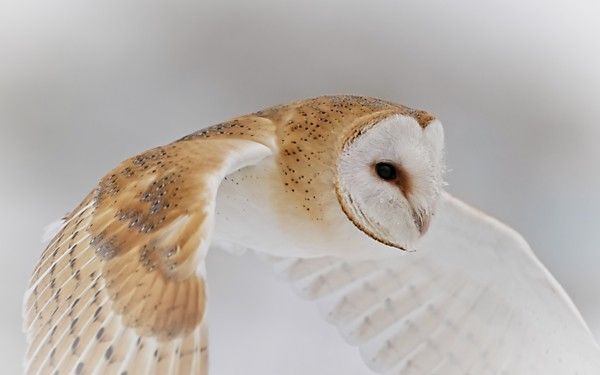
Quartering the ground
A hunting Barn Owl flies low. Most of the time it is no more than three metres off the ground, and often a good deal less, at around one to three metres. It has to be that low, because the sounds it hunts by are tiny, the rustle of a vole in grass or the faint squeak of a shrew, and they fade quickly with distance. The owl flies slowly, back and forth, covering an area again and again, a technique known as quartering. Because prey is hard to detect, an area may need several passes before the owl finds something. Its ground speed is usually somewhere between a standstill and about 16 kilometres an hour, and it is often a good deal slower than that.
When the owl hears something, it does not always dive straight away. More often it stops and hovers, holding its head perfectly still with its face pointing at the sound. It may drop a metre or so, hover again, and only then make the final pounce, with its feet thrust forwards and its wings raised. The owl's ears do most of the work here, and the eyes seem to help in the final moments. The whole thing is beautifully quiet.
Because the owl is often looking down and to the side, it is not always looking where it is going, and hunting owls do sometimes fly into fences, wires and even each other. The bird with its face pointed at the ground simply cannot see straight ahead.
Waiting on a post
A Barn Owl does not always hunt on the wing. Sometimes it perches on a fence post, a gate or a low branch and waits, scanning and listening until something moves. If nothing happens, it may try a different post or fly off to another favourite spot. This sit and wait approach is more common in cold weather. Flying burns energy and loses heat, and a bird sitting quietly on a post with its feathers fluffed up warms the air trapped in its plumage and wastes less. Posts of around two to three metres are ideal, since a low post gives only a limited range.
Owls are not all the same, either. Watchers have found that some individuals favour hunting on the wing, some prefer hopping from post to post, some work along ditches and some concentrate around farm buildings. Barn Owls also seem to avoid tall telegraph poles, which are much loved by kestrels and buzzards, presumably because a hunter that relies on its ears wants to be close to the ground.
Weather, wind and time of day
Barn Owls are creatures of the half light. They mostly leave the roost at dusk, hunt through the evening and again before dawn, and rest in between. But they are not strictly nocturnal. If food is short, or in the cold months, or when a pair is feeding hungry chicks, they hunt in daylight as well. In fact a Barn Owl hunting in broad daylight in winter is often a sign that it is struggling to find enough to eat, and not simply out for a stroll.
Rain is a problem for them. Wet feathers make an owl heavy and noisy, and the sound of rain on the ground and on vegetation masks the little noises the owl listens for. So they avoid hunting in rain, though they may occasionally work in light showers. A gentle breeze is helpful, because wind blowing up a slope gives them free lift. A strong wind, on the other hand, rustles all the grass and makes it hard to hear.
Interestingly, individual birds vary. Some are keen daytime hunters, and others stick strictly to the hours of darkness. Watch a particular owl for long enough and you will find it has habits of its own.
How well do they do?
A Barn Owl in good conditions can catch something every few minutes. Researchers who have watched breeding pairs closely have recorded a male bringing nine prey items to a nest in under an hour, and a busy pair may deliver seventeen items in a single evening. In the few weeks before the eggs are laid, a male may bring anything from ten to seventeen prey items in a 24 hour period. Once the owlets are growing, the number rises to around fourteen a day. That is a lot of voles.
A hungry family is a real test of a male's skill. Some are much better hunters than others, and researchers watching nest cameras have noted that some males are far more attentive and productive than their neighbours. A male in good condition, in good habitat, with plenty of prey around, has a big advantage.
The kill and the meal
A Barn Owl kills with its feet. It grabs the prey in its talons and squeezes harder each time the animal moves, which is usually quick and final. Young owls seem to know how to do this from the start. Owlets practise by gripping sticks, stones and even bits of pipe, and captive birds have been seen clutching and releasing dead prey over and over again. When a bird tackles something bigger, such as a young rat, it may also use its bill to give a sharp bite to the neck or head.
Once it has caught something, the owl usually mantles over it, holding its wings out and lowering its body to hide the prey from any rivals. A bird that is not mantling will do so at once if another owl comes near. Then it either eats on the spot or carries the prey home. A bird carrying food to a nest almost always holds it in one foot the whole way, and then swaps it to the bill at the entrance before going in.
A Barn Owl eats its prey whole, and it likes to swallow head first. The bird positions the animal in its bill, often with the help of a foot, then jerks its head forward and opens its bill to draw the animal in, bit by bit. When the prey is on the large side, the trick reverses, with the head jerking back so that momentum carries the animal down the throat. Swallowing head first means the fur lies flat and the legs fold back, so the animal slides down easily. Even owlets not much more than two weeks old can swallow small voles this way. Birds are different. A Barn Owl will usually pull the head off a small bird and eat the body in pieces.
Read more: Barn Owl Hunting on the website.
Chapter 8 of 23
What Barn Owls Eat
Voles, shrews, mice and the story told by a pellet
Ask a farmer what a Barn Owl eats and you will probably be told rats and mice. Ask an owl what it eats, and the answer, most nights, is voles. The Barn Owl is a specialist. It hunts small mammals in open country, and in Britain it does that better than any other bird.
The big three
In the last few decades, thousands of volunteers have collected Barn Owl pellets from all over Britain and taken them to be picked apart and counted. The results have been very clear. Of well over 180,000 prey items identified from around 50,000 pellets, nearly half were field voles. Common shrews came next, and then wood mice. Between them, those three animals made up about four in every five things the owls ate.

The field vole is the perfect meal for a Barn Owl. It is a small, grey brown rodent with a blunt nose, small ears and a short tail, and it typically weighs between 20 and 30 grams. That is just the right size. It is big enough to give the owl about a third of its daily food, and small enough to swallow whole, easy to carry back to the nest, and simple to tear up for newly hatched chicks. Field voles live in thick, tussocky grass and rarely burrow underground, which is why they are so tied to the kind of habitat we will look at in the next chapter.
Common shrews come second. They are tiny, restless and fast, and a favourite in spring and early summer. Wood mice are a bigger share in summer and autumn, and they are fairly common in hedges and field edges. If you weigh what the owls eat, not just count it, the field vole matters even more, and the wood mouse matters more than the shrew, since a wood mouse is bigger.
The supporting cast
A great many other animals turn up in pellets, but each in much smaller numbers. Pygmy shrews, bank voles and harvest mice make a small contribution. House mice and brown rats are rare in the pellets of most owls, though on farms in a hard winter, the mice and rats around buildings can matter a lot. Small birds, frogs and insects appear now and then. Water voles, moles and dormice are almost never taken.
In a year when field voles are scarce, the little extras count for more. Owls take more shrews and mice, and now and then a young rat, a small bird or a frog. That is why a landscape with lots of different kinds of small mammal is so much better for Barn Owls than a landscape with just one.
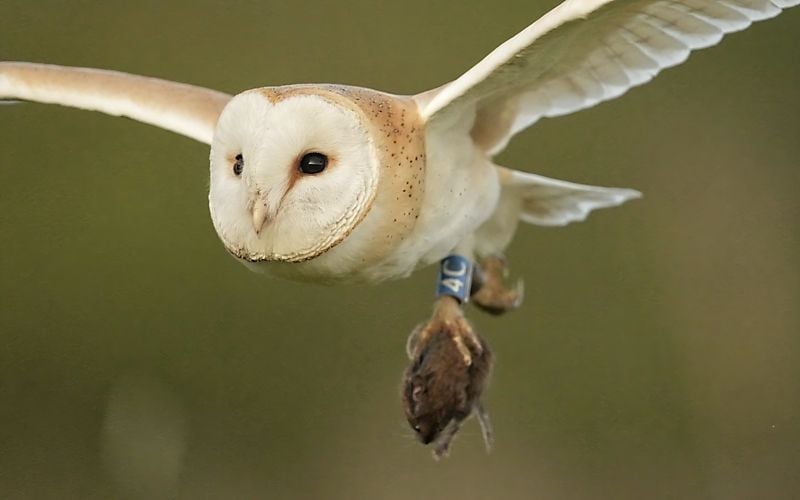
Do Barn Owls eat bats?
Not often, despite what you might hear. Out of more than 180,000 prey items in the national survey, only about three in every ten thousand were bats. That is tiny. A Barn Owl is a bird that flies slowly and low over open ground, not a bird built to snatch a bat from the air, and it is far too big to get into most places where bats live. Occasionally an individual owl takes several, particularly near a roost, but at the scale of the whole country, the effect is insignificant.
Small birds are similar. House sparrows, blackbirds and finches occasionally turn up, and they are usually the commonest species in the area. Barn Owls also share buildings with swallows, wrens, robins and wagtails without harming them, as far as anyone has seen. It is most likely that an owl now and then takes a fallen nestling or an injured bird that would not have survived anyway.
How much do they need?
Working from pellets, researchers have estimated that an adult Barn Owl in winter eats about 75 grams of food a day, close to a quarter of its own body weight. That is roughly three field voles. Captive birds are usually fed a bit less, because they do not have to keep warm or fly all night. During the breeding season the numbers go way up. A male feeding a hungry family may catch a dozen or more animals in a night. On my cameras, each growing owlet can get through three or four small rodents in a single evening, so with four owlets a parent may need to find as many as sixteen deliveries for the young and another three or four for itself.
Because Barn Owls get their water from their food, fresh prey matters, and they rarely bother to drink. A juicy vole is a meal and a drink in one, and it is proportionally far richer in moisture than an insect. You might spot one bathing on a very hot day, but it is a rare sight.
Stashing food
Barn Owls do sometimes keep a little larder. In the run up to nesting, a male may bring more food than the female can eat and leave it in the nest, and it can be eaten later if the weather turns bad. If the weather stays good, it may never be eaten. A male without a mate has been known to stockpile a huge number of animals at a possible nest site, more than a hundred in one case, presumably to impress a visitor. Some birds also stash food at roosts in hard winters. It is an insurance policy, and it can make a real difference in a poor spell.
Pellets: the owl's leftovers
Everything a Barn Owl cannot digest, including fur, bones, teeth and tiny bits of insect, stays in the gizzard, the muscular part of the stomach. The gizzard squeezes it all into a tidy lump, called a pellet, which the owl brings back up through its mouth, usually once a day. A bird about to cough one up looks a bit miserable and will not eat until it is done. It lowers its head, shakes it from side to side, and out comes the pellet.
A Barn Owl pellet is easy to recognise. It is black, smooth and glossy when it is fresh, and it stays dark and fairly hard even when it dries out. It is usually around four to six centimetres long, oval in shape and a couple of centimetres wide, with a dusting of white and grey where bone and fur poke through. Other owls, like the Tawny Owl, produce pellets that are greyer, furrier and untidier. Barn Owl pellets tend to be packed with whole, clean bones.
Finding pellets is one of the best ways to discover where a Barn Owl roosts. Look under beams, on ledges, in the entrance to a nest and on the ground beneath favourite perches. A pile of pellets and white droppings is a sure sign. During nesting, the pellets make good nest material. Insect remains do turn up in some pellets, but they most likely came from the stomachs of other prey, such as fledglings, so Barn Owls are not really chasing insects. A female often breaks them up with her bill and scatters the bits about the nest with her feet before she lays, and the soft, furry mix makes a warm, dry bed. If you put up a nest box, adding a few old pellets and some dry bark chippings can make it more inviting.
Picking a pellet apart
Dissecting a pellet is a fun and easy way to find out what an owl has been eating. You will need a pair of tweezers, a tray, a small dish of water, a magnifying glass and some disposable gloves. Old, dry pellets are the safest, and those sold by suppliers to schools are usually heat treated. If you find a fresh pellet in the wild, wear gloves and wash your hands afterwards.
Gently tease the pellet apart in the water, and separate the bones from the fur. Look for the skulls. Field voles have a zigzag pattern on their back teeth, shrews have a long, pointed skull with tiny teeth tipped in reddish brown, and mice have a rounder skull with a pair of big front teeth. Skulls and jaw bones are the easiest way to count the number of animals in a pellet and to identify them. It is not unusual to find two or three in one pellet, and you will soon start to see the story of a night's hunting spread out on your tray.
Read more: What do Barn Owls eat? on BarnOwl.live has my full write up, with a downloadable fact sheet.
Chapter 9 of 23
Home Ranges, Roosts and Habitat
Where Barn Owls live, and what they need to stay there
A home range, not a territory
Many people picture a Barn Owl as a bird that guards a patch of countryside and chases away rivals. In truth it is a much more relaxed neighbour. Barn Owls do not defend territories. Their home ranges are simply too big to guard, and they overlap a great deal. Watchers have seen owls from neighbouring nests hunting a couple of hundred metres apart, aware of each other and quite unbothered. The only time a Barn Owl really loses its cool is when a strange male walks into the actual nest site, and that seems to be about protecting the mate and not the land.
And what big home ranges they are. It is easy to assume that a bird you always see in the same field never goes anywhere else, but tracking studies show that is not the case. During the nesting season, most of a pair's hunting takes place within a kilometre or two of the nest, in an area of a few hundred hectares. The nest is rarely in the middle of the range. Away from the nest, in winter, owls may commute three or four kilometres to hunt and sometimes even further. In a Suffolk study, several neighbouring farmers each proudly described the resident Barn Owl on their own land, and it took radio tags to show that they were all talking about the same bird.

Sticking with what you know
Barn Owls are homebodies. Once an adult has settled, it will often live its whole life within a single home range, using the same nest and the same roosts year after year. In one long study in Scotland, almost every male nested in the same place from one year to the next, and the females were not much different. Birds that did move usually did so after losing a mate, and nearly always to a site nearby. A pair will also stay together for as long as both are alive.
There is good sense in this. An owl that knows its patch knows where the voles are, where the good posts are, where the wind drops, and which routes are safe on a dark, foggy night. It may even keep a kind of mental map of sounds. A bird that has to start again in a completely unfamiliar landscape wastes a lot of energy, and for an animal that cannot store fat, that can be fatal. It is also why an adult that has been in care after an injury is best released back where it came from.
Roosts
A Barn Owl needs two kinds of home. A roost is a place to rest during the day, and a nest is a place to raise a family. Often they are the same place, but they do not have to be. In a typical range, a bird will use one nest site, between one and four regular day roosts and a few odd corners for nights out, and most pairs roost apart from each other for much of the year. As the breeding season nears, the female moves into the nest site first, and the male follows, and by ten days before laying, they are usually together.
A good roost is high, dry, quiet and out of the wind, with an easy way in and out that leads to open country. It is usually at least three metres off the ground. Barn Owls use farm buildings, church towers, old ruins, hollow trees, quarries, cliffs and occasionally mine shafts. They often tuck themselves between straw bales, which is a wonderful bit of insulation. They will also use dense trees, especially young birds and especially in dry weather, though they seem to be happier in a building or a hollow tree in the long run.
In Britain there is a clear east to west divide. In the west, nearly all nests are in buildings, because there are not many trees with the right sort of hole. In parts of the east, between a third and four fifths of nests are in trees. The birds are not choosing one over the other. They are using what is there, and the same owl will happily swap between a tree and a barn.
There is more on where and how they sleep in Barn Owl Roosting on the website.
Old sites and returning owls
Some Barn Owl sites are ancient. There are buildings and hollow trees where owls have nested for as long as anyone can remember. Even when a site goes empty for years, it is often reoccupied later, and by different birds. One long running monitoring scheme found that over a third of its sites were empty for a while and then came back into use, on average after about three years. The lesson is a hopeful one. A traditional site is worth looking after even if it looks abandoned.
The perfect patch of grass
What makes a place good for Barn Owls? In two words, rough grass. More precisely, the ideal habitat is a semi permanent stretch of thick, tussocky grass, never mown short and never heavily grazed, with a deep mat of dead grass at its base, at least seven centimetres thick. Field voles love it. It gives them cover from above, plenty to eat and a network of runs beneath the surface.
The numbers tell the story. In a well known Scottish study, live traps in short grazed pasture caught no voles at all. Hay meadows caught very few. Rough grazing did somewhat better. But traps set in strips of rough grass two to four metres wide caught many more voles, and traps in strips four to six metres wide caught more than double that again. In a typical farmed landscape there may be as few as fifteen voles in a hectare. In good rough grassland the number can be in the hundreds.
A good range has other things as well. Bushy hedges, isolated trees and small areas of scrub support a wider range of small mammals, which helps when voles are scarce. Fence posts about two metres high give the owls somewhere to perch. Small, isolated patches of rough grass are surprisingly useful, and owls seem quite happy to fly across less suitable ground to reach them. They do not need everything to be joined up.
What they avoid
Barn Owls generally avoid dense woodland, high ground, busy roads and large towns. In Britain they are widespread but patchy. They are commonest in lowland farmland, especially in eastern England, and more scattered elsewhere, and they are missing from the more remote islands, such as the Outer Hebrides and the Northern Isles. Scotland is home to the most northerly Barn Owls in the world.
Boom and bust
The last part of the habitat story is the vole cycle. In many places, field vole numbers rise and fall over a period of about three or four years. When voles are everywhere, Barn Owls lay more eggs, raise bigger broods and survive better, and numbers climb. When voles crash, some pairs do not breed at all, and the population can fall by half or more. The swings are biggest in the north, where the cycle is strongest, and much gentler in the south. This is a big reason why Barn Owl numbers are so hard to pin down.
Chapter 10 of 23
Courtship and Pairing Up
How Barn Owls choose and keep a mate
By late winter, a Barn Owl's thoughts turn to romance. The whole process is quiet, affectionate and, for the male, very hard work. It is also one of the most interesting parts of the year to watch, and if you are lucky enough to have a camera in a nest box, it can be a real treat.
Finding each other
Many Barn Owls already have a partner from the year before, and for them there is nothing much to find. The pair may simply start roosting closer together as the days lengthen. Owls without a mate have to get to work. In spring, unpaired birds take to the air and screech over and over again, often for many minutes, and sometimes for hours on end, in the hope that someone will answer. In a well populated area, the neighbours are probably known already, and a song flight is likely to get a reply. In a quiet area, it can be a lonely business.
Young birds sometimes find a partner in their first autumn, moving into a site left empty when one of the old pair died. Others take longer. Whatever happens, each pair is usually made up of a mixture of experienced birds and youngsters, and the youngsters are often a little later starting their breeding.
Visiting the nest site
When a pair is thinking about nesting, they check out possible sites together. The female usually goes in first and has a good look around, and the male often waits outside and may only peep in briefly after she has gone. The female usually takes the lead, and a pair will often go back to a spot they have used before if it is still available.
Gifts and grooming
Courtship is all about food and touch. The male becomes the main provider, and in the last ten days or so before egg laying, he brings all the food for both of them, which can mean ten to seventeen prey animals in a day. It is a genuine test, because the early spring is the leanest time of the year for prey. His success matters. A male who cannot provide enough may see the breeding delayed, or even abandoned.
Meanwhile, the pair spend hours sitting close together, sometimes only a few centimetres apart, preening each other with their bills and chattering softly. In the pairs I have watched, the female is usually the more active groomer. She works away at a rather meek looking male, who ends up a bit henpecked. This small imbalance can be a nice early clue when you are trying to work out which bird is which. At dusk, the pair may chase each other in and out of the nest place, screeching wildly.
The female becomes less active as the eggs approach. She rests for longer and longer in the nest, and she will call to the male for food, using a louder version of the begging call of a chick. She puts on weight in preparation for the marathon of laying and sitting. Mating becomes frequent at this stage, particularly when the male arrives with a prey item, and it goes on right through the laying and incubation period.
Are they really faithful?
Generally, yes. Barn Owls are usually monogamous, and pairs keep together for as long as both survive. If a mate dies, the survivor often finds a new one fairly quickly, sometimes within weeks. Occasionally a male will breed with two females, especially when food is plentiful, and now and again two females have laid in the same nest.
Males can be quite protective. The only time you will see a Barn Owl attack another Barn Owl is when a strange male enters an occupied nest. This is mate guarding, and it makes evolutionary sense. A male that invests two months of hard hunting in a family wants to be certain the young are his.
Read more: Barn Owl Mating on the website.
Chapter 11 of 23
Nests, Eggs and Incubation
How a family gets started
A nest that is not really a nest
A Barn Owl does not build a nest. There are no twigs, no grass, no feathers. What it does is settle in a dry, dark hollow and lay its eggs straight onto whatever is already there. In a barn, that may be old hay, straw or a beam. In a nest box or a tree, it is often the debris left over from the pellets the birds have coughed up during the previous months. Owls have been known to lay directly onto timber, loft insulation and even plasterboard.
As the breeding season begins, the female often spends time quietly in her chosen spot. She breaks up pellets with her bill and scrapes the older debris with her feet, and sometimes makes a slight dip in the middle. The soft, furry mix is warm and dry, and it soaks up the moisture from the owlets' droppings later on. It is a nest made of leftovers, and it works beautifully.
Where and when
Barn Owls nest in barns, farm buildings, church towers, hollow trees and nest boxes. They like a nest with plenty of room, and they prefer a place with a good view over rough grassland. The entrance should be sheltered from the prevailing wind and rain, so the best direction depends on where you live. Northeast is often suggested, and on my own land, boxes facing northwest have worked best. The entrance also has to be clear, so the birds can fly straight in without any obstruction.
The timing is hugely variable. The great majority of eggs are laid in April or May, but eggs have been recorded very early in the year and very late. Timing depends mainly on food and, to a lesser extent, the weather. Where voles are plentiful and the spring is warm, laying starts earlier. Young females breeding for the first time tend to lay around two weeks later than older, more experienced females.
The eggs
A Barn Owl egg is white, with a slightly dull, chalky finish, and around four centimetres long. As the weeks pass, it often becomes stained and grubby from the nest debris. A typical clutch is four to six eggs, and the average in Britain is a little under five, though clutches of three to seven are not unusual and a few nests have held more.
The eggs are laid at intervals of two to three days, which means that laying takes a week or two. And here is the twist that makes Barn Owls different from most birds. The female starts sitting on them straight away, as soon as the first egg is down. That means the first egg is well into its incubation by the time the last one is laid, and so the eggs hatch one at a time, in the order they were laid.
This is not a mistake. It is a clever piece of planning. If food turns out to be short, the oldest and biggest owlets get fed first, and the youngest go without. In a lean year, a few of the brood survive. In a good year, all of them do.
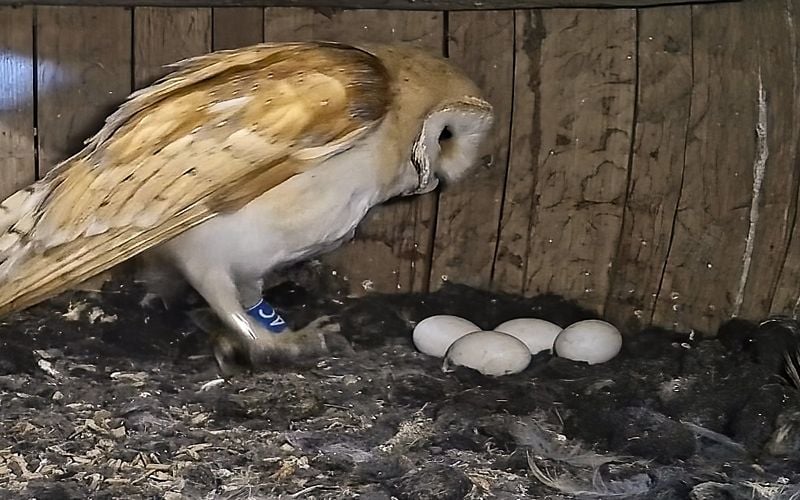
Sitting tight
Incubation takes about 30 to 32 days, and the female does all of the sitting. She rarely leaves, and she loses weight gradually through the weeks as she relies on the male to bring her food. A typical male delivers around eight to ten prey items in 24 hours at this stage, and he often leaves them in a heap by the nest, where they can wait if the weather turns bad. The female can begin to moult while she is on the eggs, so it is not unusual to find a big wing feather in the nest.
Because the male is the only source of food, he has to hunt for the female for a month, and then for the owlets for two months more. Adding that up, a male Barn Owl can be the sole provider for more than two months. He does his best, roosting close enough to see the nest, and often somewhere within the same building. If the nest box has a roosting ledge above the nest, it is usually where you will find him, with the female and owlets below.
Some eggs do not hatch. It is quite normal for one or two eggs in a clutch to fail, either because they were not fertile, or because they chilled, or because the female pushed them aside. On average, around three quarters of eggs hatch, and it is entirely usual to see an unhatched egg on the edge of a nest for the rest of the season. If food is very short, or a female is underweight, or the male has been injured or killed, a pair may give up on the whole clutch.
Disturbance
Sitting Barn Owls are sensitive to disturbance, and it is the male who usually flies off first when something unexpected happens. It is a time when the birds are at their most vulnerable, and it is also a time when they are strongly protected by law, as we will see later. If you think you have found a nest, the best thing you can do is to leave it alone and watch from a distance.
Chapter 12 of 23
Growing Up
From a pink hatchling to a full grown owl in about ten weeks
Few sights in nature are as charming as a nest full of Barn Owl chicks. They start as tiny scraps of pink and end up as fluffy white giants, and in between they go through some remarkable changes. Because they hatch one at a time, a single nest often has owlets of several different sizes, from a tiny newborn to a huge fluffy chick nearly ready to fly.
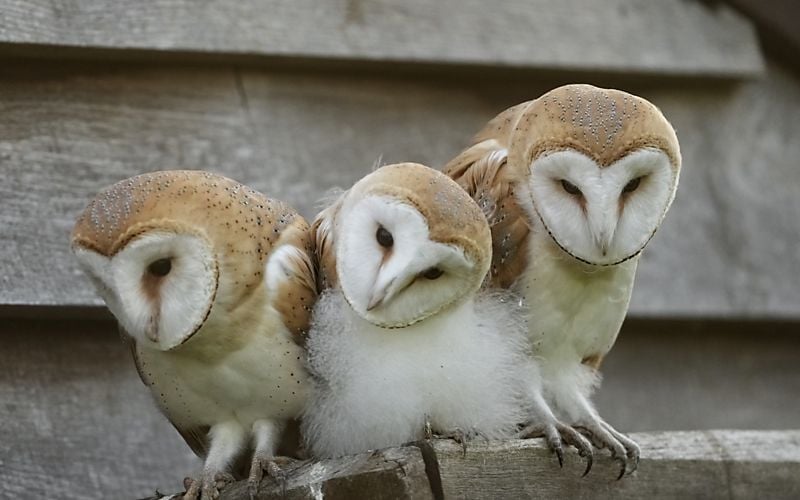

Hatching
Around 30 days after the first egg was laid, the first owlet is ready to hatch. It has a small, hard bump on the tip of its bill, called an egg tooth, which it uses to break through the inner membrane and then chip through the shell, a process known as pipping. The female can feel and hear what is happening, and she often helps by nudging aside pieces of cracked shell. It can take a day or more for the owlet to get free.
A newly hatched owlet is naked, pink and blind, weighs about as much as three or four sugar cubes, and is completely helpless. Within a day, a coat of short white down begins to sprout. The female breaks up small pieces of prey and feeds them to her newborn, and she stays close to keep the chick warm. Within a day or two, the owlet is calling for food, in a little shivery twitter which soon changes to the hiss and snore we met earlier.
Another egg hatches every two to three days, and so it goes, until the last one arrives a week or two later. Being first in line is a big advantage, and the oldest owlet gets a head start on food, size and strength.
The first weeks
In the first few weeks the female does most of the brooding, and the male brings all the food. The owlets grow quickly. Their eyes open at about ten days old, and shortly afterwards they start to shuffle around the nest. By the time they are two to three weeks old, they are strong enough to swallow small animals whole. Some owlets have been seen swallowing a shrew or even a small mouse at around two weeks, and by four weeks they can manage a medium sized field vole. It is remarkable to see a chick of only a few weeks manage a mouse almost as big as its own head.
At about three weeks, a thicker, warmer second coat of down grows in. The owlets no longer need constant brooding, and the female gets her first real chance to leave the nest and hunt. The chicks huddle together to keep warm on cold nights, and spread out and pant on hot days. By the time the youngest is three weeks old, the female has stopped brooding altogether and she often roosts elsewhere in the building or nearby.
The nest is not a tidy place, and yet it is oddly clean. The owlets produce very wet droppings with a strong smell, but the layer of fur and pellet debris soaks it all up, and the chicks stay remarkably dry. That distinctive, ammoniacal smell can hang around a nest long after the owls have left.
Nearly grown
At about a month old, the owlets are covered in thick white down and are surprisingly playful. They wrestle, hop, pounce on imaginary prey and pull at things with their beaks and feet, and they jostle for a place at the front when an adult arrives with food. By around 40 days, they have reached their full skeleton size and their maximum weight, and some are heavier than their parents, at over 400 grams. Then they gradually slim down, which is quite normal, and they lose a bit of weight before they fly.
From here, the flapping leads to jumping, the jumping leads to short hops and the hops lead to messy first flights. At around eight weeks old, most owlets are starting to fly, though at first only a short distance and often back to the nest again. After about ten weeks, they look a lot like adults, and they roost on one leg like their parents. They often sit on a ledge outside the nest at night, waiting for the parents to fly in and pass a vole straight from claw to claw.
Learning to hunt
As far as anyone knows, Barn Owls are not taught to hunt. Parents do not run lessons. Instead, the young learn by instinct and practice. They start by pouncing on blowing leaves and other bits of moving debris, and gradually work up to real prey. Young owls that were reared in captivity and released have done fine, and that is proof that the skills are built in. The parents keep bringing food to the nest for a good while after the young have fledged, and the young often come back to roost there for weeks.
Danger at the nest
Growing up in a nest has its risks. Owlets are curious, clumsy and often at the edge of the nest when the adults arrive. Between about three and eight weeks old, they are at risk of falling from the nest. It is not something the parents do deliberately, but the adults ignore any fallen owlet, and a young bird that cannot climb back up will not survive for long. Foxes take those that spend too long on the ground, and a buzzard has been seen grabbing a fledgling from a nest platform. This is why the design of a nest box matters, as we will see in chapter 15.
There are other risks too. In a poor year, when food is short or when weeks of rain have made hunting difficult, the youngest owlets may starve. Sometimes the older chicks will eat a sibling that has died or is dying, and sometimes the bodies are simply trampled into the nest. In lean years up to nearly half the chicks in a nest can die. In good years, only a small fraction do.
How many make it?
The number of owlets that survive to fly varies hugely from nest to nest and year to year. On average, a British nest holds around three owlets, and roughly two and a half of them fledge. But nearly three in every ten nesting attempts fail completely, and a lucky pair with lots of voles nearby may raise six or seven. A pair may occasionally raise a second brood in the same year when food is abundant, particularly if the first nest was early.
Leaving home
The last stage of the story is dispersal. From about twelve to sixteen weeks old, most young owls leave the area where they were born, usually in August and September. They go alone, at different times and in different directions, and they wander over an area they do not know. At first they may move a few hundred metres at a time, sleeping in trees and hedges, and gradually they explore further. In the first month, the typical distance from the nest is about three kilometres. By the third month it is about twelve.
Most young owls settle within ten kilometres of where they hatched, and a good many end up close to their parents. Many take over a site left empty when an adult has died, and pair up with the surviving bird. By the end of November, most have found a home. Getting there is the most dangerous stage of a Barn Owl's life, and more die during those months than at any other time. It is the story we turn to next.
Chapter 13 of 23
Survival, Dangers and Numbers
Why life is short for most Barn Owls, and how many there are
A short life for most
It may surprise you to learn that most wild Barn Owls do not live very long at all. Of all the young owls that leave the nest, only around one in four survives its first year, and some studies suggest the figure is a bit higher, at up to about a third. Adults do better, with roughly two in three surviving each year. A bird that gets through its first year can expect to live to around four years old, and a bird that reaches five is considered an old one.
Some do far better. The oldest wild Barn Owl found through British ringing records was a little over fifteen years old. Owls in captivity, safe from hunger, traffic and bad weather, often live to twenty or twenty five, and one bird at an owl centre in Gloucestershire reached the astonishing age of 34, confirmed by the paperwork attached to its leg ring. The gap between the wild and the captive birds tells you how dangerous the outdoor life really is.
Experience counts, too. In one long study in Scotland, a bird's chance of surviving another year improved as it grew older, from around a quarter in its first year to nearly two thirds by its third. An owl that has learned to hunt from fence posts in the cold and to roost between straw bales is a better survivor than a youngster that has only ever hunted on the wing, and slept out in the open.
When do owls die?
The deaths come in two waves. The first and biggest is in autumn, when the young of the year are dispersing and are most likely to starve, get soaked, be killed by a fox or a buzzard, or be hit by a car. The second comes in late winter, in January and February, when both adults and first year birds run short of food and the weather is at its worst. Spring and summer are safer times, at least for those who have already settled.
The hazards
The list of things that can kill a Barn Owl is long. Here are the main ones.
- Starvation. A Barn Owl carries very little fat and cannot go long without food. A run of wet or snowy weather that stops it hunting can be deadly, and so can a crash in vole numbers.
- Cold and wet. Soft feathers soak up water, and a wet owl cannot fly or keep warm.
- Roads. Grass verges are full of voles, and owls hunt along them and fly low across the road. Road deaths are one of the biggest known causes, particularly for young birds dispersing in autumn and for adults in late winter, when they roam furthest. Major roads seem to take birds that would otherwise have survived.
- Poison. Rat and mouse poisons, particularly the powerful second generation types, can pass along the food chain when an owl eats a poisoned rodent. Tests on dead owls have found traces in a large share of them. The full effect on their health and their numbers is still not known.
- Water troughs. Barn Owls trying to bathe or drink sometimes fall into deep, steep sided containers such as cattle troughs and drown, because they cannot climb out with wet wings.
- Wires and fences. Owls flying low sometimes hit overhead cables and other obstacles.
- Predators. Foxes take owls that end up on the ground, and buzzards occasionally take young ones by day. Adults have very few enemies.
- Falls from the nest. Owlets that tumble out of a nest with a low entrance often cannot get back in, and are ignored by their parents.
- Loss of homes and hunting grounds. Old barns are converted or collapse, hollow trees are felled, and rough grassland is ploughed, mown or overgrazed.
None of these hazards is new, but taken together they mean that a pair of Barn Owls is always living a little on the edge.
The people who study them
A lot of what we know comes from volunteers and researchers who have spent years watching, ringing and tracking owls. They fit tiny radio tags, weigh and measure nestlings and follow them for months. They look at nest cameras. One of their most important discoveries is that the survival of young owls after they leave the nest matters more to the total population than any other stage of life. Raising the number of young that survive their first winter would do more for Barn Owls than laying more eggs or fledging more chicks.
How many are there?
Nobody knows exactly, and it is worth being honest about that. Barn Owls are hard to count. They are mostly active at night, they nest in hidden places, and their numbers can double or halve in just a few years as voles come and go.
The best picture we have goes something like this. In 1932, a survey estimated about 12,000 pairs in England and Wales, and it was already clear that numbers had fallen over the previous decades. They declined further in the middle of the twentieth century, hit by pesticides, the loss of hunting grounds and the harsh winters of 1947 and 1963. A big national survey in the mid 1990s, called Project Barn Owl, came up with about 4,000 pairs for the UK, give or take around a third. That was the first reliable count. Since then, no one has managed an equally trustworthy nationwide figure. Sightings and nest records suggest the population grew for a while, and figures of 10,000 pairs or more have been suggested, but the numbers have also swung up and down with the weather and the voles.
What we can say is that the Barn Owl was moved from the Amber list of conservation concern to the Green list in 2015, reflecting the fact that it was doing better than it had been. It is a bird that has improved, and yet it is still one bad winter away from a bad year.
Chapter 14 of 23
History, Law and Folklore
Ghosts, superstitions and the rules that protect Barn Owls today
A bird of the old farm
For most of British history, the Barn Owl was a familiar neighbour. Through the eighteenth and early nineteenth centuries it was probably our commonest owl, living in the lofts and towers of farms, churches and country houses. Then things began to go wrong. Persecution increased, and Victorian collectors and taxidermists were eager for stuffed owls to put in glass cases. By the early twentieth century, people were already worried about falling numbers.
The decline picked up speed after the Second World War. Farming became more intense. Hedges were pulled out, old barns were converted into houses, rough meadows were ploughed or drained and farmland was sprayed with chemicals. Poisons such as the organochlorine pesticides worked their way up the food chain, and severe winters in 1947 and 1963 took a further toll. Owl numbers fell to a low point in the 1970s and 1980s.
Since then, the story has been more hopeful. Farmers, landowners and volunteers have put up thousands of nest boxes, planted hedges, created strips of rough grass and looked after old buildings. Conservation groups have built up a huge amount of knowledge about what the owls need. The result is a species that has recovered a good deal, though it is not out of the woods.
Ghosts and omens
A pale bird that glides silently out of the dark, screams in the night and lives in old ruins was always going to attract stories. In many places, people took its screech as an omen of bad luck or death, and country folk hurried indoors when they heard it. The bird's ghostly look earned it names such as ghost owl and white owl. Some folklore was gentler. In many places, owls were believed to protect the barns where they roosted, and people were glad to have them because they kept the mice down.
These days, most of us see a Barn Owl as a symbol of a healthy countryside, and finding one in your local field is more likely to make you smile than shiver. Even so, the old associations linger. There is a reason why so many people say they feel a little thrill of something otherworldly when a Barn Owl slips past in the dusk.
The law
In Britain, all wild birds are protected under the Wildlife and Countryside Act 1981, and the Barn Owl gets extra protection because it is listed on Schedule 1 of the Act. In simple terms, it is an offence to kill, injure or take a Barn Owl, or to take or destroy its eggs. It is also an offence to damage or destroy an active nest. And because of the Schedule 1 listing, it is an offence to disturb a Barn Owl at or near a nest that contains eggs or young, or to disturb its dependent young, whether you meant to or not. Penalties can include large fines and even a prison sentence.
What does disturbance mean in practice? It is anything that might cause an owl to leave its nest or change how it behaves, such as walking up to a nest, shining lights, playing recorded calls, using flash or making noise close by. The protection begins when the birds are nesting, and in practice it starts when the first egg is laid. It continues until the young are independent. Newly fledged owlets are protected wherever they are, even when they have left the nest.
Only licensed people can lawfully go near an active Barn Owl nest to inspect it. In England, licences are issued by Natural England, and other parts of the UK have their own agencies. Trained volunteers and researchers carry out nest checks and ringing under licence, and they follow strict rules to keep any disturbance to a minimum. If you have a nest box and want to know whether it is occupied, ask an experienced, licensed person, or use a camera that has been installed properly and outside the breeding season.
The rules on buildings and trees matter too. If you plan to convert a barn or fell a hollow tree and you think Barn Owls may use it, get advice from an ecologist first. In many cases the work can be timed, or a replacement roost or nest space can be provided, so that everyone comes out of the process happy.
Chapter 15 of 23
Helping Barn Owls
Practical ways to make a difference, from rough grass to nest boxes
The good news is that Barn Owls respond well to a bit of help. You do not need to own a farm, though it certainly helps if you do. Many of the best ideas are simple, cheap and kind to the rest of the wildlife too. This chapter sets out what makes the biggest difference, in the order I would tackle it. Food comes first, then safe places to live, then the dangers.
Start with the food
The single best thing you can do for Barn Owls is to give them somewhere to find voles. That means rough grass. If you have a bit of land, think about leaving a strip along the edge of a field, a hedge or a ditch, and let it grow. The tussocky grass will build up a thick mat of dead stems and leaves underneath, and the voles will move in. A strip four to six metres wide holds far more voles than a narrow one, so go for width if you can.
- Leave the strip alone for as long as possible. Rough grassland that is mown every year, or grazed short, soon loses its voles.
- If you need to cut it, do a section at a time, and only every few years, so there is always some left standing.
- Keep hedges, scrub and the odd tree. They give shelter to a wider range of small mammals, which helps when voles are scarce.
- Put in a few fence posts about two metres high along the edge of the grass, so the owls have somewhere to perch and watch.
- Do not worry too much about joining everything up. Small, separate patches of rough grass are surprisingly valuable.
A mown garden does not appeal to a Barn Owl. If yours is small and tidy, you can still help, by keeping a wild corner and making sure nothing you do harms the owls in the neighbourhood. But a large garden next to rough grassland is a much better bet for a nest box than a small suburban plot.
Say no to poison
Rat and mouse poisons put owls at risk, because a poisoned rodent can be slow to die, and an owl that catches one may take in the poison too. If you have a rodent problem, use traps, keep food stored properly and block the gaps that let them in. If you do have to use poison, follow the instructions to the letter, use it only where you need it and pick up any dead rodents. Better still, ask a professional who knows how to protect wildlife.
Make troughs and tanks safe
Deep, steep sided troughs are a serious drowning hazard. The simplest fix is to fit a ramp or a floating plank or a rough ledge so that any animal that falls in can climb out. Check them from time to time to make sure the ramp is still in place. A bird that gets soaked in a trough has no easy way to escape.
Think about roads
You cannot make the roads safe by yourself, but you can make some difference. Slow down at dusk and dawn, especially on rural roads with grass verges and hedges, since it is when owls are most active. If you manage roadside land, ask whether the verges could be left rougher away from the carriageway. A wild verge is good for voles, but it also draws owls to the road, so it is a matter of thinking about where such habitat helps and where it causes harm.
Give them somewhere to live
If you have a suitable spot, a nest box is one of the most rewarding things you can put up. Barn Owls are hole nesters that have lost many of their natural sites, thanks to the loss of old trees and the conversion of barns. A good box can offer a safe, dry place to sleep and raise a family.
Before you begin, remember that a nest box is only worth putting up in a place where Barn Owls can actually live. It should be close to rough grassland, quiet and private, and away from busy roads. A box in the wrong place will sit empty for years.
Choosing the spot
- Face the entrance away from the prevailing wind and driving rain. Local weather differs, so think about where your own storms come from. On my land, boxes with the entrance pointing northwest have been the most successful and have stayed warm and dry.
- Choose a spot that overlooks rough grass, because that is where the owl will hunt on the wing. Aim for at least an acre of good hunting ground nearby, and ideally two acres or more.
- Make sure the owls have a clear, open flight path to the entrance, with no leaves, branches or wires in the way.
- In a tree, fix the box about ten to sixteen feet up, which is roughly three to five metres. Fourteen feet, or about four and a half metres, has worked well for me. If it is too low, you get more trouble from predators such as stoats.
- Pick a quiet place, away from busy roads and yards.
Choosing a design
Safe design matters a great deal. Barn Owl chicks are curious and clumsy, and an old style box with a low entrance hole is a death trap. Think of the inside as a small room and not a birdhouse. A whole family of growing owlets has to fit, grow and flap about for weeks. Here is the sizing checklist I use for my own boxes.
| Entrance hole | Ideally about 130 by 130 millimetres. The minimum is 100 by 100 and the maximum is 150 by 150. |
|---|---|
| Entrance to floor | At least 450 millimetres from the bottom of the hole to the nest floor, so growing owlets do not tumble out when they start jumping and practising flight. |
| Nest floor | 0.25 to 0.5 square metres is a good range, with an absolute minimum of 0.2. Aim for around 0.4. |
| Landing platform | Outside the entrance, at least 0.125 square metres (about 20 by 50 centimetres), with a lip about 10 centimetres high. |
| Roof | Thick roofing felt or another waterproof material that will last at least five to ten years. |
| Access | A hinged lid or hatch, so you can clear out old nest debris. |
| Fixings | Rust proof screws, nails and fittings. |
| Timber | A long lasting natural preservative such as beeswax, pressure treated timber, or natural oak, which needs none. |
The external platform is a balcony for the owlets. It is where the adults land with food, and where the young first see the outside world. From there they can climb or jump onto the roof and, with luck, onto nearby perches, so it matters a lot for their safety. It also makes the box more appealing to the adults.
Keep the sides overhanging the floor so the box is as watertight as possible, and add a few drainage holes in case water does get in. The inside must stay dry through prolonged heavy rain from any direction.
Building one from a whisky barrel
I did not set out to show anyone how I build my boxes, so I never took a full set of step by step photographs, but I took a few along the way, and here is the gist of it, in case it is useful to you.
Old whisky barrels make brilliant owl boxes. They are solid oak, so they last for years, and old barrels are often sold cheaply as garden planters, so they are easy to find. A barrel around 700 millimetres across gives a Barn Owl the ideal floor area of about 0.4 square metres. For Tawny Owls, you can cut some height off a barrel, or use a slightly smaller one.
The basic steps are straightforward.
- Open it up. Saw the top off the barrel to leave an open topped oak barrel.
- Remove the charring. Barrels are charred on the inside during making, which hardens the wood and adds flavour to whatever is stored in it. That black, whisky smelling layer is not something you want inside an owl box, so I strip it back to clean oak with a wood carving disc on a cordless angle grinder. Wear thick gloves, arm protection, goggles, a dust mask and ear defenders, and work carefully in such a confined space.
- Cut the entrance hole. For a Barn Owl, the bottom of the hole needs to be at least 450 to 500 millimetres above the floor, so owlets cannot fall out before they can fly.
- Fit an inside ledge. Just below the entrance, I always fit a perch. It helps the owl walk in, and doubles as a place to snooze and keep watch. It is not in many designs, but in my experience it makes a real difference to whether owls want to use a box at all.
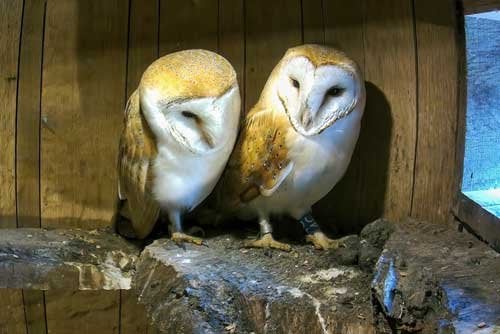
- Add a roof and an outside landing ledge. Barn Owls need a generous ledge, since owlets will queue up on it waiting to be fed, and you do not want any of them tumbling off in the scrum.
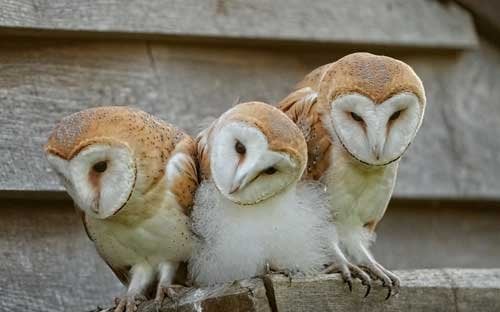
- Get help to put it up. These boxes are heavy, so lifting one into a tree is a two or three person job at least. I have used ladders, pulleys and a rope winch, and I would never try it alone. Always do this outside the breeding season, since Barn Owls are protected by law and it is an offence to disturb them at or near an active nest.
Buster’s own barrel sits inside an old barn, against the wall, with the owls reaching it through a short, oak lined tunnel about 150 millimetres square. That has turned out to have real advantages. It feels like a building to the owl, which Barn Owls like, and it is far less likely to be taken over by a Tawny Owl than a box in a tree. It is also safe from stoats, since the entrance is high up the outside wall, and safe from cats, since the barrel itself is fully enclosed.
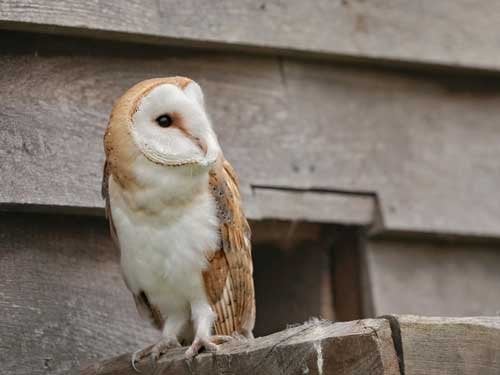
If you would like the fuller version, with the photographs I did take along the way, and how I have added cameras, gentle lighting and even backup power, it is all in my article on building a whisky barrel owl box on BarnOwl.live.
Looking after it
Nest boxes do not need constant attention, but they do need an annual check. Once a year, outside the breeding season and after you have made sure it is empty, look inside and clear out the old bedding, pellets and other debris. If you let it build up, the box gets shallower and less safe for owlets. Jackdaws and stock doves sometimes take over Barn Owl boxes, and jackdaws in particular stuff them with sticks, wool and string, which can make a box unusable. Clear it all out after the breeding season. Wear gloves and a dust mask.
And be patient. A box can take months or years to be used, and some are never occupied. If you have done everything right, keep the faith. Barn Owls are creatures of habit, and a site that has been quiet for years can suddenly be discovered.
Buildings and conversions
Old buildings are just as important. If you own a barn, do what you can to keep it in good condition and to leave a way in for the owls, such as an open pitching hole or a gap in the gable. If you are planning to convert or repair a building, talk to an ecologist first. Barn Owl roosts are protected while they are in use, and with a bit of planning, it is often possible to keep the owls, or provide a good alternative, and still get your building work done.
Things not to do
- Do not go and peer into a nest that might be occupied. It is against the law and it can cause real harm.
- Do not use recorded calls to try to lure a Barn Owl. It can cause stress and is regarded as disturbance.
- Do not feed wild owls. They need to hunt for themselves, and feeding attracts rats.
- Do not pick up a healthy owlet on the ground. We will look at what to do in the next chapter.
Chapter 16 of 23
Watching Barn Owls
Where to go, what to look for and how to be a good visitor
When and where
The best way to see a Barn Owl is to go to the right place at the right time and stay quiet. Try a calm, dry evening in the hour before dusk, beside rough grassland, field margins, riverbanks or the edges of marshes. In winter, when they often hunt earlier, you have a fair chance of seeing one in the late afternoon. In summer, while the parents are feeding a family, the evenings before sunset can be very good, and you may see a male working the same stretch of grass over and over again.
Look for the pale shape first. A Barn Owl flying low over a field looks like a piece of paper blowing in the wind, and it can be surprisingly hard to pick out against a pale sky. Then watch how it flies. It moves slowly and steadily along a line, tilts a little from side to side and hovers now and then. When it drops, mark the spot and see whether it comes up with anything.
How to behave
Barn Owls are much more relaxed about people than many birds, as long as you stay put. They tend to ignore things that do not move, and there are plenty of stories of an owl landing on a gatepost within a few metres of a motionless watcher. The moment you move suddenly, they notice. So find a comfortable spot, stay still and let the owl come to you. A car parked at a gateway makes a very good hide.
- Keep well back from any building or box where you think owls may be nesting.
- Never use torches or spotlights on owls. A moving light unsettles them.
- Do not play recorded calls to attract them.
- Keep dogs under control, especially in the summer when young owls are on the ground.
- Do not reveal the exact location of a nest online or to strangers. Nest robbing and disturbance are real problems.
Photography
A good photograph of a Barn Owl is a wonderful thing, and I would never want to put anyone off. But the bird comes first. Keep at a distance, use a long lens and do not get close to a nest, however tempting. Do not use flash near roosts or nests, and never move vegetation or alter a site to get a clearer view. If in doubt, walk away. The law protects Barn Owls from disturbance, and that includes disturbance by photographers.
Watching without disturbing
One of the best ways to see what goes on inside a nest is through a camera. Nest cameras, properly installed by people who know what they are doing and outside the breeding season, let you watch courtship, egg laying, hatching and growing owlets from the comfort of your sofa, without a single feather being ruffled. It is how much of what we have learned about Barn Owl family life has come to light. If you enjoy this guide, you will love the live streaming cameras on the BarnOwl.live website, which broadcast from the Peak District National Park.
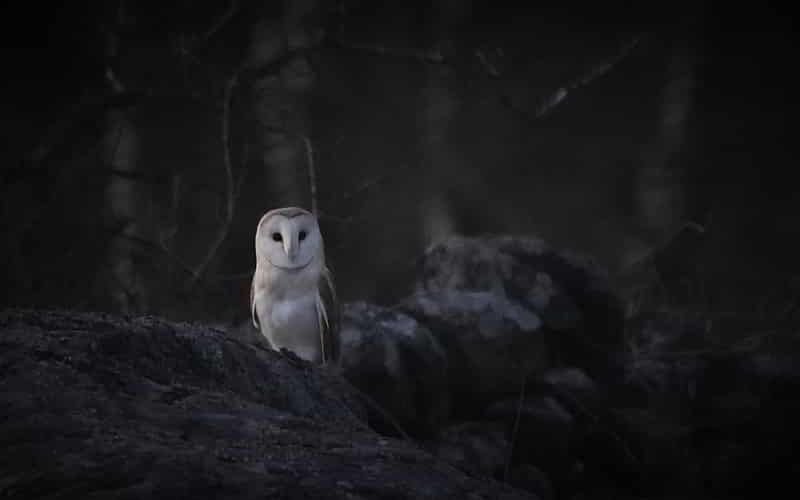
What to do if you find an owl in trouble
Now and again, someone finds a Barn Owl that is injured, wet, thin or on the ground where it should not be. Here is what to do.
- Stay calm, and watch from a distance for a few minutes. A fully feathered young owl on the ground at night may simply be exploring, and its parents may be nearby.
- If it is obviously hurt, soaked, weak, or in immediate danger, from traffic or a fox for example, it needs help.
- Wear gloves if you have them. An owl can strike with its talons. Gently cover it with a towel and place it in a cardboard box with air holes, in a warm, dark and quiet place.
- Do not try to feed it. Do not give it water, milk or bread.
- Contact a wildlife rescue, a vet or the RSPCA as soon as you can. Barn Owl specialists know exactly what to do.
A Barn Owl that cannot fly properly has a very slim chance in the wild, so getting it to expert care as quickly as possible is the kindest thing you can do. And please do not keep it. Wild Barn Owls are protected by law, and taking one home is an offence.
Chapter 17 of 23
The Nest Cam Decoder
What you are actually watching, and what it all means
Watch a Barn Owl nest camera for ten minutes and you will probably have questions. Why is she making that noise? Why did he land on her back? What was that thing she just coughed up? Is that egg supposed to be pushed over there? This chapter is a decoder for the live view. It explains the main behaviours you will see on camera, when they happen and what they mean, so you can enjoy the show and know what you are looking at.
Everything here is based on what Barn Owls do in the wild, and on hours of watching real nest boxes. Barn Owls are wild birds and every nest is different, so treat the timings as a guide, not a rulebook.
Start here: what am I seeing?
| What you see | What it usually means | When |
|---|---|---|
| Loud rasping snoring from a bird in the nest | A female or owlet saying I am here, and I am hungry or want attention | Female from courtship, owlets from the day after hatching |
| A shivery twittering or chittering | Friendly greetings between a pair, or a very young owlet that is cold or wants food | Courtship, and the first weeks after hatching |
| A long shivery screech | A song, usually from a male in flight, calling to a mate or keeping in touch | Late winter to summer, mostly at dusk and night |
| One bird climbing on the other's back | Mating | Courtship, laying and incubation |
| A bird arriving with something dangling from one foot | A prey delivery, usually a vole | Any time, with more deliveries at dusk and through the night |
| Female shuffling and rocking on the eggs | Adjusting and turning the eggs to keep them evenly warm | Throughout incubation |
| A miserable looking owl shaking its head, then a dark lump drops | A pellet being coughed up | About once a day |
| Lots of wing flapping from the owlets | Practice, clearing down feathers and asking for food | From about five or six weeks old |
Chittering, snoring and screeching
Barn Owls make far more sounds than most people expect, and once you know which is which, the audio on a nest camera becomes a running commentary.
Chittering and twittering are soft, friendly, excited sounds. Between a pair, you will hear little squeaks, chirrups and twitters when they meet or when one preens the other. A male often twitters as he arrives with food. Newly hatched owlets have a thin, shivery twitter that can sound just like a tiny bird shivering, and it is heard most in the first month.
Snoring is a rough, wheezy hiss repeated over and over. It is mainly a female and owlet sound. It is not only a food call. It is a steady way of saying I am here, and it also helps the male find the nest and keeps the pair bond strong. It gets louder when the bird is hungry. Owlets start snoring within a day of hatching, and by eight weeks old a hungry one can be heard from a long way away.
Screeching is the famous call, a long, drawn out, shivery scream. It is usually given in flight, so you may only catch it on camera as a distant sound outside the box. Unpaired birds do it for minutes on end in spring.
Hissing and bill clicking are warnings. If you see an owl swaying, spreading its wings and hissing at the lens or at an intruder, it is a defensive display, and it is completely normal.
Mounting: why does he keep landing on her?
It can look abrupt, and it happens a lot, but mounting is simply mating. It begins during courtship, becomes frequent as the female nears laying, and carries on through egg laying and into incubation. It very often follows a prey delivery, when the male arrives with food and the female accepts it. You may hear the female make a frenzied, purring snore and the male a quick, staccato squeak.
Why so often? Partly it is because the eggs are laid over a week or more, and partly it is because the male wants to be the father. In my nest boxes, I have seen mounting continue through much of the breeding process, long after you would think it was needed. It is normal, and it does not mean anything is wrong.
Prey deliveries: the male's night shift
A prey delivery is the most important thing you will see on camera. The male arrives, usually with a vole or other small animal in one foot. He often pauses at the entrance and transfers the prey to his bill before he comes in. The female may call to him in a louder version of the begging call, and she will take the food and either eat it whole, head first, or tear it up.
How many deliveries should you expect? In the final ten days before laying, a male may bring ten to seventeen animals in a day. That falls to about eight to ten a day while the female is sitting. Once the owlets are growing it climbs to around fourteen a day, and it drops to about seven as they get ready to fly. Some males are far better providers than others, and a good hunting night after a poor one can leave a small heap of uneaten prey by the nest. That heap is a larder, and it is a very good sign.
Not everything that comes in is a vole. Voles are grey brown with a blunt nose, small ears and a short tail. Shrews are tiny, with a long pointed snout. Wood mice have a long tail and big ears. A young brown rat is much bigger, and now and then a small bird or a frog turns up.
Egg turning and sitting
A sitting Barn Owl looks still, but she is busy. Like most birds, she moves her eggs during incubation, using her bill and feet and shuffling her body to roll them gently and rearrange them, so that they warm evenly and do not stick to the lining of the nest. You will often see her rock slightly, settle and shift, especially after she has had a break.
She rarely leaves for long. The male brings her food, and she gradually loses weight over the month. The eggs are laid two to three days apart, and she starts sitting as soon as the first is down, so the first egg is well on its way by the time the last is laid. Incubation lasts about 30 to 32 days.
You might notice that an egg is pushed towards the edge of the nest and left there. It is quite normal for one or two eggs to fail, because of infertility or chilling, and unhatched eggs often stay on the edge until they are buried in the pellet debris. When a hatching is near, you may see a tiny crack, and later a chick with a small bump on its bill, called the egg tooth. The female often helps by moving pieces of shell out of the way.
Pellets: what did she just cough up?
Sooner or later you will see an owl look thoroughly miserable. She lowers her head, shakes it from side to side, opens her mouth several times and, with a bit of effort, a dark, tidy lump drops out. That is a pellet, and it is made of the fur and bones she could not digest. Barn Owls produce about one a day.
Fresh pellets are black, smooth and glossy. Over time they pile up on the nest floor and turn grey. Before she lays, the female often breaks them up and scatters the pieces with her feet, which makes a warm, soft, absorbent bed. So a nest full of pellets is not a mess. It is the whole point.
Other things you will see
- Preening. A pair often preen each other, and in the pairs I have watched, the female usually does more of it, and the male ends up rather henpecked. It is also a helpful clue to which bird is which.
- Owlets lying flat. Perfectly healthy owlets often lie down to rest until they are almost full grown. A chick lying flat is not necessarily a dead one.
- Owlets of different sizes. The eggs hatch one at a time, so the chicks are different sizes. The oldest is largest and gets first pick of the food.
- Wing flapping. From about five or six weeks, the owlets flap a lot, which helps clear the down, practises flying and gets attention when food arrives.
- Jumping on imaginary prey. Owlets pounce on pretend mice, and it is a sign they are getting ready to hunt.
- The male roosting nearby. During the day he often roosts close to the nest, and in a box with an upper ledge, you may find him sitting up there.
What to expect, week by week
| Stage | What the camera usually shows |
|---|---|
| Late winter to spring | Pair roosting together, preening, mating, male bringing gifts, female settling into the nest and breaking up pellets |
| First egg to last egg | An egg every two to three days, with the female sitting from the first |
| About 30 to 32 days | Incubation, with steady prey deliveries and the female turning eggs |
| Hatching | Owlets emerge one at a time, two to three days apart, and the female tears up food for them |
| Weeks 1 to 3 | Tiny chicks under the female, twittering and snoring, then a thicker second coat of down |
| Weeks 3 to 6 | Chicks huddling, eating whole prey, growing fast and starting to flap |
| Weeks 6 to 8 | Hopping, flapping, jumping on pretend prey and sitting at the entrance |
| Weeks 8 to 10 | First short flights, often back to the box again |
| After about 10 weeks | Fully grown owlets still returning for food and sleep, before they disperse in autumn |
Normal, or a worry?
Most things that look worrying on camera are perfectly normal. A tiny owlet getting less food than its brothers is a natural part of how Barn Owls cope with lean years. So is the occasional egg that never hatches. What would be a concern is a young owl outside the nest that seems injured or in danger. Barn Owls are protected by law, so please never approach a nest yourself, even if you think you can see a problem on camera. If you are worried about a wild owl, contact a wildlife rescue.
Chapter 18 of 23
Ringed Owls: Meet Mia, Buster, LK and 3F
What a handful of little rings can tell us about my own owls, and about the species
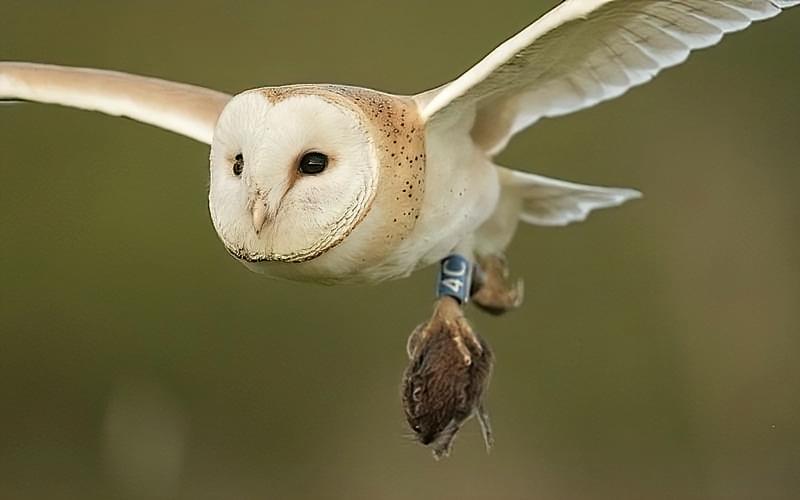
Some of the owls on our cameras wear jewellery. Look closely at one of my owls and you may see a bright blue ring with two characters on it. Look at another and you will see only a plain metal ring. Those rings are not decoration. They are part of a scientific scheme that helps us understand where young Barn Owls go, how long they live and what happens to them along the way.
My nest boxes are in the Hope Valley area of the Peak District, and a local group of volunteers has now identified four owls that have used them, not just two. In this chapter I will introduce them, explain how ringing works in the UK, and share what the ringers and other researchers have found. If you ever spot a ringed owl yourself, the last section tells you exactly what to do.
What is bird ringing?
Bird ringing is one of the oldest ways we have of finding out what wild birds get up to. In Britain and Ireland it is organised by the British Trust for Ornithology, the BTO, and it has been going for more than a hundred years. Every year over 900,000 birds of all kinds are ringed by more than 2,500 trained ringers, and most of them are volunteers.
Each bird gets a light metal ring with its own number. Every time someone catches, finds or reads that number, it adds a clue about where the bird was, when, and what it was doing. Put thousands of those clues together, and you begin to see how long birds live, how far they travel and what stops them getting there.
Ringing Barn Owls
Barn Owls are fully protected by law, and it is an offence to disturb one at or near a nest without a licence. So the people who ring them are experienced, trained and licensed. Ringers usually ring the chicks while they are still in the nest, because then you know exactly when and where the bird hatched. They work quickly and carefully, and leave the family in peace. They also count the brood, which is how we know how many chicks a typical nest raises in an area, and that turns out to be an important clue about how the owls are doing.
Two kinds of ring
An owl can wear two very different kinds of ring, and the difference matters when you are trying to work out who is who.
| Feature | Metal ring | Colour ring |
|---|---|---|
| What it is | A light metal ring with a unique number, fitted by a licensed ringer | A plastic ring with letters or numbers, worn as well as the metal ring |
| Who fits it | Ringers across the country, under the BTO scheme | Individual projects and groups, each with its own colours and codes |
| Can you read it? | Rarely. The number wraps round the leg, so you usually need the bird in the hand or a lucky photograph | Often, with binoculars, a telescope or a camera, without catching the bird |
| Where to report it | The BTO, through EURING | The project or local ringing group, or the BTO |
The Sorby Breck Ringing Group
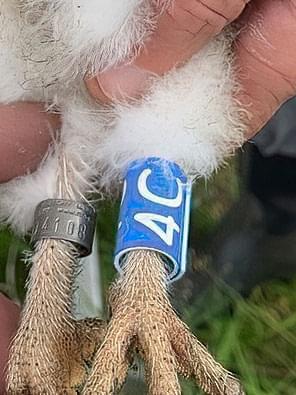
Mia, Buster, LK and 3F have all been ringed by the Sorby Breck Ringing Group, and I want to say a proper thank you to them. They are a group of bird ringers based around Sheffield and north Derbyshire, who work across Derbyshire and South Yorkshire. They are an independent group, affiliated to the Sorby Natural History Society, and part of the national network of ringing groups that feed their results into the BTO's database.
The group was formed in 1979, when the Sorby Ringing Group and the Breck Ringing Group joined together. Each of them was ringing about 1,000 birds a year, and the totals have grown steadily since. Their aim is to provide data from ringing to support the conservation and knowledge of birds in Derbyshire and South Yorkshire. They run ringing stations across the area every month, hold ringing demonstrations, and ring everything from tits and warblers to swans and owls. One of their recoveries was a Fieldfare ringed in Derbyshire in October 2020 that was later found in Finland, 1,974 kilometres away.
Like so many wildlife organisations and charities, all of this is unpaid. It takes many hours of training to become a licensed ringer, and the ringers do it in their own time, because they love wildlife. It is easy to forget how much of what we know about our birds comes from people like this.
For the last three years, the group has been part of the Northern England Raptor Forum's colour ringing project for Barn Owl chicks. As well as the usual metal ring, each owlet gets either a blue ring with white letters, or an orange ring with black letters, worn on the left leg. The big idea is to find out how far young owls travel after they leave the nest. It is generally believed that most move between about 9 and 14 kilometres from where they hatched, but nobody knows the whole story.
For me, the group has turned four anonymous owls into individuals with histories. For Buster, I pieced his ring number together myself, from a series of CCTV screenshots taken over several visits, and then got his full details from the BTO, with the Barn Owl Trust pointing me in the right direction. For Mia, and for the two new arrivals below, a member of the group, Bryn Roberts, kindly sent me their details directly.
Mia and her blue ring

Mia's blue ring read 4C. The group told me she hatched in a brood of four in 2024, on moorland a few kilometres from my boxes. It is only two characters, but that is the whole point. It was short enough to read from a distance, and big enough to show up in a photograph. You can see it in my pictures of her, and it meant that every time she landed on the perch or flew past a camera, I knew exactly who I was looking at.
Losing Mia
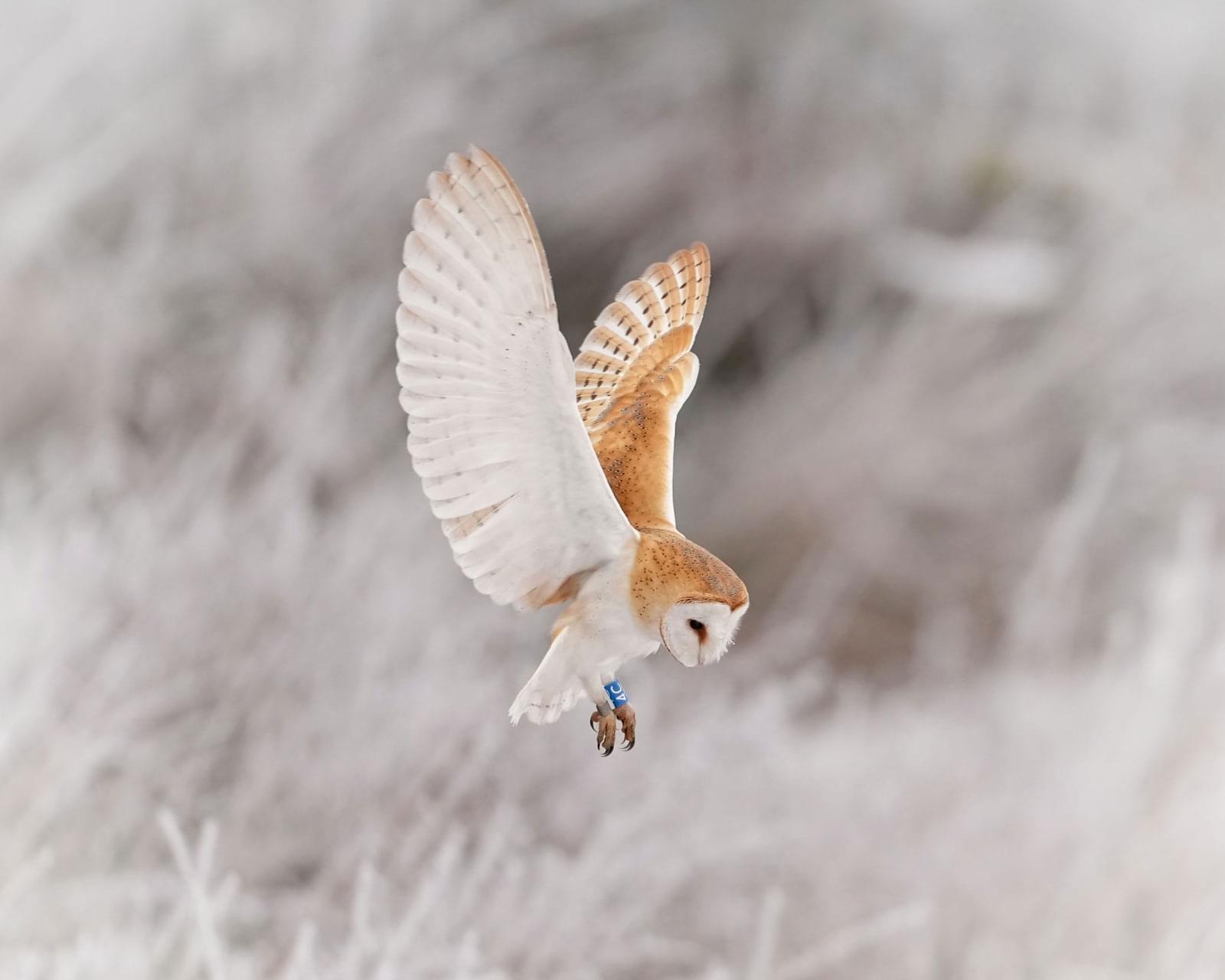
Sadly, Mia is believed to have been killed while she was out hunting. She was sitting on a wall when her distress call was heard, and it was loud enough to make Buster leave his nest box. A stoat or a red kite is the most likely culprit, as both had been seen around at the time.
Mia had a good history before that. She was one of four chicks that fledged from her natal box, and she went on to have a successful brood of her own with Buster. Sadly, one of her three siblings did not fare so well. It moved west after fledging and was killed in a road accident that September, a reminder of just how dangerous that first year on the wing can be. There was a change at Mia's old family box too. Her mother disappeared over the winter of 2024 to 2025, and a new female had taken over the box by the summer of 2025.
It is a sad reminder of how hard life is for a wild Barn Owl, even for one that knows its patch well. It is also why the ringers' work matters. Every ring that is read, and every loss that is reported, helps us understand what owls are up against.
Buster and the metal ring
Buster was ringed by the same group, but before the colour ringing project began, so he only ever had the traditional metal ring. That is a lot harder to read. The number is stamped right round the ring, so you only ever see part of it at once, and the ring is small, shiny and often at the wrong angle.
It took me plenty of patience. I took lots of pictures from my nest camera, and photographed the ring in different orientations, until I could put the whole number together. Then, with the help of the Barn Owl Trust, I got Buster's full details from the BTO. Here is his official record.
| Ring number | GY68782, a BTO metal ring |
|---|---|
| Species | Barn Owl |
| Ringed | 13 July 2023, as a nestling, by the Sorby Breck Ringing Group at a confidential site in Derbyshire |
| Found | 18 June 2024, nesting in one of my boxes with three owlets, with the ring number read from my camera |
| Time between | 341 days after ringing |
| Distance | In the same area as where he was ringed |
Buster is a survivor. The ringers quote studies suggesting that around 70 per cent of young Barn Owls do not make it through their first year, and many die on roads or from hunger. Buster made it through his first winter, and about a year after he hatched, he was raising a family close to where he was born. And he is still going strong. He has now raised three broods with three different females.
LK: a young owl on the move

I also asked about another owl wearing a similar blue ring, this one reading LK. Bryn told me that LK hatched in 2025, in a brood of five, on another estate a few kilometres away. LK has since been spotted twice at one of my nest boxes, so it seems this young owl has found my land worth visiting. Bryn asked me whether I thought LK could be a male, which is a question I would love to be able to answer.
Both sightings were caught on camera. Once, LK turned up on Buster's favourite hunting post, and another time LK was peering into the entrance of Buster's own nest box, which made for a nervous few minutes of watching. Buster did not seem impressed by the visit.
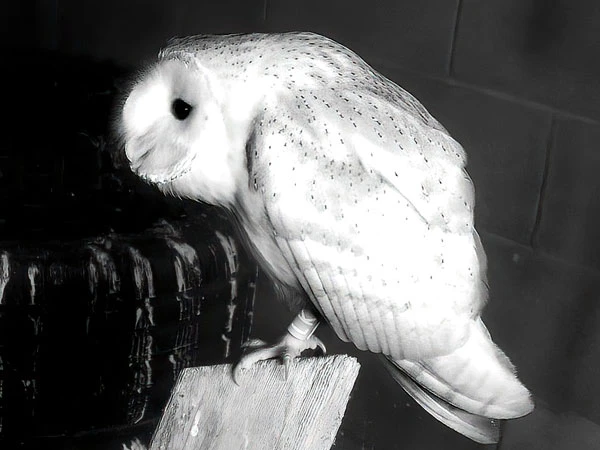
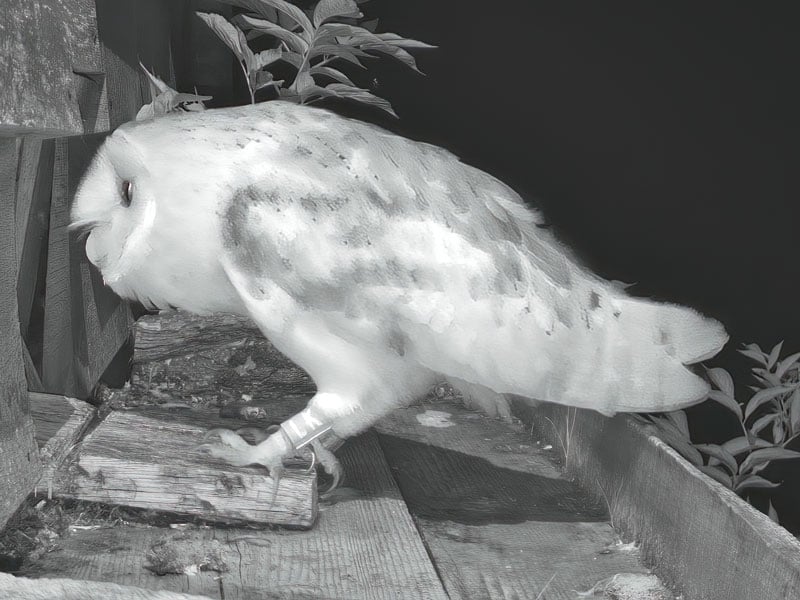
A new arrival: 3F
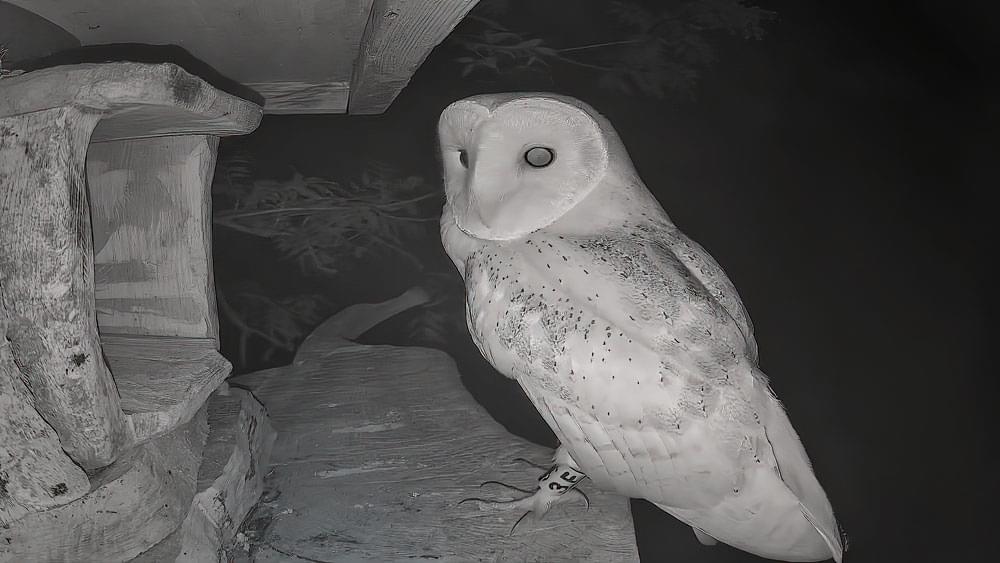
Since I first started keeping track of these owls, a third ringed owl has turned up on my cameras. This one hatched in 2026, so it is very young, and it comes from the Totley area near Sheffield. It was ringed by the same group, some distance from my boxes, which shows once again how far these young owls will explore before they settle.
On the night camera, I could just make out the letters and numbers on 3F's ring, in much the same way I once puzzled out Buster's. But because the camera works by infrared light at night, it cannot show colour, so I could not tell what colour the ring actually was. The Sorby Breck Ringing Group confirmed for me that 3F's ring is orange. It is a good reminder that photo identification from a night camera has its limits. You can read the ring, but you may not always know what you are looking at until someone who was there can tell you.
What the ringers have found
The Sorby Breck group's Barn Owl Report for 2026, written by Annie Adlington, gives a real picture of life for Barn Owls in the area where they work, and it is good news this time, after a much harder 2025. These are the parts that stood out for me. I have marked which figures are the group's own and which are national.
- More owlets ringed (the group’s own figures). The group colour ringed 94 owlets in 2026, almost double the 49 of two years before, and up from 62 in 2025.
- Bigger broods (the group’s figures). The average brood size rose to 4 chicks, matching the UK average, after 3.1 the year before.
- A kinder year (the group’s figures). 2026 had its own dry spell, but it came later in the year, after most broods had already been raised, unlike the early droughts of 2025.
- How far they go (local figures). Of 32 recovered birds, the median distance travelled was 11.1 kilometres, and 91 per cent stayed within 30 kilometres of home. Most that did move went south west, along the Derbyshire and South Yorkshire border.
- One remarkable journey (the group’s figures). One bird, ringed in Derbyshire, was found in a nest box in Powys, mid Wales, 184.7 kilometres away. That is more than ten times further than any other recovery.
- A hazard I had not thought of (the group’s figures). Two birds drowned in water troughs this year, and one in a water butt. Roads are still one of the biggest dangers, but water is an easy one to overlook.
- Roads (a UK estimate). The Barn Owl Trust estimates that of the roughly 12,000 young that Britain’s 4,000 pairs produce in a typical year, between 3,000 and 5,000 are killed on roads, mostly in autumn while young birds are dispersing.
Recoveries are still coming in as I write this, since Barn Owls are easier to spot in the shorter days of autumn and winter, so these figures are likely to grow before the year is out.
Other groups, other colours
The Sorby Breck group is not the only one doing this. Colour ringing of Barn Owls is spreading, and other groups run projects of their own. The Sussex Barn Owl Group, for example, fits its owls with a red ring with white letters on the left leg. So Mia's blue ring was one system among several. Closer to home, the Northern England Raptor Forum, which the Sorby Breck group is part of, has even started colour ringing kestrels, with black rings and white letters or numbers, so it is not just owls worth watching for now.
There is no single national code. Each project picks its own colours and letters, which means a ring only makes sense when you know the colour, the characters, which leg it is on and, ideally, which project it belongs to. Approved colour marking projects are listed on a European colour ring register, with a contact for each one, and the BTO explains more on its page about why birds are colour marked.
How far do young Barn Owls travel?
This is the big question that all these rings are trying to answer, and it is more interesting than you might expect. You will see different numbers quoted, depending on how and when they were measured.
- The average. The Barn Owl Trust puts the average dispersal distance for ringed chicks at about 7.8 kilometres, or 4.8 miles. Most move less than 10 kilometres, and a small minority go a very long way.
- The median. In the BTO's ring recovery work, the median distance between ringing and recovery for birds ringed as chicks rises from about 3 kilometres in the second month after fledging to about 12 kilometres by the fourth month. That is roughly where the 9 to 14 kilometres figure sits.
- When they go. Most of the moving is done within four or five months of leaving the nest. After that, adult owls hardly move at all, and a BTO analysis found that they shift only about 2.2 kilometres between breeding sites. Female chicks tend to travel further than males.
- The long haulers. A few owls travel far. The Barn Owl Trust lists Devon to Yorkshire, Germany to west Cornwall and the Isle of Wight to Normandy. One owl ringed at its nest in the Highlands in June 2007 was hit by a car 624 kilometres away in west Wales that December, and an owl ringed as a chick in Shropshire in 2015 was recaught alive 114 kilometres away in Warwickshire.
- Mainland Europe. Owls there often go much further, with more than 50 kilometres common, and the Barn Owl Trust says they disperse further in years when food is short.
- Sussex so far. In the Sussex colour ring project, two chicks moved more than 40 kilometres, four were seen 12 to 22 kilometres away and six roamed only 2 to 4 kilometres. The farthest recovery was 46 kilometres.
- The Sorby Breck group, in more detail. Using 32 recovered birds, the median distance was 11.1 kilometres, and 91 per cent stayed within 30 kilometres of where they hatched. One exceptional bird travelled 184.7 kilometres to mid Wales, more than ten times further than any other.
And what about my own owls? Here is something I find fascinating. Buster, Mia and LK all travelled only a few kilometres from where they hatched. According to the BTO, Buster was found nesting in the same area where he was ringed. Mia hatched a few kilometres from my boxes, and so did LK, whose home estate was the Longshaw Estate. That was where BBC Springwatch was filmed in 2025, chosen for its wildlife, and the National Trust said that barn owls and kestrels nest there.
Three owls is a very small sample, and I would not claim it proves anything. But it fits a simple idea. If there are good hunting grounds and safe roosting places close by, and there is enough food, why go anywhere else? A young owl that finds rough grassland full of voles and a dry, quiet place to sleep has everything it needs. The long journeys may be owls that found no room or not enough food at home. The Barn Owl Trust notes that in mainland Europe owls disperse further in years when food is short, although it says this does not seem to happen from year to year in Britain, so it is a lovely question for the ringers to keep working on.
Why colour rings are such a good idea
Most of what we know about dispersal comes from ring recoveries, and the Barn Owl Trust points out that those are largely birds that have died. That is useful, but it only tells us where an owl ended up. A colour ring means anyone with binoculars or a camera can identify a live bird without catching it, so the same owl can be seen again and again. That could tell us where young owls settle, how long they live and how many make it.
My guess is that as more groups adopt colour rings, and more people learn to look for them, we will slowly build up a much better picture of what Barn Owls do, based on sightings in the field. It is early days, and nobody has to use the same system, but every ring that is read helps.
What to do if you see or find a ringed bird
As winter gets closer and prey becomes harder to find, Barn Owls hunt more in daylight, which gives us more chances to see them. Whatever the ring looks like, this is what to do.
- Note the details. Write down the species, the colour of the ring, the letters or numbers, which leg it is on, whether there is a metal ring on the other leg, the date, the place and what the bird was doing. A clear photograph of the leg is often enough.
- Keep your distance. Never disturb a nest or try to catch a bird to read its ring.
- Contact the local ringing group. A Barn Owl colour ring is very likely to belong to a local project, so the local group may already know who is using that colour combination, and can tell you about the bird. You can find groups on the BTO ringing groups page.
- Report it to the BTO as well. For a colour ring, you can also look for the project on the European colour ring register, or use the EURING ring reporting website.
- If you find a dead ringed owl. The Barn Owl Trust asks for all dead Barn Owls in the UK to be reported to them, ringed or not, and birds with BTO rings should be reported through EURING.
- If it is alive but injured or in trouble. Contact a wildlife rescue or a vet for advice.
You can read the full story, with more links, in my article Barn Owl Ringing in the UK, and the group's whole report is on the website as the Barn Owl Report 2026.
A huge thank you to the Sorby Breck Ringing Group, the BTO and the Barn Owl Trust, who made these stories possible, and whose work helps every owl in the county.
Chapter 19 of 23
Owl ID and Sounds
Telling Britain's owls apart by sight and by ear
Many people do not know which owl is which, and most of us hear owls far more often than we see them. A hoot in the woods, a screech across a field, a squeaky whistle from a hedge: each one belongs to a different bird. This chapter helps you tell Britain's five regular owls apart, first by how they look and then by how they sound.
Of the five, you have already met two well. The Barn Owl is the pale, silent hunter of rough grass, and the Tawny Owl is the brown owl of the woods that gives the famous hoot. The other three are the Little Owl, the Long eared Owl and the Short eared Owl, and they are much less familiar to most people.
Five owls at a glance
| Owl | How to spot it | Where and when | What it sounds like |
|---|---|---|---|
| Barn Owl (about 33 to 39 cm) | Very pale, almost white underneath, with a golden buff back and a heart shaped white face. Dark eyes. Long legs. | Farmland and rough grass, hunting low at dusk and through the night, sometimes by day. Roosts in barns and old buildings. | A long, shivery screech. Also hisses and snoring. It never hoots. |
| Tawny Owl (about 37 to 43 cm) | Chunky and brown, streaky underneath, with a big round head, a round face and big dark eyes. No ear tufts. | Woodland, parks and large gardens. Mostly at night. By day, roosts against a trunk or in ivy. | The male gives a long hoot with a quavering follow up. The female gives a sharp kewick. Together they make the famous twit twoo. |
| Little Owl (about 22 cm) | Small and stocky, with a flat topped head and bright yellow eyes that give it a frowning look. Brown, spotted with white. | Farmland, orchards, old parkland and stone walls. Often seen by day on posts, walls and branches. Introduced to Britain in the 1800s. | A sharp, plaintive kiew note, and other short, barking calls. |
| Long eared Owl (about 35 to 37 cm) | Slim and upright, with long ear tufts and bright orange eyes. Streaky orange brown. Very secretive. | Woods, conifer plantations and thick scrub. Roosts in dense cover by day. Often nests in old crow nests. | A soft, low, repeated hoot. Young birds make a squeaky call like a creaking gate. |
| Short eared Owl (about 34 to 42 cm) | Long winged and streaky, with yellow eyes ringed with dark feathers, a pale face and short ear tufts that are rarely seen. | Open moor, rough grass and coast. Hunts by day as well as at dusk. Many arrive from northern Europe in winter. Nests on the ground. | A deep, hollow hooting in display flights, along with a harsh bark and wing claps. |
Three quick questions to ask yourself
If you see an owl and want to name it, ask three questions.
- Is it white and pale? That is almost certainly a Barn Owl. A Short eared Owl can look pale from a distance, but it has a streaky, buff body and long wings.
- Is it brown and chunky, in trees? That is very likely a Tawny Owl, which is the most numerous and widespread owl in Britain.
- Is it small, out in the day, sitting on a post or wall? That is probably a Little Owl. A Long eared Owl has orange eyes and ear tufts and stays hidden, and a Short eared Owl is a long winged bird quartering open ground.
Hearing owls
Sounds are often the easiest way to identify owls, because they do not hide their voices. Here is how to tell the main calls apart.
The screech. A Barn Owl's screech is a long, harsh, shivery scream, a little like someone hissing and gargling at once. It is nothing like a hoot. If you hear a scream across a field, it is a Barn Owl, or perhaps a Tawny Owl, since a female Tawny's kewick can also sound like a shrill scream. The difference is that a Tawny's call is short and sharp, and usually comes with a hoot nearby.
The hoot. A proper hoot comes from a Tawny Owl, a Long eared Owl or a Short eared Owl. The Tawny's is the loudest and most musical, a long hoot, a pause, then a quavering phrase. The Long eared's is quieter and lower, and repeated. A Short eared's is a deep, hollow series of hoots, usually given in a display flight over open ground.
The duet. The famous twit twoo is not one owl. A female Tawny gives the sharp kewick, and a male answers with a hoot.
The squeaks. A squeaky, creaking call in summer, like a rusty gate, often comes from young Long eared Owls. Hungry Barn Owl owlets make rasping hisses and snores instead.
Hear them for yourself
Reading about a call is one thing, and hearing it is far better. I am building a sound page with real recordings of Barn Owls and Tawny Owls, including male and female calls, so you can listen and compare. Scan the code with your phone to go straight to it.

Chapter 20 of 23
Barn Owls Around the World
A quick tour of a very widely travelled bird
Our British Barn Owls are only a tiny part of a very big story. The Barn Owl family has spread across almost the entire planet, and the birds that live in other countries have adapted in interesting ways. Here is a short tour.
Europe
Across mainland Europe, Barn Owls live very much as our birds do. They are sedentary, faithful to their mates and their sites, and they hunt small mammals over open country. The main differences are in the menu and the homes. In Britain the field vole is the star, but on the continent there is a wider mix of voles, shrews, mice and rats, and the common vole, which lives in burrows and copes well with short grass and crops, is a major food in many countries. Common voles do not live in mainland Britain at all.
In parts of southern Europe, Barn Owls live comfortably in towns and cities, and they take roosting sparrows from street trees. Nests are often higher above the ground than in Britain, probably because of stone martens, and are commonly in churches, towers, windmills and castles. The Irish owls are different again. There are no field voles in Ireland, so the owls there rely heavily on mice, rats and shrews, including a couple of newcomers that have arrived in recent years.
Africa, Asia and beyond
In Africa, gerbils and multimammate mice take the place of voles on the Barn Owl's menu. In parts of Asia, rats are a mainstay, and in the great rice growing regions, the owls have become valued allies of farmers, and in some places they are encouraged with nest boxes. In North America, voles and pocket gophers are favourite foods, and in many islands, there are local forms adapted to the food on offer. The bird is remarkably flexible so long as there are small mammals to catch and somewhere dry to sleep.
Barn Owl relatives
The Barn Owl has some interesting cousins. The grass owls live in tall, damp grassland in Africa, Asia and Australasia. They are darker on the back and look rather like Barn Owls that have come home from a muddy walk. The masked owls of Australia and New Guinea are big and powerful, and some can tackle animals as large as a possum. The sooty owls live in rainforest. The bay owls of tropical Asia are small, shy and rather odd looking, with a heart shaped face of their own. They all share the same family features, from the heart shaped facial disc to the comb on the claw, and they are a reminder that the Barn Owl's success story is really a family one.
The far north
The Barn Owl is a bird of warm places, and Britain sits close to the cold limit of its range. Scotland has the most northerly Barn Owls in the world. That makes our birds more vulnerable to bad weather than their cousins in warmer places, and it explains a good deal about why cold, wet winters and springs can be so damaging. It also makes it likely that a warmer climate might help them in the north, though it might change the small mammals they rely on in ways that are hard to predict.
If you would like to meet more of the family, the Owls Around The World page on the website is a good next step.
Chapter 21 of 23
Myths, Mix Ups and Quick Answers
Clearing up some common questions
Some common myths
Owls attract a lot of myths, and it is worth setting a few straight.
- Barn Owls hoot. They do not. A hoot means a Tawny Owl. A Barn Owl screeches, hisses and snores.
- Owls can see in complete darkness. No. They see very well in dim light, but in true darkness, a Barn Owl depends on its hearing.
- Owls can turn their heads all the way round. Not quite. They can turn about three quarters of a full circle.
- Barn Owls eat bats. Very rarely. In a survey of more than 180,000 prey items, only a tiny fraction were bats.
- Barn Owls are territorial. Not in the usual sense. They have huge home ranges that overlap, and they do not defend them.
- A Barn Owl seen by day is ill. Not necessarily. It may be hungry, feeding chicks or simply making the most of a good afternoon. It is worth watching, but there is no need to panic.
- Barn Owls keep rats and mice under control. They eat plenty, but studies suggest that predators like owls follow the numbers of their prey, and do not control them. They are a lovely addition to a farm and no substitute for good pest management.
Quick answers
These are the questions I get asked most often.
Where do Barn Owls sleep? In dry, high, quiet places, such as barns, hollow trees, church towers and nest boxes. Sometimes they tuck themselves between straw bales.
How long do Barn Owls live? Around four years in the wild, though some live more than ten, and captive birds can live far longer.
What do Barn Owls eat? Mostly small mammals, especially field voles, common shrews and wood mice.
Do Barn Owls mate for life? Generally, yes, for as long as both are alive, though a newcomer can sometimes upset a pair.
Can I put up a nest box in my garden? Only if it is a large garden next to plenty of rough grassland. Otherwise the owls will not find enough to eat.
Is it legal to look at a nest? Not without a licence. It is an offence to disturb Barn Owls at or near an active nest, so watch from a distance.
Why do Barn Owls hunt in the daytime? Usually because food is short, the weather has been bad or there are hungry chicks to feed.
Fancy testing what you have learned? There is a Barn Owl quiz on the website.
Chapter 22 of 23
Over 100 Barn Owl Facts
Quick answers to the questions people ask most
This chapter gathers more than a hundred of the most common questions about Barn Owls, with short, plain answers you can dip into at any time. Some of it repeats what you have read earlier in the guide, which is deliberate, so that each answer stands on its own.
About the Barn Owl
What is a Barn Owl?
The Barn Owl (Tyto alba) is a pale, silent flying owl of open farmland, rough grassland and field edges. It hunts mainly at dusk and through the night, often ranging low over grass. It nests and roosts in barns, old buildings, hollow trees and nest boxes, which is how it got its name.
How big is a Barn Owl?
It's a medium sized owl, about 33 to 39 cm long with a wingspan of 80 to 95 cm. It looks bigger than it is because its feathers are so fluffy.
What does a Barn Owl weigh?
Usually 250 to 350 g, and females are typically a little heavier than males. That's remarkably light for its size, which helps with slow, silent flight.
What does a Barn Owl look like?
It has a white, heart shaped face, dark eyes, and golden buff back and wings with soft grey markings. The underparts are white to pale buff, and the legs are long and feathered.
Why do Barn Owls look so pale at night?
Their light coloured underside is unlike anything else at night, and as humans, we find it unusual, especially under car headlights.
Are there different colours of Barn Owl?
Yes. Individual birds range from very white to a richer buff, and females are usually darker with flecks on the chest. Across Europe, there's also a darker, orange breasted form that occasionally turns up in Britain. Most UK birds are the pale, white breasted type.
How many species of Barn Owl are there?
Britain has just one. Worldwide, the answer depends on who you ask, because DNA studies have led to extensive reclassification. Owls in the Americas are now usually treated as a separate species, leaving the Old World Barn Owl with around ten regional forms. The one in Britain is the western European form, Tyto alba alba.
How do you tell a male from a female?
It's tricky and not always reliable. Males tend to be whiter underneath with few or no spots, while females are often buffer and more heavily speckled on the breast. Females are also slightly larger and, during the breeding season, have a bare brood patch on their bellies. Seeing a pair together makes the difference much easier to spot.
How can you tell a Barn Owl from a Tawny Owl?
A Barn Owl is pale, with a white heart shaped face, dark eyes and long legs. A Tawny Owl is chunkier and brown, with a rounder face and a mottled body. Their voices differ too: Barn Owls screech, while Tawnies give the classic hoot and "kewick" calls.
How long do Barn Owls live?
Most don't live long. Around two thirds of young die in their first year, and the average life expectancy in the wild is only about 4 years. A few live beyond 10, and the oldest known wild UK birds have passed 15. Captive birds can live over 20 years.
Where in the world are Barn Owls found?
On every continent except Antarctica, which makes them among the most widespread birds of all. They occur across Europe, Africa, the Americas, Asia, and Australia, as well as many islands.
Why are Barn Owls called "ghost owls"?
Their pale plumage, silent flight and eerie screech made them seem supernatural to people long ago. They appeared out of the dark in old churches and ruins, and a lot of folklore and superstition grew up around them.
Senses & Adaptations
What adaptations does a Barn Owl have?
- Silent flight: soft, velvety feathers and comb like edges on the wing feathers muffle the sound of flight.
- Super sensitive hearing: the flat facial disc funnels sound to the ears, which sit asymmetrically on the skull so the owl can pinpoint prey in three dimensions.
- Large, forward facing eyes: these are tuned for low light.
- Flexible neck: it can turn its head about 270°.
- Strong feet: the talons are sharp, and the middle claw has a comb like edge used for preening.
Why is a Barn Owl's face heart shaped?
The face is a sound collecting dish. Stiff, curved feathers guide noise towards the ears hidden on either side, much like a satellite dish focusing a signal. The owl can subtly change the shape of the disc to help it pinpoint faint rustles in grass.
Can Barn Owls see in the dark?
Their eyesight is excellent in low light, but in complete darkness they rely on hearing. They can catch prey in near total darkness by sound alone.
How do Barn Owls see so well?
Their eyes are large and tube shaped, with big pupils that let in lots of light. The retina is rich in cells that work in dim conditions, so their eyes are far more light sensitive than ours. Both eyes face forward, which gives them good depth perception.
Can Barn Owls move their eyes?
No. Their eyes are held rigidly in bony sockets, so they turn their whole head instead. That's why their long, flexible neck matters so much.
Can Barn Owls see in colour?
Probably only weakly. Their eyes are tuned for brightness and movement in low light rather than for rich colour.
How good is a Barn Owl's hearing?
Exceptional. They can work out where a sound is coming from with an error of only a degree or two, which is why they can hit tiny prey in the dark.
Do Barn Owls have ear tufts?
No. The "horns" on some other owls are just feather tufts and have nothing to do with hearing. A Barn Owl's real ears are slits tucked beneath the feathers of its facial disc, set at slightly different heights so it can judge whether a sound is above or below it.
Why do Barn Owls bob their heads?
An owl's eyes are fixed in their sockets, so it moves its whole head to see. Bobbing gives it slightly different viewpoints, which helps it judge distance and depth and pinpoint sounds. It's also seen when an owl is curious or wary.
How can a Barn Owl turn its head so far?
Owls have around twice as many neck bones as we do, plus specially adapted blood vessels that keep blood flowing to the brain during a twist. That lets a Barn Owl look about 270 degrees, which is three quarters of a full turn. It can't spin a full circle, but it can look straight behind itself.
Do Barn Owls blink?
Yes, but in a slightly odd way. Like other owls, they close the upper lid to blink and the lower lid to sleep. A thin, see through inner eyelid also sweeps across the eye to clean and protect it.
What calls and sounds do Barn Owls make?
Not the "twit twoo", which is a Tawny Owl. Barn Owls give a long, harsh screech, and they also hiss, click their bills and make purring or twittering sounds. Chicks make a "snoring" or hissing noise when begging for food.
Why do Barn Owls screech?
The call has several jobs: announcing a bird's presence, attracting a mate, keeping in touch with a partner, and raising the alarm. Because the call carries well at night, it's often the first clue that an owl is around.
Why can't a Barn Owl hoot?
Barn Owls belong to a different family from the "true" owls, such as the Tawny Owl, that hoot. Their voices work differently, so their repertoire consists of screeches, hisses, snores, and clicks.
How fast do Barn Owls fly?
Slowly and buoyantly when hunting, often at less than about 25 km/h. That easy pace lets them scan the ground and hover before pouncing. They can go faster when travelling.
Do Barn Owls have a good sense of smell?
No, it's poor. They rely on hearing and sight.
Why do Barn Owls have feathered legs and feet?
The feathering keeps the legs warm and helps cushion them against the bites and scratches of struggling prey. It also adds to the owl's soft, quiet profile in flight.
Are Barn Owl feathers waterproof?
Not very. Their plumage is soft and fluffy, built for silence rather than weather protection, so it soaks up water more readily than the feathers of many birds. That makes long spells of wet weather a real threat.
How do Barn Owls keep their feathers in good condition?
They preen with their beak and use the comb like edge on the middle claw to tidy tricky spots. They also stretch and shake to keep their plumage in shape.
Do Barn Owls stand on one leg?
Yes, especially when roosting. Tucking one leg up into the belly feathers helps to keep it warm, and it shows the bird is relaxed.
Hunting & Diet
When do Barn Owls come out to hunt?
Typically around dusk, and they keep going through the night. Activity often peaks in the hours after sunset and again before dawn.
How does a Barn Owl hunt?
It quarters low over rough grassland, usually 1 to 3 m up, listening for prey. It also hunts from fence posts and perches. On hearing a rustle, it hovers briefly, then drops feet first onto the prey.
Why do I sometimes see Barn Owls hunting in daylight?
It usually means the owl needs extra food. Common reasons are a hard winter, bad weather the night before, or a pair feeding hungry chicks. Occasional daytime hunting is normal, but regular daytime hunting in winter can be a sign that food is scarce.
What do Barn Owls eat?
Mainly small mammals: field voles, wood mice and shrews, plus the occasional rat, small bird or frog. Field voles are the staple prey in the UK.
Do Barn Owls eat birds or bats?
Not often. The diet consists overwhelmingly of small mammals, with birds, bats, frogs, and insects taken now and then, especially when voles are hard to find.
How much does a Barn Owl eat?
An adult typically gets through roughly three to five small mammals in a night. A nest full of growing chicks demands far more, so the parents may bring back well over a dozen prey items nightly.
How many small animals does a Barn Owl family eat in a year?
It's an estimate, but a single adult probably gets through 1,000 or more small mammals a year. A family with hungry chicks may need several thousand.
Do Barn Owls store food?
Yes. In good vole years, the male may bring back more than the family can eat at once, and a small stockpile of dead prey can build up in or near the nest. It acts as a buffer if hunting is poor.
Do Barn Owls swallow mice and voles whole?
Yes, usually head first and in one go. The indigestible parts are coughed up later as a pellet.
Where does a Barn Owl eat its prey?
It usually flies to a favourite perch or back to the roost or nest. Small prey may be gulped down quickly, and adults carry food to chicks whole.
Why do Barn Owls regurgitate pellets?
Fur, bones and teeth can't be digested, so the owl compacts them into a pellet and coughs it up, usually once or twice a day at the roost. Barn Owl pellets are dark, smooth and glossy, and they often contain whole skulls and bones.
What can pellets tell us about a Barn Owl?
By carefully pulling one apart, you can find skulls and jaw bones. These identify exactly which small mammals the owl has eaten, and counting them shows the mix of prey in its diet. This has made pellets a favourite tool for scientists and school groups.
How can you tell a Barn Owl pellet from a Tawny Owl pellet?
Barn Owl pellets are usually dark, smooth, and glossy, and they contain many intact bones. Tawny Owl pellets tend to be greyer and furrier, and less tidy.
Is it safe to handle owl pellets?
Old, dry pellets are low risk, and those sold to schools are often heat treated. Wear gloves for fresh ones, avoid touching your face, and wash your hands afterwards.
Do Barn Owls drink?
Very rarely. Most of their water comes from their prey, though they'll occasionally drink or bathe.
Can Barn Owls hunt in rain or snow?
Not well. Heavy rain drowns out the tiny sounds they hunt by and soaks their feathers. Deep or crusty snow blocks access to prey, although they can sometimes catch animals through a thin cover. Long stretches of either can cause starvation.
What is the vole cycle and why does it matter?
Field vole numbers rise and crash over a few years. When voles are plentiful, Barn Owls lay more eggs and rear more chicks, and when voles are scarce, many pairs don't breed at all. That's why Barn Owl numbers naturally fluctuate.
Are Barn Owls harmed by rat and mouse poison?
Yes. Poisoned rodents can be slow to die, and an owl that eats them may absorb the toxin as well, a process called secondary poisoning. It can weaken or kill the bird, and the risk is greatest around farms and buildings where poison is used. Traps and good hygiene are safer alternatives.
Can you feed a Barn Owl?
It's not recommended. Wild owls need to hunt for themselves, and feeding can make them dependent and attract rats. If you find a sick, injured or grounded owl, contact a wildlife rescue or a specialist such as the Barn Owl Trust.
Courtship, Eggs & Breeding
When do Barn Owls mate, and what time of year?
Courtship begins in late winter, with eggs usually laid from March to June. It's flexible, though, and depends on how many voles there are.
How do Barn Owls court each other?
The male displays around the nest site, swooping and screeching, and brings the female gifts of food. Once a pair has formed, he keeps feeding her. She chooses him partly on how well he provides, which matters, since he'll be her main food supply during incubation.
Do Barn Owls mate for life?
Generally, they pair for as long as both birds survive, and they usually re pair quickly if a mate dies. Some pairs do split up.
Do Barn Owls have multiple partners?
Mostly no, but occasionally a male will breed with two females in a very good vole year, or if its partner dies.
How many eggs do Barn Owls lay?
Typically 4 to 6 white eggs, though it can range from 2 to 9. They're laid every 2 to 3 days, so the chicks hatch at different times and vary in size.
How big is a Barn Owl egg?
About 4 cm long and 3 cm wide, a little smaller than a typical hen's egg.
What colour is a Barn Owl egg?
White with a dull, matt finish. During incubation, eggs often become stained brown and grubby from nest debris.
How many broods do they have?
Normally one, but in a very good food year they may raise a second.
What's the incubation period?
About 30 to 31 days. The female incubates while the male brings her food.
Does the female ever leave the eggs?
Rarely, and only for short breaks to stretch or relieve herself. The male brings her food, so she can stay put and keep the eggs warm.
Will all the eggs hatch?
Not always. Some may be infertile, chill, or stop developing, so it's common for one or more to fail even when most hatch.
How does a chick get out of the egg?
It uses a tiny, hard "egg tooth" on the tip of its beak to crack the shell from the inside, and it drops off soon after hatching. Getting out can take a day or more.
How does weather affect Barn Owl breeding?
Weather matters a lot. Cold, wet spells make hunting hard and can cut breeding success, and drought can thin the grass cover that voles rely on. Tough years are often followed by a rebound.
Owlets & Family Life
How big are newly hatched owlets?
Tiny. They're roughly 15 g, blind at first and covered in thin white down, and completely dependent on their mother for warmth.
How do Barn Owl chicks develop from hatching to flying?
Within days, their eyes open, and a thicker second coat of down grows in. Proper feathers emerge after several weeks, and by about two months the chicks are feathered, exercising their wings and ready to fledge.
How fast do owlets grow?
Very fast. In a few weeks a chick swaps its down for a thicker coat and then for feathers. At their heaviest, chicks can outweigh their parents, then slim down before their first flight.
Why are the chicks in one nest so different sizes?
Eggs are laid a couple of days apart, and incubation begins early, so the chicks hatch at staggered times. The oldest is far ahead in size and gets first pick of the food. This is a survival strategy: in good years, everyone survives; in lean years, only the biggest do.
Do both parents feed the chicks?
At first, the female stays on the nest to keep the chicks warm while the male hunts. As the chicks grow, she joins in, and both parents bring food, often in large quantities.
Can a young owlet eat a mouse whole?
Very young chicks are fed small pieces. By a few weeks old, they can all swallow whole mice and voles. Occasionally, an owlet in its first week in life will swallow a small vole whole!
Do Barn Owls eat their young?
Not deliberately. In a poor food year, the smallest chick often loses out and dies, and its body may be eaten by siblings or a parent. This behaviour is more common in Tawnies.
How long does the owlet stay in the nest?
Around 8 to 10 weeks before its first flight.
What does the owlet do when it leaves the nest?
It stays close at first, perching nearby and returning to the nest site to be fed for a few weeks while it learns to hunt. It then disperses, often in autumn, typically over 5 to 15 km, but sometimes much farther. Many die in their first winter.
Will the owlet leave the nest site, and will it come back each year?
Yes, it leaves for good. Young owls don't usually return to breed at their birth site. It's the adult pair that tends to come back to the same nest year after year.
When does an owlet breed?
Many will breed when they're around a year old if they find a mate.
What should I do if I find a baby Barn Owl on the ground?
First, stay calm and keep your distance. If it's fully feathered and looks healthy, it may just be exploring, which is normal. If it's downy, cold, injured, or in danger, keep it quiet and warm, don't try to feed it, and contact a wildlife rescue, the RSPCA, or a Barn Owl specialist for advice.
Behaviour & Daily Life
Do Barn Owls sleep during the day?
Mostly, yes. They spend the day dozing in a dark, sheltered roost, typically upright with eyes half closed and feathers fluffed.
How far do Barn Owls travel in a night?
They usually stay within a couple of kilometres of the nest or roost, though they may go further when food is scarce. They cover several kilometres in total while quartering back and forth.
Do male and female Barn Owls hunt together?
No, they hunt alone. But the male covers most of the feeding early in the nesting season, and both adults are hunting hard once the chicks are growing.
How do Barn Owls defend themselves?
A threatened owl tries to look as big and frightening as possible. It hisses, sways its head from side to side and spreads and droops its wings. If cornered, it may even flip onto its back and present its talons.
What eats Barn Owls?
Adults have few natural enemies, though larger birds of prey and other owls can be a danger. Eggs and chicks are at greater risk from stoats, rats, foxes, other mammals, and some birds. Roads are a much bigger killer.
Do Barn Owls get on with other birds?
Often they compete. Jackdaws, stock doves and Tawny Owls also like cavities and barns, and they can take over sites or harass the owls. Tawny Owls in particular can be a real threat.
Are Barn Owls dangerous to people or pets?
Not to people, and they're very unlikely to bother pets. Their prey is mostly small animals such as voles and mice. A nesting owl may hiss to warn you off, but the best approach is simply to give it space.
Habitat, Roosts & Winter
What is the Barn Owl's habitat?
Rough, tussocky grassland with lots of voles, such as field margins, hedgerows, ditches, riverbanks, rough meadows and marshes. They avoid uplands, dense woodland and busy roads.
Where can you find Barn Owls in Britain and Ireland?
Mainly lowland farmland and river valleys in England and Wales, and parts of southern and eastern Scotland. They're scarcer in uplands and the far north, and they're rare in Ireland.
Do Barn Owls live in towns?
Seldom. They prefer open countryside with rough grass, though a few use the edges of towns where there's suitable hunting ground.
Where do Barn Owls roost, and where do they nest?
They use the same kinds of places for both: old barns and farm buildings, church towers, hollow trees, ruins and nest boxes. They build no nest, and eggs are laid on a bare floor, often on a bed of pellet debris.
Do Barn Owls roost together or flock?
A male and female often roost together, especially in winter and the breeding season. Otherwise, they're solitary and don't flock, apart from family groups.
How do you spot an active roost or nest?
Look for white droppings ("whitewash") under the entrance or perch, along with pellets and feathers. You may also see owls flying in and out at dusk, or hear the chicks hissing at night.
How does the Barn Owl survive the winter?
It doesn't hibernate or migrate, and stays active all year. It often hunts in daylight when food is scarce, and uses several roosts. Prolonged heavy rain, snow and freezing weather are its biggest threats, because they make hunting difficult.
How big is a Barn Owl's territory?
It varies with habitat and food supply. The hunting range is usually within a couple of kilometres of the nest, so roughly a few square kilometres.
What's the best time and place to see a Barn Owl?
Try dusk on a calm, dry evening beside rough grassland, field edges or riverbanks. Late summer is good because the parents are busy feeding young, and sometimes you can spot one hunting on winter afternoons.
Helping Barn Owls & Nest Boxes
How do you attract a Barn Owl to your land?
Think about food before housing. Leave ribbons of tall, tussocky grass along hedges, ditches and field edges, wide enough for voles to thrive, and don't mow them every year. Keep hedgerows and old trees, avoid poisons, and keep floodlights away from hunting areas. A nest box then completes the job by providing the owls with a place to raise chicks.
How do you make a nest box attractive?
Site it somewhere quiet, dry and dark, close to rough grassland, with a clear flight path to the entrance hole. Keep it out of the prevailing wind and midday sun, and away from busy roads.
How big should a Barn Owl nest box be?
Think of it as a small room rather than a birdhouse, because a whole family of chicks has to fit, grow and flap about inside for weeks. A nest chamber floor of 0.2 to 0.5 m² is a good range. A floor about 60 cm square is comfortable. Bigger is better if you can manage it, although a huge box is hard to put up.
How big should the entrance hole be?
Aim for a roughly square opening about 13 cm across, with about 10 cm as the minimum and 15 cm as the maximum. Barn Owls slip through easily, but a smaller hole helps keep out bulkier birds and animals. Going much larger invites trouble.
What are the design considerations for a nest box?
Safety comes first. Owlets are curious and clumsy, so the box should work like a deep well, with the entrance well above the floor so small chicks can't reach it. The drop from the bottom of the hole to the floor should be at least 46 cm. If the box is shallower than that, add a raised edge platform outside so the young can exercise their wings without falling. Use untreated timber, and make sure a lid or panel opens to clear out old nest material.
How high should you put a nest box up?
Well above head height, and out of reach of predators. On a tree, at least 3 m above the ground is recommended. Pole boxes typically sit higher, with about 4.5 m of the pole standing above ground after the base is buried 1.5 m deep.
Do you need multiple nest boxes in the same area?
Not necessarily, but recommended. Barn Owls aren't colonial, and two boxes in the same tree or building won't be used at once. A second box, a good distance away, can provide a pair with a spare roost or nest site.
How long does it take for a new nest box to be used?
It can take a few months or a few years, and some are never used. Good hunting habitat nearby is the deciding factor.
Will a Barn Owl use a nest box in a garden?
Only if it's a large garden bordering plenty of rough grassland. A typical small or suburban garden won't have enough hunting ground.
Do nest boxes need cleaning?
The pellet level can become too high, so yes, they do, but not very often. Have a look once a year, outside the breeding season and after making sure it's empty, look inside and clear out any old bedding, pellets and debris. Left to build up, it makes the box shallower and less safe for chicks. Wear gloves and a dust mask, especially if jackdaws have been using it.
Are Barn Owls good for farmers?
Very. A family of owls eats a large number of rodents over the course of a year, which helps keep crop damaging pests in check. They won't solve every rodent problem, but they're a free and natural form of pest control.
Can you keep a Barn Owl as a pet?
Absolutely not! Wild Barn Owls are protected, and taking one from the wild is illegal. Captive owls also need a very large aviary, a specialised diet and years of committed care, and there are legal rules to follow. It's kinder to help wild owls or visit a reputable sanctuary.
Conservation, Law & Getting Involved
Why did Barn Owl numbers fall in the past?
Several things combined: the loss of rough grassland where they hunt, the removal of hedgerows, old barns being converted or falling down, pesticides, and road deaths. Conservation work such as nest boxes and better grassland management has helped numbers recover in many areas.
Are roads dangerous for Barn Owls?
Yes. Grass verges are full of voles, so owls hunt along them and fly low across the tarmac. Vehicle collisions are a leading cause of death, especially for young owls dispersing.
How big is the Barn Owl population?
No one can give a firm figure. Only one reliable national estimate has ever been made, in 1995 to 97, at almost 4,000 pairs. Since then, figures like about 9,000 pairs have been quoted, but they're less solid and much debated. What's clearer is the year to year swings: monitoring groups found around a quarter fewer active nests than average in 2025, the worst breeding season for a decade.
Is the Barn Owl a rare bird?
It's a specialist and doesn't occur everywhere, but it's not as rare as it once was. It is no longer on the UK conservation concern Amber list. It remains fully protected by law, and its numbers still rise and fall with the weather and vole supply.
Are Barn Owls a protected species?
Yes. They're listed on Schedule 1 of the Wildlife and Countryside Act 1981, which protects them and their nests from disturbance and harm.
Why are some Barn Owls ringed?
Rings carry unique numbers. They allow trained, licensed ringers to study survival, lifespan, movement and breeding success. Found rings can be reported to the BTO.
Can you go near a Barn Owl nest?
Not without a licence. It's an offence to disturb a Barn Owl at or near an active nest, so watch from a distance. If you're planning building or land work near a roost or nest, take advice first.
Can I put a camera in a nest box?
Be careful. Disturbing an occupied nest is an offence. Fit cameras outside the breeding season, or with help from an experienced, licensed person, and choose low disturbance equipment.
Is it okay to photograph a Barn Owl nest?
Not if you'd be disturbing the birds. Stay well back, never use flash or recordings to lure them, and don't share exact nest locations publicly.
What should I do if Barn Owls use a building I'm converting?
Get advice from an ecologist or a group such as the Barn Owl Trust before doing anything. Work may need to wait until the breeding season is over, and you'll usually need to provide a replacement roost or nest space.
How do I report a Barn Owl sighting or nest?
Tell a local Barn Owl group or a conservation charity, and keep exact locations private. If you find a ringed bird, report the ring number to the BTO. Sightings can also be logged on citizen science apps.
How can I get involved in helping or monitoring Barn Owls?
Contact a local Barn Owl group or a charity such as the Barn Owl Trust. You could help create rough grass habitat, put up a nest box with expert advice, or report sightings. Nest checks and ringing are performed only by trained, licensed personnel, but volunteers can often help in other roles.
Chapter 23 of 23
Keep Exploring
Where to go next
That is the end of the guide, but I hope it is only the start of your time with Barn Owls. If you would like to keep learning, watch the birds and support the people who look after them, here are the best places to start.
Share this guide
This guide is free, and I would love you to pass it on. You are welcome to share it with friends, schools, clubs, groups and websites, as long as you share the whole guide, unchanged, do not sell it and give credit to BarnOwl.live. It is shared under the Creative Commons Attribution NonCommercial NoDerivatives 4.0 licence. If you would like to use parts of it, or if you spot a mistake, please get in touch through the website.
Copyright 2026 Barn Owl Live. Text and photographs by Barn Owl Live, unless credited.
Sources and further reading
- Bunn, D. S., Warburton, A. B. and Wilson, R. D. S., The Barn Owl (T and A D Poyser, 1982).
- The Barn Owl Trust, Barn Owl Conservation Handbook, and the advice on the Barn Owl Trust website.
- The British Trust for Ornithology, BirdFacts and ringing records, at bto.org.
- Sorby Breck Ringing Group, Barn Owl Report 2026, by Annie Adlington.
- The BTO, ringing scheme pages and research reports on Barn Owl movements, and the Barn Owl Trust pages on juvenile dispersal and on reporting dead or ringed owls.
- The Sussex Ornithological Society, Sussex Barn Owl Group updates on colour ring sightings.
- The Mammal Society, National Owl Pellet Survey, which underlies the diet figures.
- Project Barn Owl, the national survey of the 1990s, for the population estimate.
- The Wildlife and Countryside Act 1981, for the legal protection of Barn Owls.
- My own observations from the nest boxes and live streams on BarnOwl.live.
Coming soon: printable cheat sheets
I am putting together three one page cheat sheets that you can print, stick on the fridge or take out into the field.
- Male or female? The main clues side by side.
- The Barn Owl year. The life cycle, from courtship to fledging.
- What Barn Owls eat. A simple diet chart.
They will be free to download from the downloads page. To be told the moment they are ready, join the mailing list.
More from me
The BarnOwl.live website has plenty more, most of it based on my own observations. Here are some good places to start.
- What do Barn Owls eat?, my diet article, with a downloadable fact sheet.
- How to tell the sex of a Barn Owl, with clues, photographs and a video podcast.
- Comprehensive Guide to Barn Owls, the shorter article that this guide grew from.
- Barn Owl Hunting and Barn Owl Mating, the articles that go into more detail on those two topics.
- Barn Owl Roosting and Owls Around The World for more on where owls sleep and on the wider owl family.
- The live Barn Owl nest, where you can watch a family at home in real time.
- Free downloadable fact sheets and the Barn Owl quiz.
I stream live Barn Owl nest feeds, along with badgers and foxes, on my YouTube channel, @BarnOwlLive, where you will also find my Talking Wildlife podcasts. My wildlife photographs, often with tips on how I took them, are on Instagram at PeakyWildlife.
Organisations worth knowing
- The Barn Owl Trust, a UK charity dedicated to Barn Owls and their habitat, with a wealth of practical advice on nest boxes, habitat and helping owls in trouble.
- The British Trust for Ornithology, known as the BTO, which runs the national bird ringing scheme and many surveys, and publishes fact sheets on every British bird.
- The Hawk and Owl Trust, which works to conserve birds of prey and owls and runs local projects across Britain.
- The Mammal Society, which coordinates the National Owl Pellet Survey and is a great resource for identifying the small mammals in pellets.
Thank you for reading. Look after your local owls, and enjoy every one you see.
Glossary
Glossary
A few useful words
- Brood patch
- A bare area of skin on the belly of a sitting female, which lets her warm the eggs.
- Clutch
- The set of eggs laid in one nest.
- Crepuscular
- Active at dusk and dawn.
- Dispersal
- The move that young birds make away from where they were born to find a place of their own.
- Facial disc
- The flat, heart shaped face of a Barn Owl, which gathers sound.
- Fledging
- The stage when a young bird becomes fully feathered and able to fly.
- Gizzard
- The muscular part of a bird's stomach, where a pellet is formed.
- Home range
- The area an animal uses through the year. Unlike a territory, it is not defended.
- Incubation
- Keeping eggs warm so that they develop and hatch.
- Nestling
- A young bird that is still in the nest.
- Owlet
- A young owl.
- Pellet
- A tidy lump of fur, bones and other indigestible remains that an owl coughs up.
- Quartering
- Flying back and forth over an area to search it thoroughly.
- Roost
- A place where a bird rests or sleeps.
- Rough grassland
- Thick, tussocky grass that is never mown short or heavily grazed. Ideal for voles.
- Schedule 1
- The list of the most strongly protected birds in the Wildlife and Countryside Act 1981.
- Sedentary
- Staying in one area and not migrating.
- Subspecies
- A regional form of a species, which differs a little in size or colour.
- Talon
- A sharp, curved claw used to grip and kill prey.
- Vole cycle
- The rise and fall of vole numbers over a few years.
See it happen live. Everything in this guide plays out on our cameras.
Watch the live nest Subscribe on YouTube Free PDF Find us on Facebook
Share this page: Facebook · WhatsApp
Free to read and share under a Creative Commons Attribution NonCommercial NoDerivatives 4.0 licence. Last updated September 2026 · Edition 1.0