Chapter 15 of 23
Helping Barn Owls
Practical ways to make a difference, from rough grass to nest boxes
About 9 minute read
The good news is that Barn Owls respond well to a bit of help. You do not need to own a farm, though it certainly helps if you do. Many of the best ideas are simple, cheap and kind to the rest of the wildlife too. This chapter sets out what makes the biggest difference, in the order I would tackle it. Food comes first, then safe places to live, then the dangers.
Start with the food
The single best thing you can do for Barn Owls is to give them somewhere to find voles. That means rough grass. If you have a bit of land, think about leaving a strip along the edge of a field, a hedge or a ditch, and let it grow. The tussocky grass will build up a thick mat of dead stems and leaves underneath, and the voles will move in. A strip four to six metres wide holds far more voles than a narrow one, so go for width if you can.
- Leave the strip alone for as long as possible. Rough grassland that is mown every year, or grazed short, soon loses its voles.
- If you need to cut it, do a section at a time, and only every few years, so there is always some left standing.
- Keep hedges, scrub and the odd tree. They give shelter to a wider range of small mammals, which helps when voles are scarce.
- Put in a few fence posts about two metres high along the edge of the grass, so the owls have somewhere to perch and watch.
- Do not worry too much about joining everything up. Small, separate patches of rough grass are surprisingly valuable.
A mown garden does not appeal to a Barn Owl. If yours is small and tidy, you can still help, by keeping a wild corner and making sure nothing you do harms the owls in the neighbourhood. But a large garden next to rough grassland is a much better bet for a nest box than a small suburban plot.
Say no to poison
Rat and mouse poisons put owls at risk, because a poisoned rodent can be slow to die, and an owl that catches one may take in the poison too. If you have a rodent problem, use traps, keep food stored properly and block the gaps that let them in. If you do have to use poison, follow the instructions to the letter, use it only where you need it and pick up any dead rodents. Better still, ask a professional who knows how to protect wildlife.
Make troughs and tanks safe
Deep, steep sided troughs are a serious drowning hazard. The simplest fix is to fit a ramp or a floating plank or a rough ledge so that any animal that falls in can climb out. Check them from time to time to make sure the ramp is still in place. A bird that gets soaked in a trough has no easy way to escape.
Think about roads
You cannot make the roads safe by yourself, but you can make some difference. Slow down at dusk and dawn, especially on rural roads with grass verges and hedges, since it is when owls are most active. If you manage roadside land, ask whether the verges could be left rougher away from the carriageway. A wild verge is good for voles, but it also draws owls to the road, so it is a matter of thinking about where such habitat helps and where it causes harm.
Give them somewhere to live
If you have a suitable spot, a nest box is one of the most rewarding things you can put up. Barn Owls are hole nesters that have lost many of their natural sites, thanks to the loss of old trees and the conversion of barns. A good box can offer a safe, dry place to sleep and raise a family.
Before you begin, remember that a nest box is only worth putting up in a place where Barn Owls can actually live. It should be close to rough grassland, quiet and private, and away from busy roads. A box in the wrong place will sit empty for years.
Choosing the spot
- Face the entrance away from the prevailing wind and driving rain. Local weather differs, so think about where your own storms come from. On my land, boxes with the entrance pointing northwest have been the most successful and have stayed warm and dry.
- Choose a spot that overlooks rough grass, because that is where the owl will hunt on the wing. Aim for at least an acre of good hunting ground nearby, and ideally two acres or more.
- Make sure the owls have a clear, open flight path to the entrance, with no leaves, branches or wires in the way.
- In a tree, fix the box about ten to sixteen feet up, which is roughly three to five metres. Fourteen feet, or about four and a half metres, has worked well for me. If it is too low, you get more trouble from predators such as stoats.
- Pick a quiet place, away from busy roads and yards.
Choosing a design
Safe design matters a great deal. Barn Owl chicks are curious and clumsy, and an old style box with a low entrance hole is a death trap. Think of the inside as a small room and not a birdhouse. A whole family of growing owlets has to fit, grow and flap about for weeks. Here is the sizing checklist I use for my own boxes.
| Entrance hole | Ideally about 130 by 130 millimetres. The minimum is 100 by 100 and the maximum is 150 by 150. |
|---|---|
| Entrance to floor | At least 450 millimetres from the bottom of the hole to the nest floor, so growing owlets do not tumble out when they start jumping and practising flight. |
| Nest floor | 0.25 to 0.5 square metres is a good range, with an absolute minimum of 0.2. Aim for around 0.4. |
| Landing platform | Outside the entrance, at least 0.125 square metres (about 20 by 50 centimetres), with a lip about 10 centimetres high. |
| Roof | Thick roofing felt or another waterproof material that will last at least five to ten years. |
| Access | A hinged lid or hatch, so you can clear out old nest debris. |
| Fixings | Rust proof screws, nails and fittings. |
| Timber | A long lasting natural preservative such as beeswax, pressure treated timber, or natural oak, which needs none. |
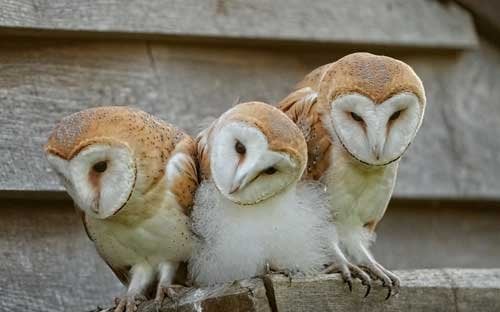
The external platform is a balcony for the owlets. It is where the adults land with food, and where the young first see the outside world. From there they can climb or jump onto the roof and, with luck, onto nearby perches, so it matters a lot for their safety. It also makes the box more appealing to the adults.
Keep the sides overhanging the floor so the box is as watertight as possible, and add a few drainage holes in case water does get in. The inside must stay dry through prolonged heavy rain from any direction.
Building one from a whisky barrel
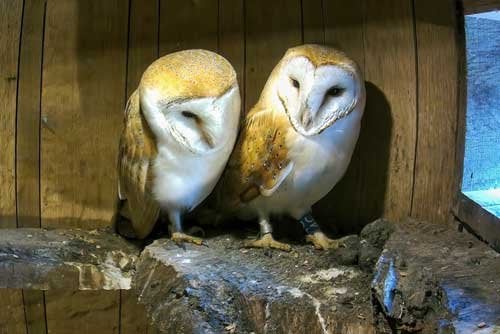
I did not set out to show anyone how I build my boxes, so I never took a full set of step by step photographs, but I took a few along the way, and here is the gist of it, in case it is useful to you.
Old whisky barrels make brilliant owl boxes. They are solid oak, so they last for years, and old barrels are often sold cheaply as garden planters, so they are easy to find. A barrel around 700 millimetres across gives a Barn Owl the ideal floor area of about 0.4 square metres. For Tawny Owls, you can cut some height off a barrel, or use a slightly smaller one.
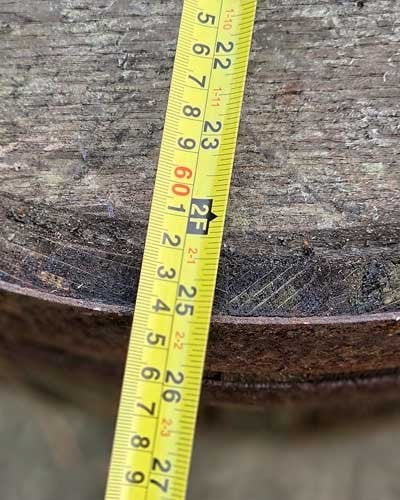
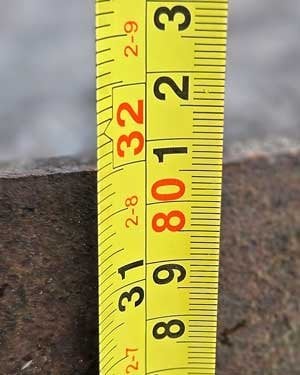
The basic steps are straightforward.
- Open it up. Saw the top off the barrel to leave an open topped oak barrel.
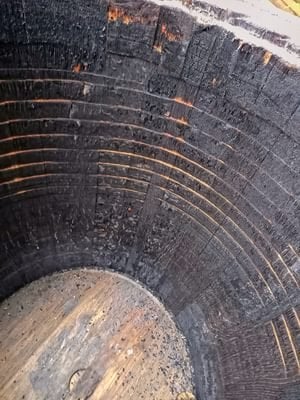
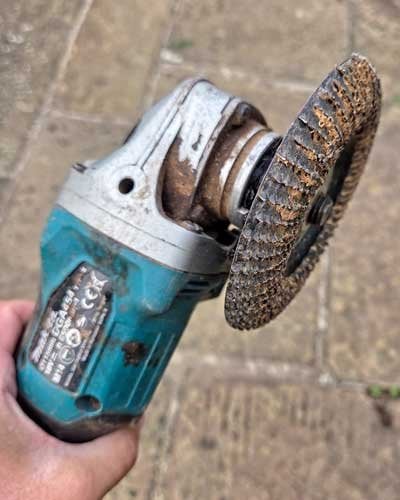
- Remove the charring. Barrels are charred on the inside during making, which hardens the wood and adds flavour to whatever is stored in it. That black, whisky smelling layer is not something you want inside an owl box, so I strip it back to clean oak with a wood carving disc on a cordless angle grinder. Wear thick gloves, arm protection, goggles, a dust mask and ear defenders, and work carefully in such a confined space.
- Cut the entrance hole. For a Barn Owl, the bottom of the hole needs to be at least 450 to 500 millimetres above the floor, so owlets cannot fall out before they can fly.
- Fit an inside ledge. Just below the entrance, I always fit a perch. It helps the owl walk in, and doubles as a place to snooze and keep watch. It is not in many designs, but in my experience it makes a real difference to whether owls want to use a box at all.
- Add a roof and an outside landing ledge. Barn Owls need a generous ledge, since owlets will queue up on it waiting to be fed, and you do not want any of them tumbling off in the scrum.
- Get help to put it up. These boxes are heavy, so lifting one into a tree is a two or three person job at least. I have used ladders, pulleys and a rope winch, and I would never try it alone. Always do this outside the breeding season, since Barn Owls are protected by law and it is an offence to disturb them at or near an active nest.
Buster’s own barrel sits inside an old barn, against the wall, with the owls reaching it through a short, oak lined tunnel about 150 millimetres square. That has turned out to have real advantages. It feels like a building to the owl, which Barn Owls like, and it is far less likely to be taken over by a Tawny Owl than a box in a tree. It is also safe from stoats, since the entrance is high up the outside wall, and safe from cats, since the barrel itself is fully enclosed.
If you would like the fuller version, with the photographs I did take along the way, and how I have added cameras, gentle lighting and even backup power, it is all in my article on building a whisky barrel owl box on BarnOwl.live.
Looking after it
Nest boxes do not need constant attention, but they do need an annual check. Once a year, outside the breeding season and after you have made sure it is empty, look inside and clear out the old bedding, pellets and other debris. If you let it build up, the box gets shallower and less safe for owlets. Jackdaws and stock doves sometimes take over Barn Owl boxes, and jackdaws in particular stuff them with sticks, wool and string, which can make a box unusable. Clear it all out after the breeding season. Wear gloves and a dust mask.
And be patient. A box can take months or years to be used, and some are never occupied. If you have done everything right, keep the faith. Barn Owls are creatures of habit, and a site that has been quiet for years can suddenly be discovered.
Buildings and conversions
Old buildings are just as important. If you own a barn, do what you can to keep it in good condition and to leave a way in for the owls, such as an open pitching hole or a gap in the gable. If you are planning to convert or repair a building, talk to an ecologist first. Barn Owl roosts are protected while they are in use, and with a bit of planning, it is often possible to keep the owls, or provide a good alternative, and still get your building work done.
Things not to do
- Do not go and peer into a nest that might be occupied. It is against the law and it can cause real harm.
- Do not use recorded calls to try to lure a Barn Owl. It can cause stress and is regarded as disturbance.
- Do not feed wild owls. They need to hunt for themselves, and feeding attracts rats.
- Do not pick up a healthy owlet on the ground. We will look at what to do in the next chapter.
See it happen live. Everything in this guide plays out on our cameras.
Watch the live nest Subscribe on YouTube Free PDF Find us on Facebook
Share this page: Facebook · WhatsApp
Free to read and share under a Creative Commons Attribution NonCommercial NoDerivatives 4.0 licence. Last updated September 2026 · Edition 1.0 · About 9 minute read