
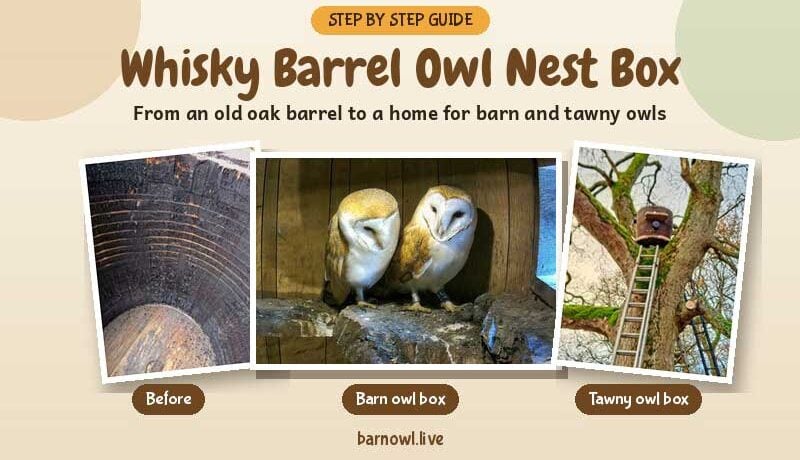

Recycling an old oak barrel into a home for barn owls and tawny owls
I never set out to make these whisky barrel nest boxes with the idea of showing other people how to do it, so I didn't take a full set of step by step photos. I did take a few for my own records, though, and I hope they'll give you a useful guide to how I go about it.
This guide covers everything from choosing and cleaning out a barrel, to fitting cameras, lighting and even backup power. The basics are simple and cheap. The extras are optional, but they've turned Buster's barrel into what might just be one of the most high tech owl nest boxes in the world!
Why use a whisky barrel?
Old whisky barrels make brilliant owl boxes. They're made of solid oak, so they'll last for years, and they're surprisingly cheap for such a wonderful natural material. It's also a great way to recycle something that would otherwise be thrown away. Old barrels are often sold as garden planters, so they're easy to get hold of.
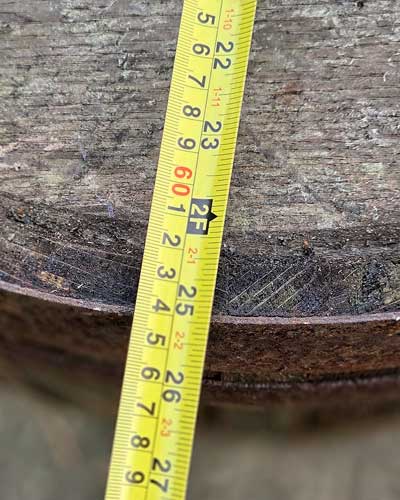
They're big, too. A large barrel gives a barn owl a very spacious nest box, with plenty of room for the female and a full brood of owlets. For a barn owl you're looking for a floor area of about 0.4m², which means a barrel around 700mm across. For tawny owls, you can either cut some of the height off a barrel or use a slightly smaller one.
What you'll need
For the basic box:
- An old oak whisky barrel, around 700mm across for barn owls
- A saw, to take the top off the barrel
- A cordless 4 inch (115mm) angle grinder with a wood carving disc
- Safety gear: thick gloves, arm protection, goggles, a dust mask, ear defenders and a hat
- A hole saw for the entrance hole (I use 140mm)
- Oak or other hardwood for the perches, outside ledge and tree deck
- Material for a flat, waterproof roof, plus hinges and catches so the lid can be locked down
- Rust proof screws suitable for the weight
Optional extras:
- A soil pipe fitting to make a camera pocket, and a CCTV camera
- A small, dim LED light, a photocell or small solar panel, and an LED dimmer
- Infrared (IR) LEDs for night time viewing
Step 1: Opening up the barrel
First, choose your barrel and take the top end off it. I literally cut through the top with a saw and removed the oak lid, which leaves you with an open topped oak barrel.
Step 2: Removing the charring
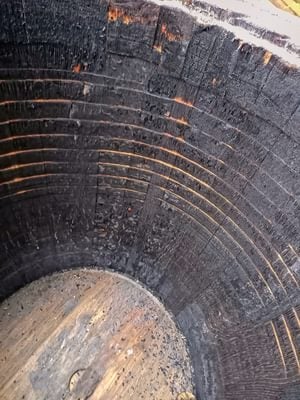
When you look inside the barrel, it's dark and looks burnt. That's because it is. When barrels are made, a fire is lit inside to char the wood, which hardens it and adds flavour to whatever is stored in it later. Mine have come from various uses, but the bigger barrels I've used for barn owls were whisky barrels.
The charring and years of whisky turn the walls black, and even though the barrels have been empty for years, you can still smell the alcohol.
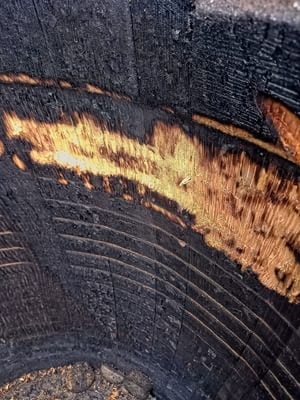
You don't want the inside of an owl box blackened or smelling of whisky, so the charred layer needs to come off. This also gets rid of the smell. I use a wood carving disc on my cordless 4 inch (115mm) angle grinder. If you have one of these grinders, it's a very effective way of removing the charring. It quickly strips off a layer and leaves a rough, natural wood finish that feels right for the owls.
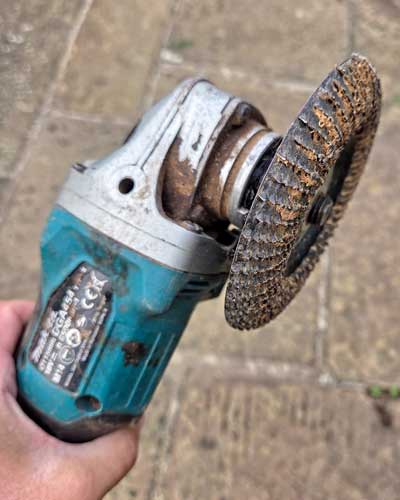
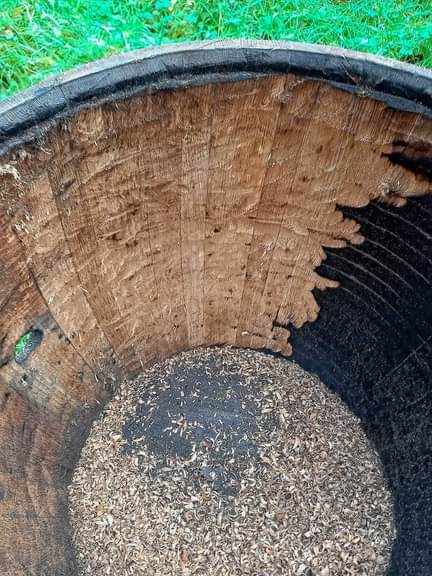
Bit by bit, you slowly reveal the lovely colour of natural oak.
Please be very careful with the grinder. Working in such a confined space, the disc can snag and could easily rip through clothing or skin. Wear proper protection on your hands and arms, and hold the grinder firmly with both hands. The chippings fly everywhere, so you'll need a mask, goggles, ear defenders and a hat too.
Eventually, when you're covered in wood chippings and smell like a bottle of Johnnie Walker from all the aromas you've released, you'll have a clean barrel.
Step 3: Cutting the entrance hole
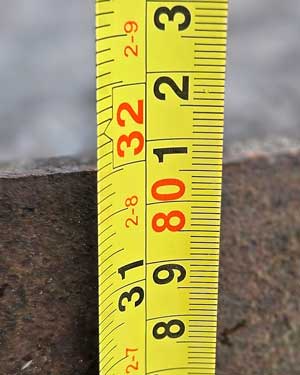
Next, cut the entrance hole at the right height for the owl you want to attract. For barn owls, the bottom of the hole needs to be at least 450mm to 500mm above the floor. That depth stops young owlets falling out before they can fly. I use a 140mm hole saw for the entrance, which is ideal for barn owls.
Step 4: Fitting the inside ledges
Just below the entrance hole, on the inside, I always fit a perch. It helps the owl walk into the box, and it doubles up as a snoozing and lookout ledge.
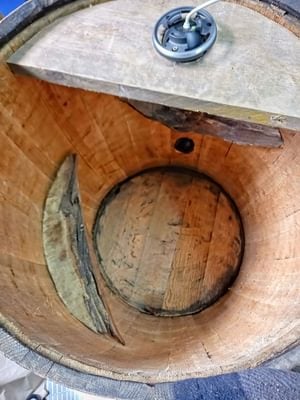
This ledge isn't in many barn owl box designs, but in my experience it's really valuable for making owls want to use your box. Both my barn owl box and my tawny owl box have one, and both have been extremely popular. In fact, I struggle to clean the barn owl box, because the barn owls are in it almost permanently, and new owls often visit wanting to move in. I'd call that a thumbs up from the barn owls!
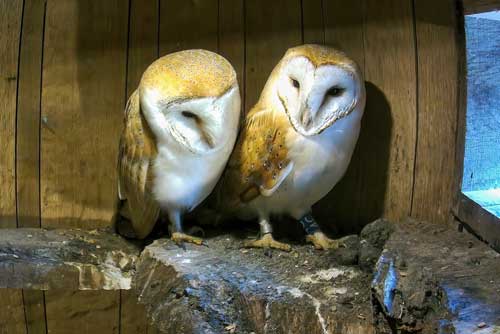
In my designs, I've ended up with three ledges inside, like stepping stones, each one slightly below the other. The owls can hop in, step down and snooze just away from the entrance. As you can see from the photo of Mia and Buster, they love it. Little tweaks like this don't just make your nest box work, they make the owls come back year after year, so they're important design details.
Step 5: Fitting the cameras
Below the perch, I cut a round hole in the barrel with a hole cutter, sized to tightly fit a soil pipe fitting, which I glue in. This makes a camera pocket where I can fit an eyeball CCTV camera looking down at the nest scrape on the floor of the box. The pocket also means I can adjust the camera slightly from the outside, without disturbing the owls.
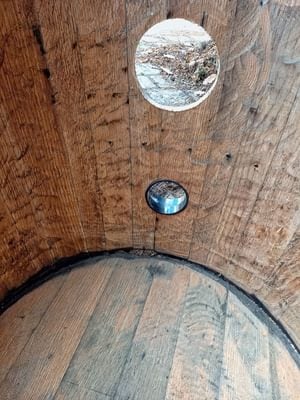
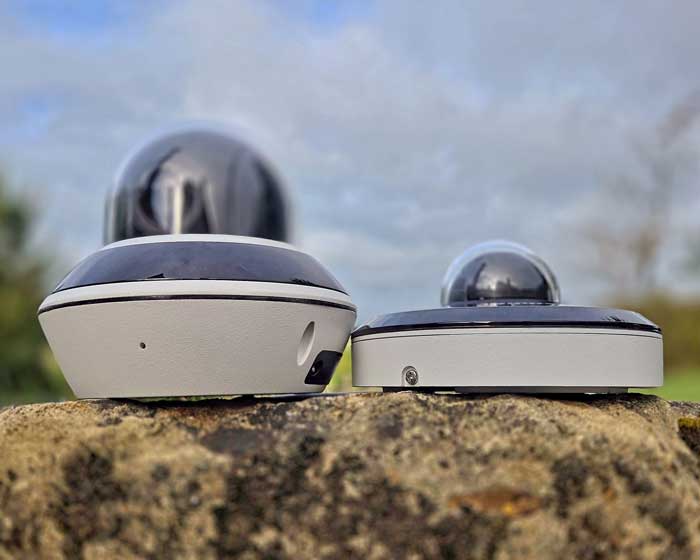
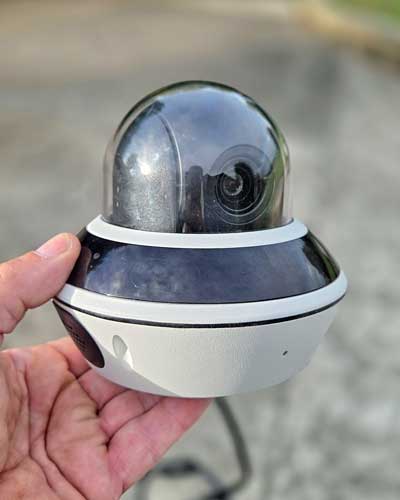
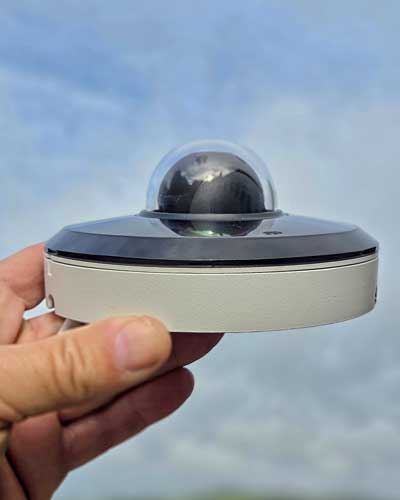
I'm now moving over to mini PTZ cameras in my owl boxes, so I'll be tweaking this part of the design and will write up how I fit them. Where I've fitted mini PTZ cameras so far, they sit a little higher, so I can look at the owl on the inside perch or turn the camera to look at the scrape.
The barrel that Buster calls home also has a third camera looking straight down into the box. Three cameras is really overkill for most people, but it gives you an idea of how they can be fitted.
Do you need a camera at all? No, but it definitely adds to the enjoyment of putting up a box. It's also really useful for checking whether an owl is in residence, so you don't disturb it, which you clearly shouldn't.
If you don't fancy adapting a standard CCTV camera, you can simply buy a purpose made nest box camera from a reputable supplier. They're small and easy to fit. You'll still need to power it and get its picture back to the house so you can watch it, so check how each camera works before you buy, to make sure it suits your setup.
There's much more about choosing and fitting cameras in my guide to CCTV nest box cameras and RTSP streaming.
Step 6: Lighting the box
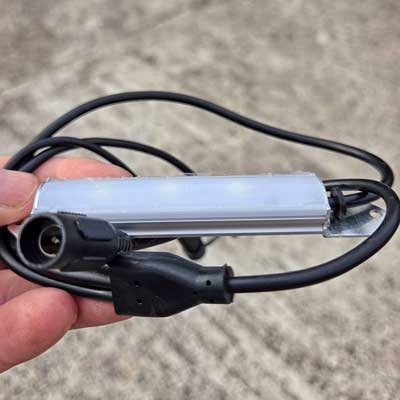
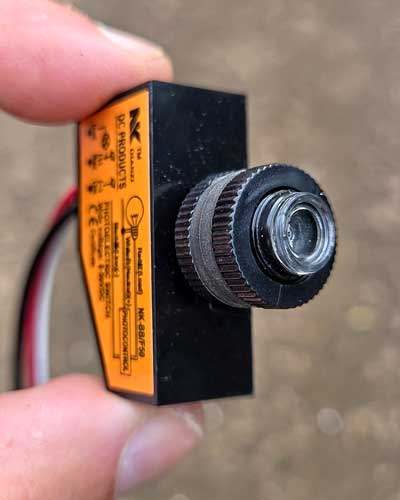
All my boxes now have a very small, dim, warm LED light inside, to copy the natural daylight that would seep into a barn or through a crack in a tree trunk. On some boxes I control it with a photocell, and on others it's simply powered by a small solar panel on the roof. Either way, the light is only on when the sun is out and goes off at night. As far as the owl is concerned, the inside of the box is just gently lit in daytime.
CCTV cameras only need a tiny amount of light to see in colour, and modern cameras perform very well in dim light. So this gives a lovely daytime colour picture of the owls on the live stream, and such a small amount of light doesn't bother the owls at all.
If you'd rather not build your own lighting, I've recently bought a couple of the Green Feathers daytime LED lamps for bird boxes to try. Each one is a small, dim LED light with its own photocell built in, so it switches itself on in daylight and off at night. At under £20 they're good value, and hardly worth the trouble of making your own.
There's one thing I don't know yet, and that's whether the photocell has any hysteresis built in. The separate photocell I use on my other boxes does, and it's an important feature. Hysteresis simply means the light switches on and off at slightly different light levels. Without it, at dawn and dusk, when the light is right on the edge, the light can keep flicking on and off, which is no good for the owls or the camera. I'll update this once I've tested them properly. I explain how I get the brightness just right in the "Beyond the basics" section below.
Some people fit polycarbonate windows in their nest boxes to let natural light in. It's an easy option, but take care: the polycarbonate must be opaque, so strong sunlight can't get in and overheat the box. If you fit one, do it with the owls' welfare in mind.
Step 7: Infrared lighting for night
On some boxes, I use my own infrared (IR) lighting rather than the IR built into the camera, for a couple of reasons.
First, I use 940nm IR LEDs, which give off no visible glow at night. Most cameras' built in LEDs are 850nm, which glow faintly red. To be honest, that's only a minor detail and probably makes little difference to attracting owls, as on some boxes I just use the camera's own IR.
Second, and more usefully, I use a very simple switching arrangement: when the photocell switches the daytime LED light off, it switches the IR light on. The big advantage is that when there are several cameras in the same box, they all switch between colour and black and white at exactly the same time, rather than one after another.
Step 8: The roof and outside ledge
Next, I fit a flat, waterproof roof and an outside ledge for the birds to land on.
Tawny owls only need a small landing perch, but barn owls need a much bigger outside ledge. Once the owlets are older, they'll queue up out there waiting to be fed, and you don't want any of them falling off in the rugby scrum!
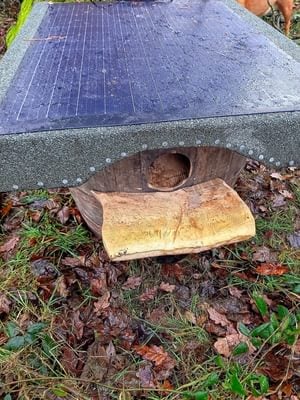
On the tawny owl box, I've put the solar panel for the lighting on the roof, where it also helps keep the rain out. The lids are hinged, and can be locked down so they can never blow off in a gale.
Step 9: Putting it up in a tree
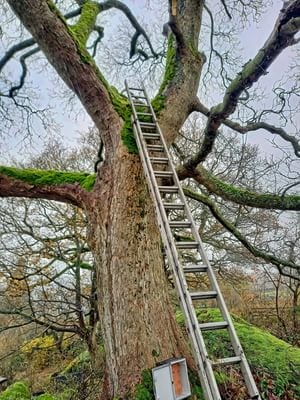
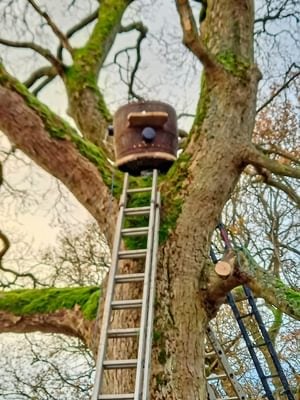
To install a box in a tree, I first fix a wooden support deck, usually made of oak so it lasts. Then I put the nest box on it and screw it down with screws suited to the tree and the weight.
These boxes are very, very heavy, so getting one up a tree is like a military operation. Get someone to help you. I've used ladders, pulleys and a rope winch. Never try it on your own.
At the bottom of my trees, I fit a small box to house the equipment I need to get the camera signals back to the house. I've used Wi-Fi links in the past, but I now have everything hard wired through ducting. If you do go wireless, the TP-Link CPE605 is a fairly reliable wireless link (you'll need a pair, one at each end), but wireless will never be as good as a cable. If you're running a network cable anyway, you can use it to power the camera at the same time. If there's no power where the box is, you'll need a solar panel, but don't underestimate how big it needs to be, and you'll need a battery so everything keeps running at night.
Please put up and work on nest boxes outside the breeding season. Barn owls are protected by law in the UK, and it's an offence to disturb them at or near an active nest.
Choosing where the box faces
When you put the box up, the entrance hole must face away from the prevailing wind, and it needs to be private for the owl. Don't position it so you can see into it from a better spot: position it the way the owl needs it, sheltered and overlooking its hunting ground.
The owl must have a clear view of the box as it flies in, and for barn owls the entrance must be free of branches. Tawny owls are similar, but they're happy to nest in a hole that's slightly hidden, as long as they can see their landing area or nearby branches.
There's more about location in my barn owl nest box sizes and checklist.
Buster's barrel: a box inside a barn
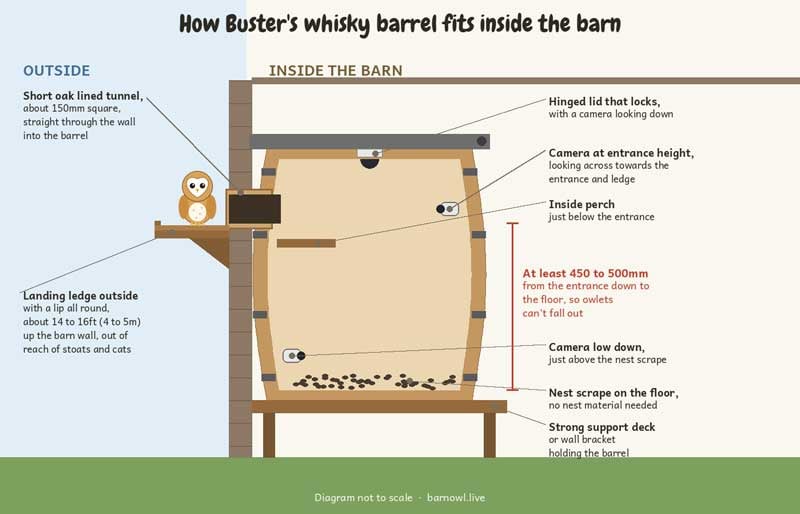
The barrel Buster uses is actually inside an old barn, sitting tight against the wall. The owls get in through a short, square tunnel, about 150mm square and lined with oak, which runs straight through the outside wall of the barn into the barrel. The entrance and landing ledge are around 14 to 16ft (about 4 to 5m) up the outside wall, and the ledge has a lip all round it, so the owlets can't tumble off.
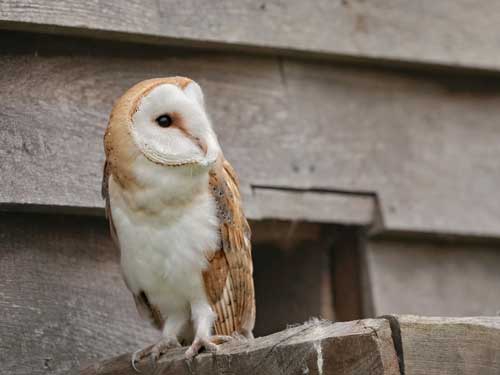
This way of installing it has some real advantages:
- It feels like a building to the owl. Barn owls like nesting in barns, and their arch enemy for nest sites, the tawny owl, is less likely to take over a nest inside a building. That's a bonus for the barn owl.
- It's safe from stoats. The entrance is high up the side of the barn, where stoats can't reach it. Stoats will raid nest boxes in trees from time to time.
- It's safe from cats. Cats could get into the barn roof, but because the barrel's entrance is on the outside of the barn and the barrel itself is enclosed, they can't get to the owls.
This diagram shows how the barrel is fitted inside the barn.
That covers the basics of turning a low cost oak whisky barrel into a barn owl nest box. It's also a good guide to making one for tawny owls. They don't need as much room, but a similar design works well for them too.
Beyond the basics: how Tech Buster's box works
If you enjoy a bit of tinkering, here's how I've taken Buster's box further. None of this is essential, but it all helps the owls and makes for a better live stream.
Getting the light level just right
The easiest place to start is to buy LED lights described as "low output". But if you want the light exactly right, you'll need a dimmer, and LEDs don't dim quite like the old filament bulbs.
LED stands for light emitting diode. Unlike an old bulb, an LED doesn't dim smoothly if you just turn the voltage down. Below a certain voltage it simply goes off, and just above it, it comes on. A 12V LED light is usually made up of several LEDs wired together, with a little extra circuitry, so it's designed to run at its full 12V. Some lights have extra regulation circuitry that makes them seem to dim a little as the voltage drops, but it isn't proper dimming.
The answer is an LED dimmer. Look for one that's made for your lights' voltage, for example 12V. For safety, always use low voltage lights. The type you want is a PWM (pulse width modulation) dimmer. Rather than actually lowering the power, it switches the LED on and off very rapidly, far too fast to see. The longer the LED is on compared with off, the brighter it looks. For example, if it's on half the time and off half the time, it looks half as bright. These dimmers are very cheap from Amazon and similar shops.
You can use exactly the same method to dim your infrared LEDs, so you get the perfect amount of IR light in the box at night. The dimmer only controls the IR lights you've fitted yourself, not the camera's built in IR, which you'd switch off. Many cameras also let you turn their own IR up or down in the settings.
A gentle sunrise and sunset
I also use a soft start for the daytime LEDs. When the photocell switches the lights on at sunrise, they slowly get brighter, and at sunset they slowly fade out. This copies the natural change in light and is great for the owls' welfare.
To do this, I use a ready made LED soft start module. They're mostly sold for making car interior lights fade slowly, but they work perfectly here. I use an Oznium Fade-in Fade-Out LED Dimmer, which works on 12 to 24 volts and has 13 fade speeds to choose from, so you can make the sunrise and sunset as slow as you like. At the time of writing it's out of stock on Amazon, but similar fade in fade out modules are easy to find. Just make sure the one you choose matches the voltage of your lights.
Backup power for power cuts
Living in the countryside, we get a lot of power cuts, so Buster's box has its own UPS (uninterruptible power supply). I use a solar inverter that charges batteries while the mains power is on. When there's a power cut, it switches over automatically and keeps the nest box and all its equipment running.
These inverters can also connect to solar panels, so the panels can power the nest box and charge the batteries at the same time, making the whole setup as green as possible. When I redo the barn roof, I'll be adding solar panels to do exactly that.
You can use lithium batteries, but I use large lead acid leisure batteries, as I consider them a lower fire risk and they're much cheaper. If you use lead acid batteries, keep them somewhere well ventilated, as they can give off gas while charging.
Backup internet
Power cuts, and faults on the fibre line, can also knock out our broadband. So my system automatically switches the YouTube stream over to a mobile router with a SIM card in it if the fibre connection goes down.
It's relatively cheap to do. I use a prepaid "unlimited" data SIM from Scancom on Amazon, a Three SIM that can also use the Vodafone network for stronger coverage. It works out at around £9 a month. It usually lasts around 1.5 to 2.5 years, and when it expires you simply buy a new one, as it can't be topped up. It says unlimited, but at the time of writing it actually has a fair usage limit of 1TB a month, which is plenty for backup streaming.
What's in Tech Buster's box?
So, to sum it all up, Buster's box has:
- three CCTV cameras, able to record at up to 6K resolution
- invisible 940nm infrared lighting, which is dimmable
- natural looking daytime LED lighting, which is dimmable, with a gentle sunrise and sunset
- its own uninterruptible power supply, soon to be solar powered
- backup mobile internet, so the live stream keeps going if the broadband drops
It may be a barn owl box made from a recycled old whisky barrel, but it's also one of the most technologically advanced nest boxes in the world. Well, Buster thinks so!
What I'd change next time
The only improvement I want to make in future designs is easier access for licensed bird ringers, so they can ring the owlets more easily. Other than that, the owls love them!
Questions people ask
Can you use a whisky barrel as an owl box? Yes. Old oak whisky barrels make excellent owl nest boxes. They're strong, long lasting and roomy, and a barrel around 700mm across gives a barn owl the ideal floor area of about 0.4m².
Do you need to remove the charring from inside the barrel? Yes. The charred layer is black and still smells of whisky, so remove it with a wood carving disc on an angle grinder until you reach clean, natural oak.
How high should the entrance hole be in a barn owl box? The bottom of the entrance hole should be at least 450mm to 500mm above the floor, so young owlets can't fall out before they can fly.
Can I use a whisky barrel for a tawny owl box? Yes. Tawny owls don't need as much room, so either cut some of the height off the barrel or use a slightly smaller one. The same basic design works well.
Should I put lights in an owl nest box? Only a very dim, soft LED light that comes on in daylight and goes off at night, for example controlled by a photocell or a small solar panel. It helps the camera show a colour picture during the day without disturbing the owls.
Over to you
I hope you've found this useful. Before you start building, have a look at my barn owl nest box sizes and checklist and my CCTV nest box camera guide. If you'd like to stream your box, there are also articles on streaming your wildlife cameras to YouTube.
And if you'd like to see one of these barrels in use, come and watch Buster on our live barn owl nest camera.
Paul 🦉