
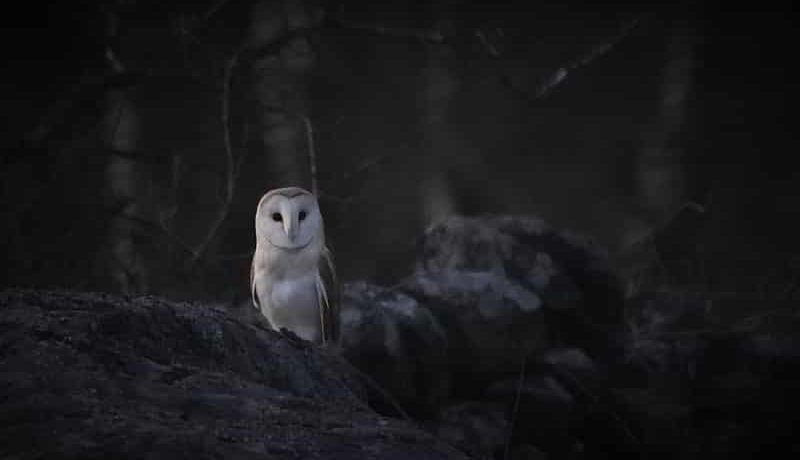

Here's a confession. If it wasn't for the CCTV cameras in my nest boxes, a lot of the time I wouldn't even know I had barn owls. I hardly ever see them. They spend the day tucked away inside the boxes, and they don't come out until the light is fading. That tells you most of what you need to know about how nocturnal barn owls really are.
But it isn't quite the whole story. Barn owls do sometimes hunt in daylight, and there are good reasons why. On this page I'll explain what nocturnal actually means, how barn owls are built for the dark, why they choose the night, and when you're most likely to see one during the day.
🔤 What does nocturnal mean?
A nocturnal animal is one that's mainly active at night and rests during the day. There are two other words you'll come across:
- Diurnal: active during the day, like most birds, including kestrels and buzzards.
- Crepuscular: most active at dawn and dusk, the twilight hours.
Barn owls are mainly nocturnal, but they also have a strong crepuscular streak. The first hunting flights of the evening often start as the light fades, and a hungry owl may still be hunting as dawn breaks.
Barn owls belong to their own family of owls, the Tytonidae. Most of the other owls you know, such as tawny owls and little owls, belong to a different family, the Strigidae. Not all owls are nocturnal, which is why it's a good question to ask.
🦉 Built for the dark
The barn owl is one of the best night hunters in the world. Almost everything about it is designed for catching small animals in the dark.
👂 Extraordinary hearing
This is the barn owl's secret weapon. Its ears are set at slightly different heights on its head, so it can pinpoint exactly where a sound is coming from, up and down as well as left and right. Barn owls can catch prey in complete darkness using hearing alone.
💛 A face like a satellite dish
The heart-shaped facial disc isn't just for looks. It funnels sound towards the owl's ears, a bit like cupping your hands behind your ears to hear better.
🪶 Silent flight
Barn owl feathers have soft, comb-like edges and a velvety surface that muffle the sound of air rushing over the wings. The owl can hear its prey, but its prey can't hear it coming.
👀 Eyes for low light
Barn owls have large eyes that are very sensitive to low light. They can't move their eyes in their sockets, so they turn their heads instead, up to around 270 degrees.
A fascinating discovery: research in Switzerland found that on bright moonlit nights, the white feathers of a barn owl seem to make voles freeze for longer, making them easier to catch. Even their colour may help them hunt at night.
🌒 Why do barn owls hunt at night?
It comes down to food, and to staying out of trouble.
Their prey keeps hidden in the day
Barn owls mostly eat field voles, shrews and mice. In daylight, these little animals keep well hidden under long grass, in their runs and burrows, where they're much harder to find. After dark, a barn owl can listen for every tiny rustle as they move about. Why hunt in the day, when your prey is easier to find at night?
Less competition
By day, kestrels, buzzards and other birds of prey are all out hunting the same voles. At night, the barn owl has the fields much more to itself.
Less hassle
A barn owl out in daylight often gets mobbed by crows, jackdaws and gulls, and other birds of prey will sometimes try to steal its catch. Staying hidden during the day keeps it out of trouble and saves precious energy.
What I've found: our barn owls spend the day inside the nest boxes and almost never come out in daylight. Without the cameras, I'd rarely know they were there. And why would they come out, when their prey is so well hidden during the day? As the light fades, they're off.
☀️ When might you see a barn owl in the day?
Seeing a barn owl in daylight usually means it's hungry and needs the extra hunting time. The most common reasons are:
- 🌧️ After bad weather. Barn owl feathers aren't waterproof, and heavy rain, strong wind or deep snow can stop them hunting at night. After a night or two like that, they'll often be out in the day to catch up.
- ❄️ In winter. Food is harder to find and nights are long and cold. Barn owls use a lot of energy just keeping warm, so daytime hunting becomes more common, especially in late afternoon.
- 🐣 When feeding owlets. A family of hungry owlets needs a huge amount of food, so parents may start hunting earlier in the evening and carry on after dawn.
- 🐭 In a poor vole year. When prey is scarce, owls need every extra hour of hunting they can get.
- 🌱 Young owls in autumn. Newly independent young owls are still learning to hunt and may be out at odd times.
Seen a barn owl in the day? It doesn't necessarily mean it's ill. It's usually just hungry. If it looks weak, is on the ground or can't fly, though, contact a local wildlife rescue for advice.
🏠 What do barn owls do in the day?
During the day, barn owls rest in a quiet, sheltered roost. That might be a nest box, an old barn, a hollow tree or a quiet farm building. They spend the time sleeping, dozing and preening their feathers to keep them in good condition for silent flight.
A pair will often roost close together, but not always in the same place. That's one reason putting up a second box nearby can help encourage a pair to settle. You can read more about this in barn owl roosting.
🦉 How do barn owls compare with other UK owls?
| Owl | When it's active |
|---|---|
| Barn owl | Mainly at night and dusk, sometimes by day when hungry |
| Tawny owl | Strictly nocturnal, very rarely seen in daylight |
| Long-eared owl | Nocturnal, and very secretive by day |
| Little owl | Often seen in the daytime, especially perched on posts or walls |
| Short-eared owl | Often hunts in daylight, especially over moorland and rough grassland |
Tawny owls share the night with barn owls, and they don't always get on. Have a look at our popular video of a tawny owl chasing a barn owl.
🔭 How to see a barn owl
Because they're so nocturnal, seeing a wild barn owl takes a bit of patience. These tips give you the best chance:
- Go out at dusk on a calm, dry evening. Barn owls avoid hunting in wind and rain.
- Watch rough grassland, field edges and road verges, where voles live.
- Look for a pale, ghostly shape flying low and slowly back and forth over the grass, then hovering or dropping suddenly.
- Listen for the screech. Barn owls don't hoot. Their call is a long, rasping shriek.
- Look for signs: dark, shiny pellets and white droppings below a regular roost.
- Winter afternoons are a good time to spot one hunting in daylight, especially after bad weather.
⚠️ Please keep your distance. Barn owls are protected, and disturbing them at or near an active nest is an offence in the UK. Watch quietly from a distance, and never shine lights at them.
Or, of course, you can watch them from the comfort of your sofa. Our live barn owl nest camera runs day and night, and it's how I get to see what my owls are up to.
❓ Questions people ask
Are barn owls nocturnal?
Yes. Barn owls mainly hunt from dusk and through the night and rest during the day, although they will hunt in daylight when they're hungry.
Do barn owls come out in the day?
Sometimes. They're most likely to be seen by day after bad weather, in winter, in a poor vole year or when they have owlets to feed.
Why is there a barn owl out in the daytime?
Usually because it's hungry and needs extra time to hunt. It isn't necessarily a sign of illness, but if it's on the ground or can't fly, contact a wildlife rescue.
Can barn owls see in the dark?
They see well in low light, but they rely mostly on their extraordinary hearing. Barn owls can catch prey in complete darkness using sound alone.
Where do barn owls go during the day?
They roost somewhere quiet and sheltered, such as a nest box, barn, hollow tree or farm building, where they sleep and preen until dusk.
Are barn owls crepuscular?
Partly. They're mainly nocturnal, but they're often active at dusk and dawn too, which is when you're most likely to see one.
📚 More from Barn Owl Live
- 🎥 Watch our live barn owl nest camera
- 🦉 How barn owls hunt
- 🍽️ What do barn owls eat?
- 🏠 Barn owl roosting
- 📖 A short guide to barn owls
Paul 🦉
Please share this article if you like it!